The Most Common Description Of This Test Is Wrong#
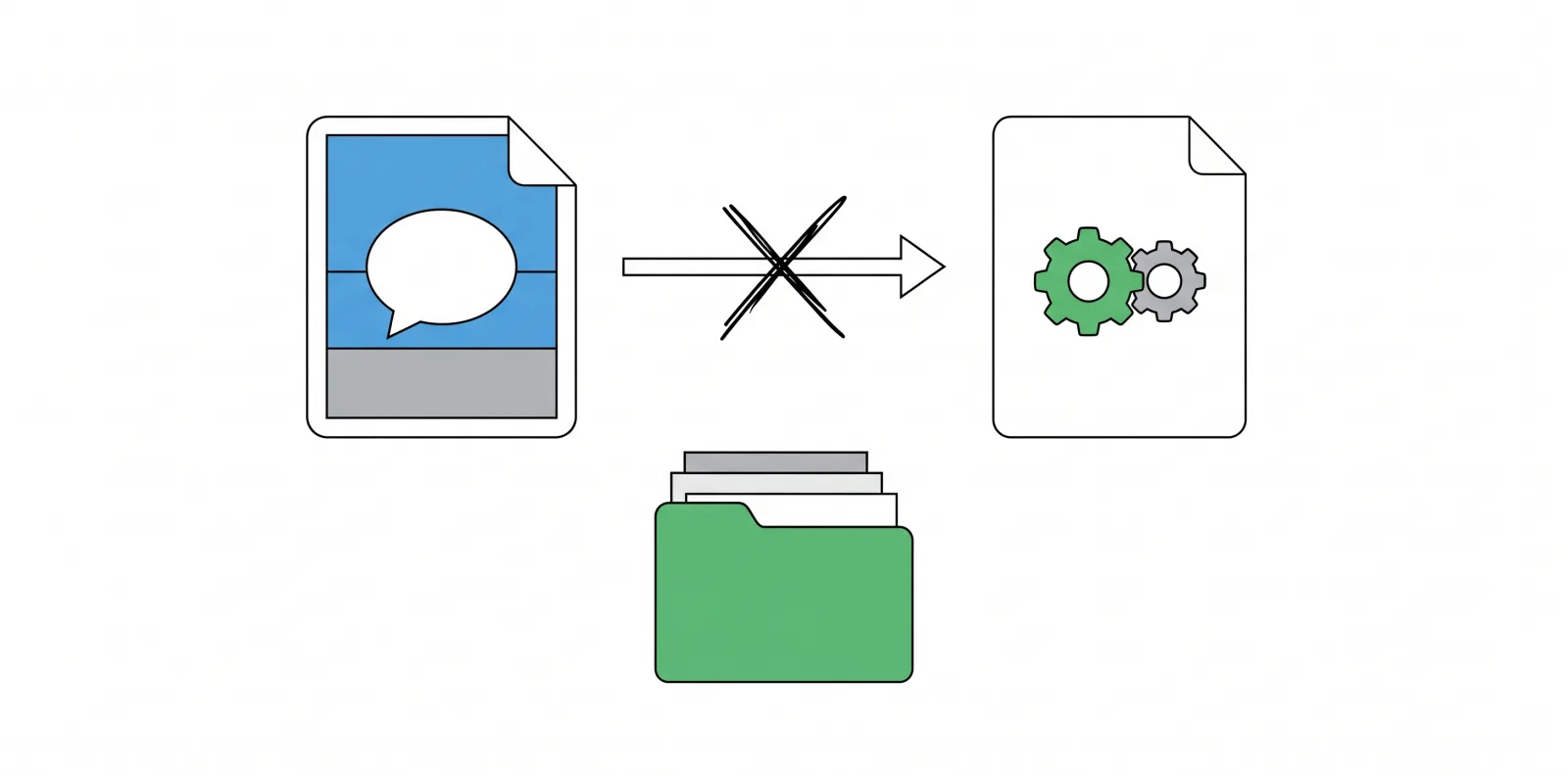
Search for dMAT and you will find it described as a German language test that replaces TestDaF and DSH at some universities.
That description is incorrect in every part, and acting on it would cause real harm. A student who believes dMAT replaces their language requirement will skip language preparation and find themselves unable to meet an admission condition that never went away.
Here is what dMAT actually is.
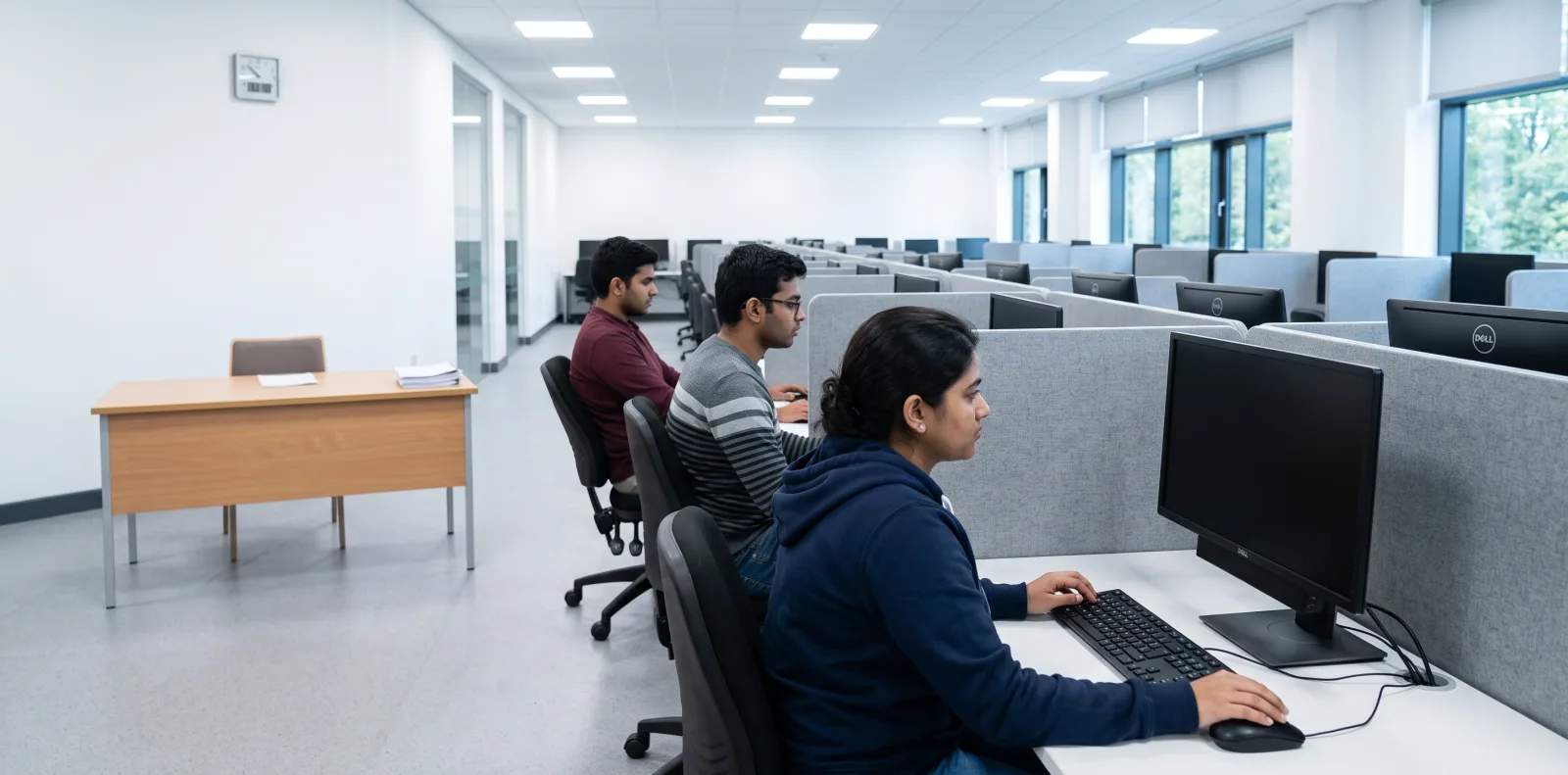
It is an academic aptitude test, the Digital Master Test, introduced in June 2026.
It tests reasoning and academic ability, not German. It replaces no language qualification. TestDaF, DSH, IELTS and TOEFL all continue to apply exactly as before, according to whatever your chosen programme requires.
It is administered by g.a.s.t., the organisation behind TestDaF and TestAS, with support from DAAD. That shared administration is probably where the confusion originated, since the same body runs a well-known language test.
It becomes mandatory from the summer 2027 intake, as part of APS documentation, for Indian applicants to master's programmes in a defined set of fields.
So it is a new requirement, it is real, and it sits alongside your existing obligations rather than replacing any of them.
Background: What APS Is And Where dMAT Fits#
You cannot understand dMAT without understanding APS, which many Indian applicants also encounter for the first time quite late.
APS is the Academic Evaluation Centre, which verifies the academic documents of applicants from certain countries, including India, before they apply to German universities. It checks that your degrees and transcripts are genuine and that your qualification profile is what you claim.
It is a prerequisite, not an option. Most German universities will not process an application from an Indian candidate without an APS certificate, and a German student visa application generally requires it. Applicants who discover APS in their final month before a deadline are in difficulty, because verification takes time.
dMAT now joins that documentation. From the summer 2027 intake, the test result becomes part of what APS requires for applicants in the affected fields.
Two further terms worth fixing:
Intake. German universities generally run a winter intake, usually beginning in September or October, and a summer intake, usually beginning in March or April. The summer 2027 intake is the point from which this requirement applies.
TestAS. A separate academic aptitude test that has existed for some time, also run by g.a.s.t. dMAT is distinct from it, though the two share a general purpose.
Who It Applies To, And Who It Does Not#
| Your situation | Does dMAT apply? | What you should do |
|---|---|---|
| Indian applicant, master's in engineering, from summer 2027 intake | Yes | Build it into your APS timeline. Sit it well before your application deadline |
| Indian applicant, master's in business, commerce, finance or a related field, from summer 2027 | Yes | Same. Check the current APS specification for the exact field list |
| Indian applicant, master's in a field outside the specified list | Check directly | The scope is defined by field. Do not assume exclusion; confirm with APS |
| Indian applicant, bachelor's programme | Generally not | The requirement as announced concerns master's applicants. Verify for your specific case |
| Applicant for an intake before summer 2027 | No | The requirement begins from that intake. Earlier applications are unaffected |
| Non-Indian applicant | No | This is a requirement within the Indian APS process |
The instruction that matters most. Field scope and intake applicability are defined by APS and can be clarified or adjusted. Check the current specification on the APS India portal rather than relying on any summary, including this one, before concluding that it does or does not apply to you.
What The Test Actually Assesses#
Because dMAT is new, there is no substantial bank of previous papers and no established preparation industry around it. That changes how you should approach it.
It is an aptitude test, which means it assesses reasoning ability rather than subject knowledge. Aptitude tests of this family typically cover quantitative reasoning, analytical and logical reasoning, data interpretation and verbal or comprehension reasoning.
Aptitude tests reward practice with formats rather than content revision. You cannot revise for reasoning in the way you revise for a syllabus. What improves performance is familiarity with question types and comfort under time pressure.
The official material is the authoritative guide. g.a.s.t. publishes information about structure, format and sample material. Because the test is new, that official material is considerably more reliable than any third-party guide, which will be working from the same limited base.
A sensible preparation approach.
Work through the official sample material first, carefully, to understand exactly what is being asked. Then practise general aptitude question types of the same families: numerical reasoning, logical sequences, data interpretation and comprehension. Material from other established aptitude tests serves adequately for building the underlying skills, provided you return to the official format for calibration.
Practise on screen and against a clock, since it is a digital test. Reading and reasoning on a monitor is measurably different from working on paper for most people.
And do not over-invest. This is one component of an application in which your degree results, your statement, your language qualification and your APS verification all matter. A proportionate few weeks of preparation is appropriate; three months is not.
Building It Into Your Timeline#
This is where the practical risk sits, because German application deadlines are unforgiving and APS adds a step before you can even apply.
Work backwards from the university deadline. Summer intake applications generally close well before the intake begins, and each university sets its own date.
Before that, APS must be complete. Verification takes time, and it cannot be rushed at the end.
Before that, dMAT must be sat and the result available. Test dates and result timelines are published by the administering body, and sitting the test late is the most likely way to miss an APS deadline that then causes you to miss a university deadline.
So the practical sequence is: identify your target universities and their deadlines, work back to the APS submission date, work back to when you need a dMAT result, and book a test date with margin. Applicants who treat these three as independent tasks discover the dependency at the worst possible moment.
And keep your language preparation running in parallel. This is the point of the whole article. dMAT does not reduce your language obligation by a single requirement. If your programme is German-taught you still need TestDaF or DSH at the required level. If it is English-taught you still need IELTS or TOEFL at the level the university specifies. Those timelines run alongside, not instead.
How dMAT Sits Alongside Everything Else You Need#
Because the test is new and widely misdescribed, it helps to see the full set of requirements in one place.
Academic documents verified through APS. Degree certificates, transcripts and supporting records, verified before you apply to universities. This takes time and it is a prerequisite rather than a parallel task.
Language proficiency, unchanged. For German-taught programmes, TestDaF or DSH at the level the programme specifies. For English-taught programmes, IELTS or TOEFL at the level the university requires. dMAT changes neither of these.
dMAT itself, from the summer 2027 intake, for Indian master's applicants in the specified fields, as part of APS documentation.
University application, on each institution's own timeline, which for German public universities commonly closes several months before the intake.
Proof of funds, currently €11,904 in a blocked account, for the visa.
Health insurance, required both for enrolment and for the visa.
The dependency chain that catches people. dMAT result feeds APS. APS certificate feeds university application. University admission feeds visa application. Blocked account feeds visa application. Each link takes weeks, and they are largely sequential rather than parallel. A candidate who begins four months before their intended intake cannot complete the chain.
Work backwards from the intake, not forwards from today. Identify the intake, find the university deadline, subtract APS processing, subtract dMAT scheduling and result time, and you will arrive at a start date considerably earlier than instinct suggests.
If You Are Applying Before Summer 2027#
A substantial number of readers will be applying for an intake before the requirement takes effect, and the position for them is straightforward but worth stating.
The requirement begins from the summer 2027 intake. Applications for earlier intakes are unaffected, and you do not need to sit dMAT for them.
Do not sit it unnecessarily. There is no advantage to taking a test that your application does not require, and the time is better spent on language preparation or on strengthening your application.
But do check your own intake carefully. German universities run winter and summer intakes, and the distinction matters here. If your plan slips by one cycle, you may move from an unaffected intake into an affected one, and discovering that late is the problem.
If your plan might slip, prepare as though it will. A candidate targeting winter 2026 with a realistic chance of deferring to summer 2027 should build dMAT into their contingency rather than assuming the earlier intake will hold.
And watch for scope clarification. Because the requirement is new, the field list and applicability may be clarified further. Check the APS India portal periodically rather than relying on an understanding formed months earlier.
The general rule. Verify your specific intake and your specific field against the current APS specification before concluding either that you must sit it or that you need not. Both errors are avoidable with one visit to the official source.
Frequently Asked Questions#
Is dMAT a German language test?#
No. It is an academic aptitude test, the Digital Master Test, assessing reasoning ability rather than language proficiency. The widespread description of it as a language test is incorrect.
Does dMAT replace TestDaF or DSH?#
No. It replaces no language qualification. TestDaF, DSH, IELTS and TOEFL continue to apply according to whatever your chosen programme requires, and dMAT sits alongside them.
When does dMAT become mandatory?#
From the summer 2027 intake, as part of APS documentation for Indian applicants to master's programmes in engineering, business, commerce, finance and related fields.
Who administers it?#
g.a.s.t., the organisation behind TestDaF and TestAS, with support from DAAD. That shared administration is probably why it is frequently mistaken for a language test.
Does it apply to bachelor's applicants?#
The requirement as announced concerns master's applicants. If you are applying for a bachelor's programme, verify your specific position with APS rather than assuming exclusion.
How do I prepare for an aptitude test with no past papers?#
Start with the official sample material from the administering body, which is the authoritative guide. Then practise general aptitude question families: quantitative reasoning, logical sequences, data interpretation and comprehension. Work on screen and against a clock.
What is APS and do I need it anyway?#
APS is the Academic Evaluation Centre, which verifies Indian applicants' academic documents before university application. Most German universities require the certificate and a student visa application generally does too, so it is a prerequisite regardless of dMAT.
Where should I confirm whether this applies to me?#
On the APS India portal, which publishes the current requirement including field scope and intake applicability, and on the administering body's own site for test structure and dates. Both are more reliable than any summary while the requirement is new.