
The Applications Close Before Most Students Start Looking#
Every year the same thing happens. A second-year student decides in March that they should do something over the summer, opens a job board, and finds that the structured internship programmes at the companies they have heard of closed their applications months earlier.
They conclude they were not good enough. They were simply late.
Internship recruitment runs on a calendar that nobody tells second-year students about. Large organised programmes recruit far ahead of the summer they are recruiting for. Virtual and certification-linked programmes run in cohorts with their own rolling dates. Small companies and startups hire closer to the need, which is why they are the only thing left in March, and why so many students conclude that startups are the only option available to them.
This article is a calendar. It assumes you are starting your second year, you have no prior experience, and you want something worth doing by the following summer. The months below are indicative rather than fixed, since programmes vary, but the sequence holds.
Background: What A Second-Year Student Is Actually Selling#
Before the calendar, a clear-eyed look at your position, because it determines what you should apply to.
You have no experience, and everyone knows it. Nobody expects a second-year student to have built anything commercially. Pretending otherwise on a CV is transparent and counterproductive.
What you do have is availability, teachability and a specific interest. Those are genuinely valuable to a small team and largely irrelevant to a large structured programme, which is one reason your odds differ so much between the two.
You also have time that later students do not. A second-year student can take an unpaid certification programme during term, which a final-year student juggling placements cannot. This asymmetry is the single most useful thing about your position and most students waste it.
What you are building is not a summer job. It is the first line of a CV that will be read eighteen months from now, when it matters. A certification plus a modest real placement in your second year makes your third-year applications dramatically stronger, and that compounding is the actual point.
Two terms worth defining:
Cohort. A fixed intake for a structured programme, running to set start and end dates, with applications open for a defined window before each one.
Cold email. An unsolicited approach to someone who has not advertised a role. It is the primary route into small organisations and it works far better than students expect.
The Calendar#
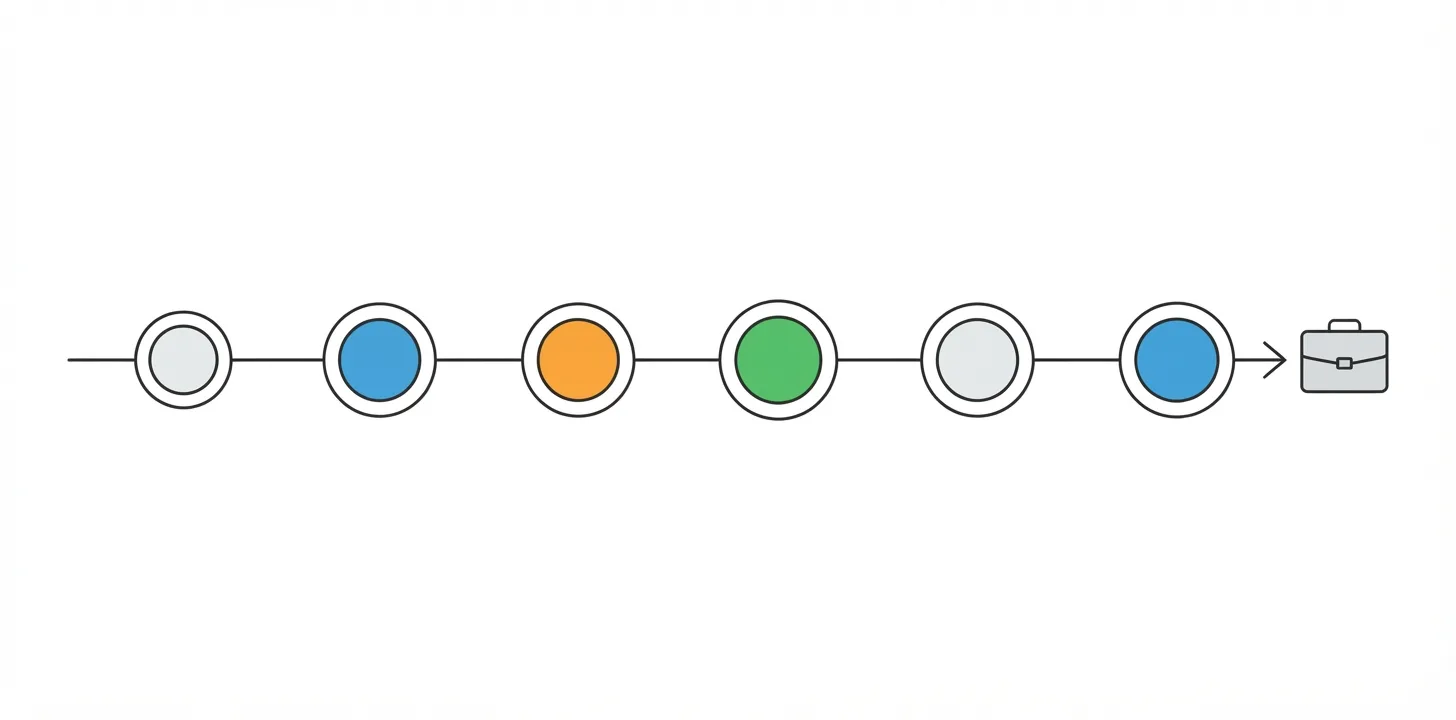
The colour coding is the argument. The green months cost nothing and require no one's permission, which is why they are the only part of this calendar entirely within your control. The blue months are competitive and largely decided by what you did in the green ones. The orange months are the fallback, and they work, but they work much better for a student who has something to show.
Most students start in orange. That is the whole problem.
August To November: The Part Nobody Does#
This is the highest-return period in the entire calendar and it is almost universally skipped.
Start a free certification cohort. The AICTE and EduSkills virtual internships are the obvious route: free, remote, run in cohorts through the year, open to students across branches and years, and producing a certification from a named technology partner. A ten-week programme started in August finishes comfortably before the competitive applications open.
Build one small thing you can describe. Not a portfolio, not five projects. One. It can be modest. What matters is that you can explain what problem it addressed, what you did, and what you would do differently. That description is worth more in an interview than the project itself.
Write a one-page CV now, while there is no pressure. It will be bad. That is fine; you will revise it four times before it matters, which is exactly the point of writing it in August rather than in March.
Set up a professional profile properly. A clear photograph, an accurate headline, your course and year, the certification when you finish it. Recruiters and small employers do look, and an empty or abandoned profile is worse than none.
Shortlist thirty targets by November. Mix large programmes you will apply to formally with smaller organisations you will approach directly. Include your own institution's laboratories and research groups, which take second-year students far more readily than companies do and are almost never asked.
December To March: Applying#
December and January are when the structured programmes open. Apply to everything you qualify for, and apply early in the window rather than at the deadline. Programmes that screen on a rolling basis fill before they close.
Expect rejection and plan for volume. A second-year student with no experience applying to competitive programmes will be rejected by most of them. This is normal and it is not a judgement on you. Thirty applications producing two interviews is a functioning process, not a failure.
Then move to cold email in February. This is where second-year students actually get their first placement, and it is underused because it feels presumptuous. It is not. A short, specific, well-researched email to a small company, a research group or an alumnus works surprisingly often.
What a good cold email contains. Who you are in one line. Why this specific organisation, demonstrating you know what they do. What you can offer, honestly stated. What you are asking for, specifically, including dates. And nothing else. Three short paragraphs, no attachment beyond a one-page CV, no flattery.
Send fifty, not five. The response rate is low by nature and there is no reason to take it personally. Track what you sent and follow up once after ten days.
Use your institution's alumni network. People respond to students from their own college at rates that have nothing to do with merit and everything to do with familiarity. This is the single most efficient channel available to you and most students never use it.
April To July: Doing It Well#
Getting the internship is half the exercise. What you take away from it determines whether next year's applications are stronger.
Agree the project and the mentor before you start. A placement with a defined output and a named person to ask questions of is worth several times one without. Ask in April, not in the first week of May.
Document outcomes weekly. Keep a short running note of what you did, what changed as a result, and any numbers attached to it. In July you will have forgotten the specifics, and the specifics are what make an interview answer good.
Ask questions visibly. Second-year interns are not expected to know things. They are expected to be teachable, and the ones who ask are remembered better than the ones who quietly struggle.
Ask for a reference before you leave, while you are present and recent. A written note from a supervisor, obtained in July, is available to you for years. The same request made in November frequently goes unanswered.
Then write it up properly on your CV. Not the job title and the dates. What the problem was, what you did, what resulted. That is the line that gets you the third-year internship, which is the one that gets you the job.
Where Second-Year Students Actually Get Placed#
The structured programmes get all the attention and account for a small share of second-year placements. These are the channels that actually work at your stage.
Your own institution's laboratories and research groups. Faculty running projects need help, they take second-year students readily, and almost nobody asks. Walk in, say what you have studied, say what you would like to learn, and offer the summer. The work is real, a reference from a faculty member carries weight, and it costs one conversation.
Alumni from your college. People respond to students from their own institution at rates that have nothing to do with your CV. Find them through your institution's alumni network or a professional platform, write two honest paragraphs, and ask for fifteen minutes rather than a job. The job follows the conversation more often than it follows the request.
Small and medium local companies. They rarely advertise, they hire when someone useful appears, and they give second-year students more responsibility than a large programme ever would. A cold email in February reaches them at exactly the right moment.
Non-profits and civil society organisations. Consistently overlooked, consistently short of capable help, and frequently willing to give a student real ownership of something. For anyone interested in policy, development or communications, this is the best available route.
Professors at other institutions. A specific, informed email about someone's published work occasionally produces a summer position. Low hit rate, disproportionate reward when it lands.
And the certification cohorts, which are not placements but which are the one thing on this list you can start today without anyone's permission.
Frequently Asked Questions#
When should a second-year student start looking for a summer internship?#
The preparation starts in August, roughly ten months ahead. Structured programmes typically open applications around December and January, and by March the competitive ones have closed, which is why students who start in March find only small companies still hiring.
I have no experience. What goes on my CV?#
Your course and year, any certification you have completed, one project you can describe in detail, relevant coursework, and any position of responsibility. Nobody expects commercial experience from a second-year student, and inventing it is obvious.
Are unpaid virtual internships worth doing in second year?#
Yes, more so than at any other stage. They are free, they run remotely alongside your course, they produce a verifiable credential, and second year is the only time you have the spare capacity to do one comfortably.
Does cold emailing actually work?#
Regularly, for small organisations, research groups and alumni contacts. The response rate is low, so volume matters: send fifty short, specific, well-researched emails rather than five long ones.
What should a cold email say?#
Who you are, why this particular organisation, what you can offer, and exactly what you are asking for including dates. Three short paragraphs and a one-page CV. Nothing else.
What if I get no offer at all?#
Do a certification cohort over the summer instead, or approach a laboratory or research group at your own institution, which take second-year students far more readily than companies do. A summer with a credential and a small project beats a summer with nothing.
Should I take an unpaid internship at a small company?#
Sometimes, if the work is real and someone will supervise you. Judge it on whether you will be able to describe an outcome at the end. Be wary of anything that asks you to pay a fee, which is a reliable sign it is not an internship.
How many applications is realistic?#
Around thirty formal applications to structured programmes and fifty cold approaches, spread across the window rather than sent in one week. Most will not reply. That is how the process works, not a reflection on your candidacy.