
Thirteen Weeks Decide Most Of It#
The final-year job search is unusual among student tasks because nothing external enforces it.
Examinations have dates. Assignments have deadlines. A job search has neither, which means it competes for attention with everything that does, and loses. The result is a predictable pattern: an energetic fortnight in October, a collapse in November when internal assessments arrive, a vague resumption in January, and a graduate in March wondering where the time went.
A calendar with numeric weekly targets fixes most of this, because it converts an anxious open-ended activity into a finite set of tasks that can be completed and ticked.
The numbers matter more than the enthusiasm. A student who applies to fifteen roles a week for thirteen weeks has made roughly two hundred applications. A student who applies whenever they feel motivated makes perhaps forty. Given how the conversion funnel works, those are two entirely different searches.
What follows is a thirteen-week plan running from early October to the end of December, designed so that a bad week costs you a week rather than the quarter.
Background: Why This Particular Window#
Campus recruitment concentrates here. For most Indian institutions, the bulk of campus drives fall in the first half of the final year. The students who are ready in October sit more drives than the students who are ready in December, which is most of the difference between them.
Off-campus hiring runs continuously but responds slowly. An application sent in October may produce an interview in December. Starting late does not delay your outcome by the same amount you delayed; it delays it by that amount plus the pipeline length.
And December is genuinely slower, as organisations close out their year. This is predictable and it should be planned around rather than experienced as a discouragement.
The one structural risk to name. Running a job search alongside a final year of coursework, a project and examinations is genuinely demanding, and students routinely sacrifice one for the other. The plan below is designed with that in mind: the heaviest search load sits in the weeks least likely to collide with assessment.
Two terms worth defining:
Pipeline length. The time between sending an application and hearing an outcome, frequently several weeks. It is why starting early matters more than working intensely.
Conversion funnel. The sequence from application through screening and interview to offer, with attrition at every stage. Off-campus applications convert to interviews in low single-digit percentages.
The Thirteen Weeks#
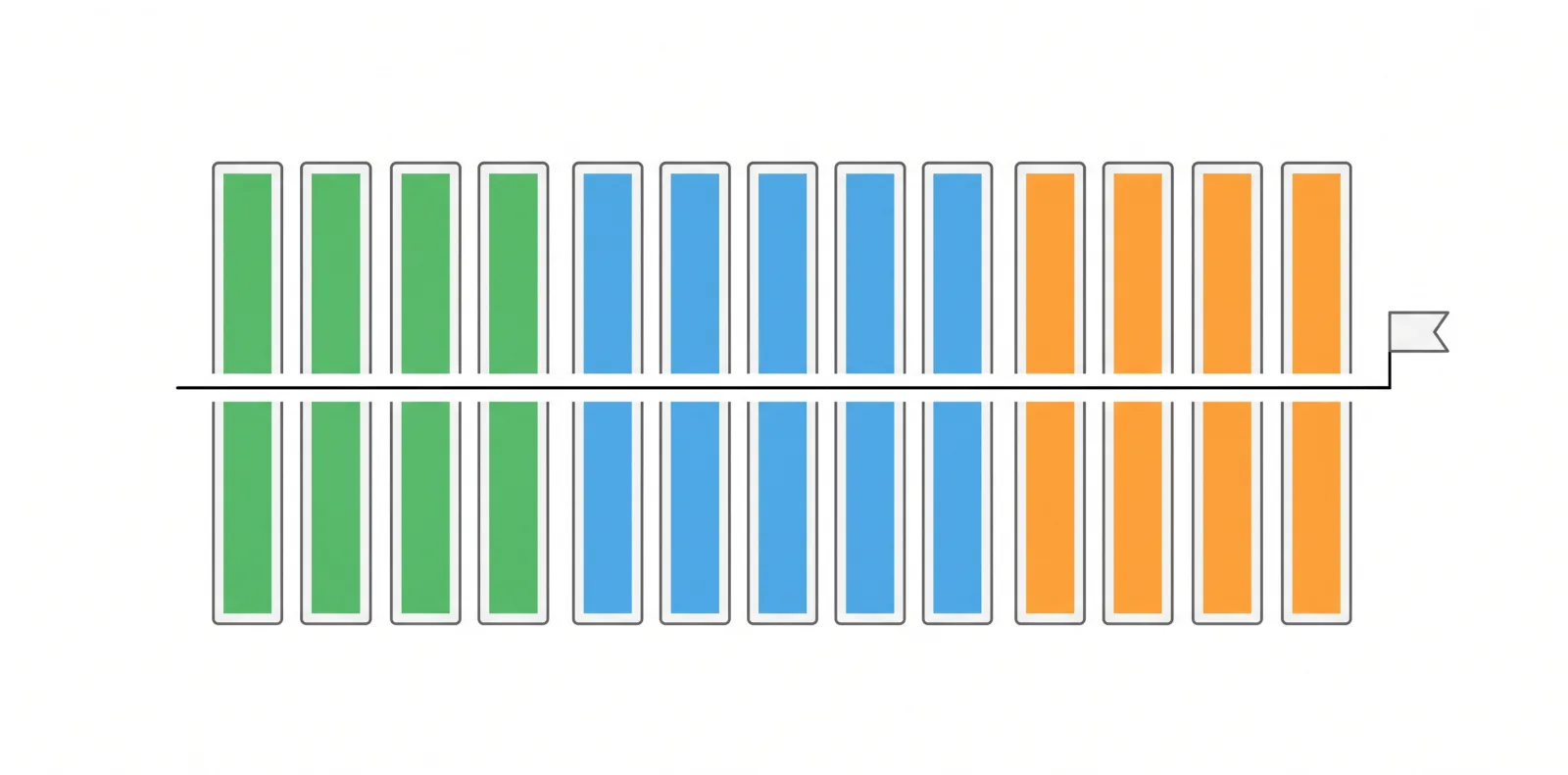
Notice that preparation hours are highest in phase one and applications are lowest. This is deliberate. Applying with a weak CV and an unprepared assessment technique wastes the applications, and you cannot re-apply to most of them.
Notice also that applications do not stop in the final phase. Students who receive their first interviews frequently stop applying, then have nothing in the pipeline when those interviews do not convert.
Weeks One To Four: Build The Machine#
Week one. Rewrite your CV to one page, outcome-oriented, with your strongest project first. Have two people read it. Set up your professional profile properly, including a headline that contains your discipline, a named skill and the word internship or graduate role.
Week two. Finish or tidy one portfolio project so that someone else can run it, with a two-hundred-word written explanation. This is the single most valuable week in the plan and the one most likely to be skipped.
Week three. Build a target list of sixty organisations across three groups: companies visiting your campus, global capability centres, and off-campus employers in your area of interest. Find one contact at each of twenty of them.
Week four. Set up your tracker, complete registrations for the national assessments you intend to sit, and confirm your eligibility against each one's criteria, including backlogs and gap rules.
Throughout, ten hours a week of preparation. Weighted towards whatever gates the roles you want, which for most technical roles means programming and quantitative aptitude rather than interview answers.
And start applying at a low rate, five a week. Partly to keep the pipeline warm and partly because the first few applications are always the worst and you want them behind you.
Weeks Five To Ten: Maximum Volume#
This is the engine of the plan and it is mostly a matter of not stopping.
Fifteen applications a week. Roughly three a day on weekdays, or a single concentrated session. Both work; inconsistency does not.
Eight referral approaches a week. Alumni from your college first, at companies on your target list, for specific open roles. This is the highest-value hour of your week and the one students most often skip because it is uncomfortable.
Six hours of preparation a week, now shifting from foundational practice to timed mock assessments under real conditions.
Sit every campus drive you are eligible for, including ones you are unenthusiastic about. Early drives are practice for later ones, and an offer in hand transforms your position in every subsequent conversation.
Follow up once on anything older than ten days, briefly, on the original thread.
Review at the end of week seven. Where is your funnel breaking? No responses suggests a CV or filtering problem. Responses without interviews suggests screening. Interviews without offers suggests interview performance. Fix the specific stage rather than working harder at all of them.
And protect two hours a week for skill work, so that a long search leaves you better qualified rather than merely tired.
Weeks Eleven To Thirteen: Convert And Hold The Line#
Interviews start arriving from applications sent six to eight weeks earlier. This is the pipeline paying out, and it is why starting in October rather than December matters.
Preparation hours rise again, to eight, now focused on interview practice: describing your project in two minutes and ten minutes, common technical questions in your area, and the behavioural questions every process asks.
Keep applying at ten a week. The temptation to stop once interviews begin is strong and it is the commonest way a promising quarter ends with nothing.
Expect December to slow down. Organisations close out their year, decisions are deferred, and responses take longer. This is predictable and it is not about you. Use the quieter days for preparation and for the portfolio work you postponed.
Prepare your negotiation position before any offer arrives, so that you are not deciding under time pressure. Know what the full breakdown should contain and what you would accept.
And close the quarter deliberately. In the final week, write down what worked, what your conversion rates actually were, and what you would change. January is a strong hiring month and you want to enter it with a plan rather than with a resolution.
Running The Search Alongside Your Actual Degree#
The plan above assumes you still have a final year to complete, and the commonest way it fails is a collision with coursework.
Map your assessment dates onto the thirteen weeks first. Internal examinations, project reviews and submission deadlines. You now know which weeks will be difficult, and you can front-load application volume into the weeks that are not.
Reduce, do not pause. A week at five applications instead of fifteen keeps the pipeline alive. A week at zero, repeated twice, ends the search. The plan is designed to survive reduced weeks; it does not survive abandoned ones.
Batch the search into one or two blocks a week rather than spreading it across every day. Context switching between a laboratory report and a cover letter costs more than either task deserves.
Use your project work as portfolio material. A final-year project done properly is a legitimate portfolio entry, and treating it as one means the hours count twice.
Do not sacrifice the degree. A backlog can disqualify you from drives outright, and several employers check the criteria strictly. The search is worth nothing if it costs you eligibility.
Tell someone what you are doing. A friend, a sibling, a classmate running the same plan. External accountability is what keeps weekly targets alive in weeks when nothing is working, and nothing works for long stretches of any job search.
Twelve Things To Have Ready Before Week One#
A short checklist, because the first fortnight is much easier when these already exist.
A one-page CV in a plain, conventionally structured format that parses cleanly, with your strongest project first.
One finished portfolio project with a written explanation and instructions someone else could follow.
A professional profile with a real photograph, a keyword-bearing headline, your expected graduation year and your location set correctly.
A tracker, company by company, with columns for role, date, channel, contact, status and follow-up date.
Your academic documents, scanned and legible: marksheets, degree certificates where applicable, and identity proof.
A clear statement of your eligibility, including any backlogs, gaps or criteria that affect which drives you can sit.
Registrations completed for the national assessments you intend to take, well before their windows close.
A target list of sixty organisations across campus visitors, global capability centres and off-campus employers.
Twenty named contacts on that list, found through your institution's alumni network.
A two-minute and a ten-minute version of your project description, rehearsed aloud rather than written.
A professional email address that is your name rather than something you chose at fifteen.
And a fixed weekly time block in your calendar, protected, for the search itself.
Frequently Asked Questions#
When should a final-year student start applying?#
Early October, or as soon as the final year begins. Off-campus pipelines take six to eight weeks from application to interview, so a late start delays your outcome by the delay plus the pipeline length.
How many applications a week is realistic?#
Around fifteen during the main phase, with five during the initial build phase and ten while converting. That produces roughly two hundred applications across the quarter, which is the volume the conversion rates actually require.
Is it worth sitting campus drives I am not enthusiastic about?#
Yes. Early drives are practice for later ones, and an offer in hand changes your position in every subsequent conversation and negotiation.
What should I do first?#
Rewrite your CV and finish one portfolio project. Applying with a weak CV wastes applications you cannot resend, which is why the first phase is preparation-heavy and application-light.
Should I stop applying once interviews begin?#
No. This is the commonest way a promising quarter ends with nothing. Interviews convert at a fraction, and a pipeline you stopped filling six weeks ago is empty when you need it.
How do I know what to fix in my search?#
Look at where your funnel breaks. No responses at all points to your CV or the software filter. Responses without interviews points to screening. Interviews without offers points to interview performance. Review at the end of week seven rather than daily.
What about December being slow?#
Expect it and plan for it. Organisations close out their year and decisions are deferred. Use the quieter days for interview preparation and portfolio work, and remember that January is a strong hiring month.
What if I reach the end with no offer?#
Treat it as a pipeline that has not yet matured rather than a verdict. Review your conversion rates to identify the failing stage, continue into January at the same weekly targets, and use the time to add a named capability so that your candidacy is improving rather than static.