
The Market Did Not Shrink. It Moved.#
Every few months a headline announces that entry-level technology hiring in India has collapsed. Every few months a different headline announces that demand for technology professionals is growing. Both are drawing on real data, and students reading them conclude that nobody knows anything.
They are both right, and the apparent contradiction is the single most important thing to understand about the 2026 market.
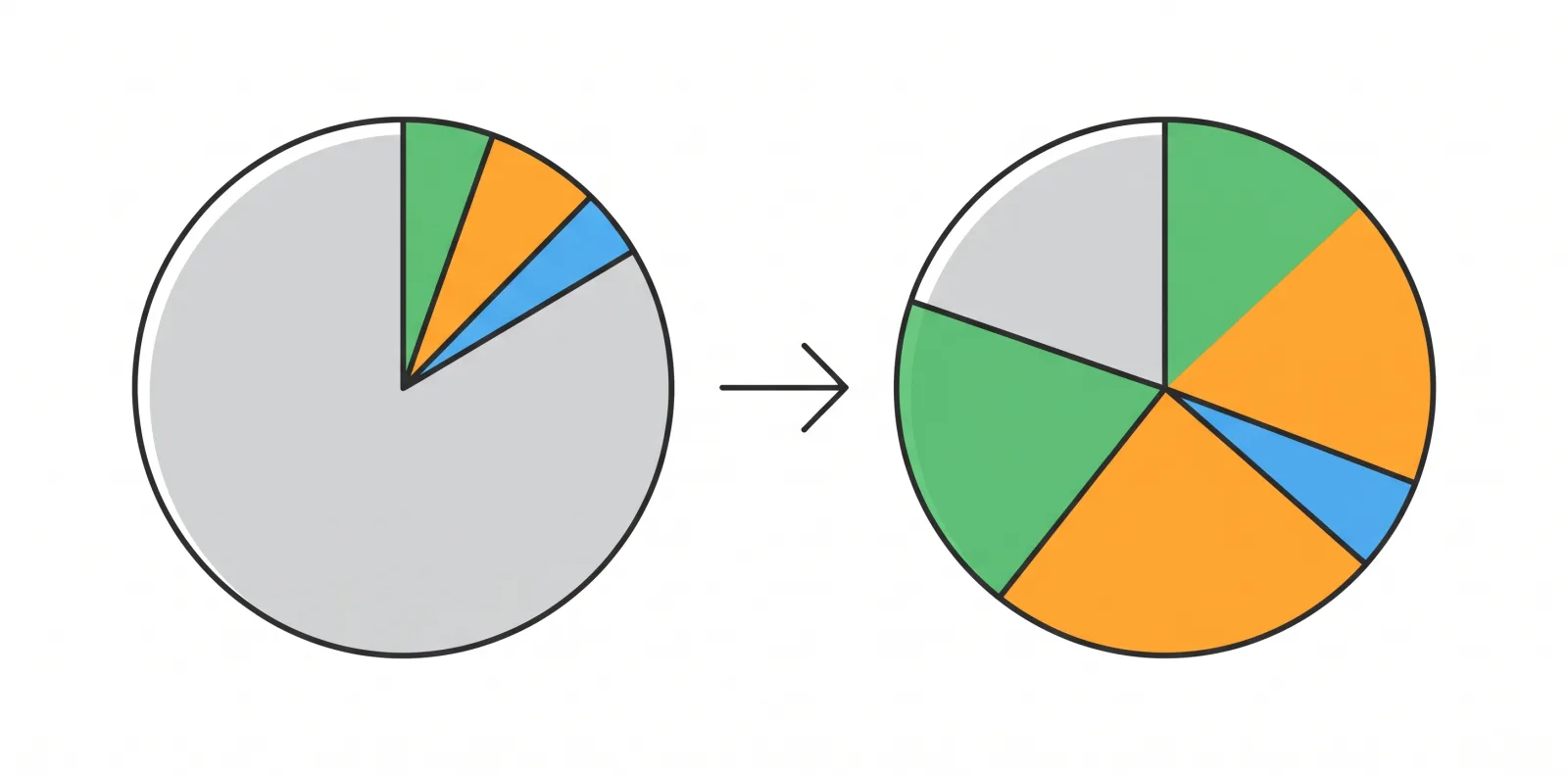
Entry-level openings at IT services firms fell by 44% year on year. The sector's share of all fresher hiring dropped from 32% in 2025 to 24% in 2026. Those numbers are real and the pain behind them is real.
Meanwhile, demand for technology professionals rose by around 10% over the same period. Global capability centres lifted their share of entry-level hiring from 8% to 11%, the largest gain of any employer category. Roles in artificial intelligence and machine learning grew by roughly a third.
The resolution is straightforward once stated. Technology hiring in India is increasingly happening outside technology companies. The IT occupation index grew while the IT industry hiring index fell, which is a precise description of work moving from one kind of employer to another.
For a student, the practical question is not whether there are jobs. It is which door you are standing in front of.
Background: Three Terms You Need For This#
A global capability centre. An offshore unit that a multinational company owns and staffs directly, rather than outsourcing the work to a services firm. A bank or a retailer running its own engineering and analytics operation in Bengaluru or Hyderabad is running a GCC. The crucial distinction from IT services is that the GCC's customer is its own parent company, so the work is product and platform work rather than client project work.
IT services. The traditional Indian model, in which a firm sells engineering and support capacity to external clients. This is the sector that built mass campus recruitment, hired enormous junior cohorts, and trained them on the bench.
The bench. The practice of hiring more graduates than there is immediate work for, holding and training them until a project needs staffing. It is the mechanism that made mass fresher hiring economically possible, and it is the thing that has largely gone.
Understanding the bench is understanding the whole story. When a firm can hire two thousand graduates, train them for four months and deploy them as billable capacity, it hires in volume. When clients want specific capability immediately, and when automation absorbs the routine work that juniors used to do, the economics of that model stop working.
The Numbers, In One Picture#
The two halves of that chart tell one story. A sharp fall in one channel, a steady rise in another, and an overall demand figure that is positive. Nothing here says the market is closing. It says the market is redistributing, and that a graduate positioned for the old channel is in difficulty while one positioned for the new channel is not.
The GCC gain is the largest of any employer category, which is worth dwelling on because most students have never heard the term and cannot name five of these organisations.
Why Technology Hiring Left Technology Companies#
Four things happened at once, and they compound.
Multinationals decided to own their engineering rather than buy it. A company whose product is software, or whose business depends on it, increasingly wants that capability in house. The result is a GCC in India staffed directly, doing product work, rather than a contract with a services vendor.
Automation absorbed the junior layer. A substantial share of what an entry-level engineer at a services firm used to do, routine testing, maintenance, support and boilerplate development, is now partly automated. That layer was the entry point for hundreds of thousands of graduates.
Clients stopped paying for training time. The bench model depended on a client tolerating people who were learning on the project. That tolerance has narrowed, and employers now prefer candidates who can contribute quickly rather than large junior cohorts trained over months.
And the skills demanded shifted underneath. Around 64% of new GCC roles in 2026 require capability in artificial intelligence, data science or intelligent automation. Mass hiring of generic engineers fell by roughly half, while demand in AI and machine learning, cybersecurity, cloud and data engineering rose sharply.
The combined effect is a narrower, more specific market. Fewer roles that anyone with a degree can fill, more roles that require a named capability, and far less tolerance for candidates who expect to be trained from zero.
What This Means If You Are A Student Right Now#
The generalist engineering profile is the weak position. A degree, a reasonable grade average and no specific demonstrable capability was a sufficient profile for mass hiring. It is not sufficient for a market where the employer wants immediate contribution.
One named, verifiable capability changes your position more than anything else. Cloud, data engineering, cybersecurity, machine learning. Not familiarity, but something certified and, more importantly, something you have used to build a thing you can describe.
Learn what a GCC is and where they are. They are the fastest growing entry-level employer category and most students cannot name them because they do not advertise like IT services firms do. They recruit through their own channels, they do not run mass campus drives at every college, and they are therefore less competed for by students who have never heard of them.
Do not write off IT services. A 44% fall in entry-level openings is severe, and it still leaves a very large number of jobs. The sector remains a major employer and remains an entirely reasonable place to start a career. It is simply no longer the automatic default it was.
And treat the training gap as your problem to close. The old arrangement, in which the employer took you as a raw graduate and made you employable, has substantially ended. What replaces it is work you do before you are hired, which is inconvenient and unfair to hear and is nonetheless the situation.
What Not To Conclude From These Numbers#
A few careless readings are worth heading off, because they lead students to bad decisions.
Do not conclude that engineering is finished. Demand for technology professionals rose. The composition changed. A graduate who reads a 44% fall and abandons the field has misread a redistribution as a collapse.
Do not conclude that everyone must become a machine learning engineer. AI-related roles grew fastest from a small base, and the competition for them has grown correspondingly. The broader and more reliable gain is in adjacent capability: data engineering, cloud infrastructure, cybersecurity, and the ability to work alongside AI tools competently in any discipline.
Do not treat a single quarter as a trend. Hiring indices move sharply quarter to quarter and headlines follow the movement. The structural shift described here is visible across the year, which is what makes it worth acting on. A single month's figure is not.
Do not read national figures as your own. These numbers aggregate across institutions of enormously different standing. A national fall in entry-level hiring says little about your specific college's placement outcomes, which your training and placement cell can tell you directly.
And do not assume this is permanent. Hiring cycles turn. The structural change in where technology work happens looks durable; the depth of the current entry-level contraction may not be.
Finding The Employers Nobody Told You About#
If the fastest-growing entry-level employer category is one most students cannot name, that is an opportunity rather than a problem. Here is how to find them.
Start from the companies, not the job boards. Global capability centres belong to multinational parents in banking, insurance, retail, healthcare, manufacturing, logistics, media and energy. Think of large international companies in any of those sectors, then look for their engineering or technology operations in India.
Search by location and function rather than by industry. The concentrations are in Bengaluru, Hyderabad, Pune, Chennai, Gurugram and Noida, and the roles are titled as engineering, analytics, platform, operations technology or data rather than as consulting or delivery.
Use professional networks to find people, not postings. These organisations recruit heavily through referrals and through their own careers pages rather than through mass campus drives. An alumnus working inside one is worth more than a hundred job board searches.
Watch for the captive parent's own careers site. Many GCC roles are posted there rather than on Indian job aggregators, which is precisely why students miss them.
Understand what they are assessing. Because the work is product work for the parent rather than client projects, they screen for depth in a specific area and for the ability to work without a training runway. A candidate with one strong demonstrable capability interviews better here than one with broad shallow exposure.
And expect a longer process. These organisations often run multi-stage interviews over weeks rather than a single campus test. Plan for it rather than being surprised by it.
Frequently Asked Questions#
Did fresher hiring in India collapse in 2026?#
It redistributed rather than collapsed. Entry-level openings at IT services firms fell 44% year on year and the sector's share of fresher hiring dropped from 32% to 24%, while overall demand for technology professionals rose around 10% and global capability centres increased their share from 8% to 11%.
What is a global capability centre?#
An offshore unit owned and staffed directly by a multinational company rather than outsourced to a services vendor. The work is product and platform engineering for the parent company, and GCCs were the fastest growing category of entry-level employer in 2026.
Why are IT services firms hiring fewer freshers?#
The bench model, hiring large junior cohorts and training them until projects needed staffing, has largely broken down. Automation absorbed much of the routine junior work, clients became less willing to pay for training time, and employers now prefer candidates who can contribute immediately.
Which skills are actually in demand?#
Around 64% of new GCC roles in 2026 require artificial intelligence, data science or intelligent automation capability. Demand also rose sharply in cybersecurity, cloud and data engineering, while mass hiring of generic engineers fell by roughly half.
Should I still apply to IT services companies?#
Yes. A severe fall in openings still leaves a very large employer, and the sector remains a reasonable place to start. It is simply no longer the automatic destination it once was, so it should be one channel rather than your only one.
Do I need to become an AI engineer?#
No. AI and machine learning roles grew fastest but from a small base and with correspondingly intense competition. The broader gain is in adjacent capability and in the ability to work competently with AI tools within your own discipline.
What is the single most useful thing I can do?#
Acquire one named, verifiable capability and use it to build something you can describe. In a market that rewards immediate contribution, demonstrated capability is worth more than a grade average.
Does this mean engineering degrees are not worth it?#
No. Demand for technology professionals grew. What changed is that the degree alone no longer carries you into a role, because the employer-funded training layer that used to follow it has largely gone.