
Two Questions, Two Different Authorities#
An applicant sits a test twice. The first attempt has a strong reading score and a weak speaking score. The second reverses it. Neither attempt on its own meets the requirement, but the best sections across the two comfortably would.
Can they be combined?
The answer is that it depends on the university, not on the test. This is the single most misunderstood point in this area, and it explains why forum answers to the question contradict each other so persistently. Different people are describing different universities and all of them are correct.
Validity works differently. How long a score remains usable is set by the organisation that makes the test, uniformly, and it is not negotiable by anyone.
So you are dealing with two separate mechanisms controlled by two separate bodies. Confusing them produces both wasted retakes and missed opportunities, and the rest of this article separates them properly.
Background: What Each Term Actually Means#
Validity. The period during which a score remains reportable and usable. For the major English proficiency tests this is generally two years from the test date. For the GRE it is generally five years. After that the score is no longer available to send and universities will not consider it.
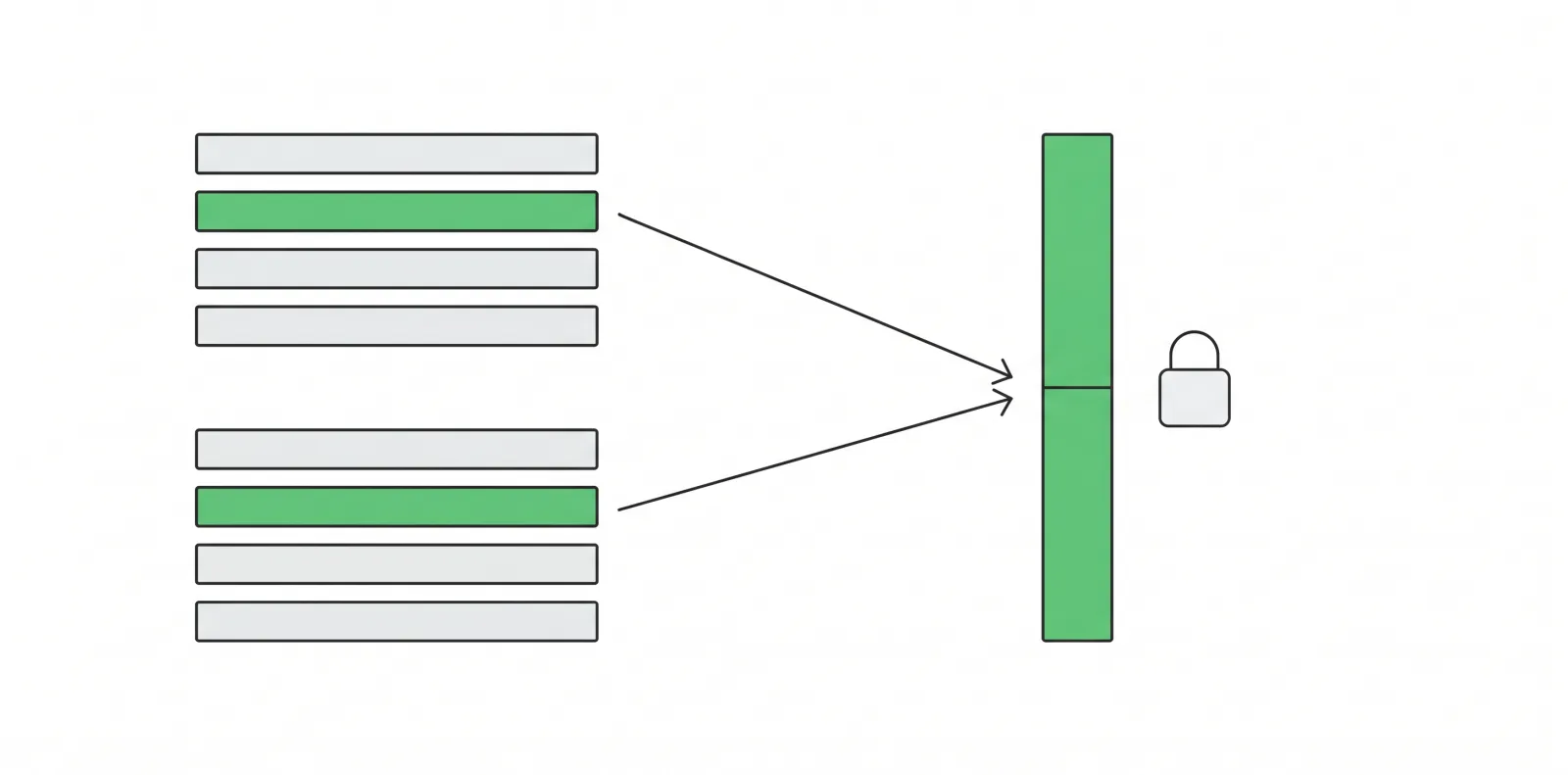
Superscoring. Combining your highest section scores across multiple attempts into a single composite. A university that superscores would take your best reading from one sitting and your best speaking from another.
Score choice. The ability to decide which attempts to send at all, which is distinct from superscoring. Some tests allow you to select which scores are reported; others report your full recent history.
Best score. Simply taking your highest single sitting and ignoring the others. This is what most institutions do, and it is not the same as superscoring.
The crucial asymmetry. The testing organisation controls validity and what it will report. The university controls what it does with what it receives. A test maker cannot stop a university from superscoring, and a university cannot extend a validity period.
Two further terms worth defining:
Composite score. A total assembled from parts, as in a superscore. Not something that appears on any official report from the testing organisation.
Official score report. A result sent directly from the testing organisation to the institution, which is what most universities require rather than a copy you supply.
Validity, Which Is Simple#
English proficiency tests are generally valid for two years. This applies across the major options and is set by the testing organisation.
GRE scores are generally valid for five years, which is considerably longer and has a practical consequence worth noting: a score taken in your final undergraduate year remains usable if you work for two or three years before applying to graduate school.
Validity is measured from the test date, not from when you receive the result or when you send it.
The date that matters is your intake, not your application. A score valid when you apply but expired by the start of your programme can cause problems, and institutions sometimes specify that it must be valid at a particular point.
Universities may impose shorter periods than the test maker. An institution requiring a score from within the last twelve months is entitled to do so even where the test remains valid for two years. Check rather than assume.
And expired means expired. You cannot send a score after its validity period, and there is no appeal. A candidate planning a multi-year application timeline should work backwards from their intended intake.
Superscoring, Which Is Not#
It is entirely the university's policy. There is no general rule, no industry standard and no way to determine it except by checking.
Three positions are common. Some institutions superscore explicitly and say so. Some take your single best sitting. Some require your most recent attempt regardless of whether an earlier one was stronger.
Superscoring is more common for some tests than others, and more common at some levels of study than others, but any generalisation you rely on will be wrong for some institution on your list.
Where a university superscores, it usually still requires official reports for every attempt being combined, which means the score-sending cost multiplies.
And it usually requires the attempts to be within the validity period, so an older strong section from an expired attempt cannot be resurrected.
The practical instruction is therefore narrow. Do not plan a retake strategy around superscoring until you have confirmed, in writing, that the institutions you care about actually do it.
Finding The Actual Policy#
This takes twenty minutes and it prevents both a wasted retake and a missed opportunity.
Search the university's admissions pages for the terms directly. Institutions that superscore generally say so, because it is a point in their favour for applicants.
Check the programme page as well as the university page. Departments sometimes apply a different practice from the institutional default, particularly for graduate admissions.
Email the admissions office if it is not stated. A short, specific question, naming the test and the programme: whether they consider the highest section scores across multiple attempts or the highest single sitting. This is an entirely ordinary question and it will be answered.
Ask about score choice at the same time. Whether they require all attempts within the validity period or will consider only the ones you send affects whether a weak attempt harms you.
Record the answer with the date, because policies change between cycles and a forum post from two years ago is not evidence.
And ask before you book a retake, not after. The order matters, because the answer determines whether the retake is worth taking at all.
What Follows For Your Retake Strategy#
If your universities take the best single sitting, which is the most common position, you must produce one attempt that clears every requirement simultaneously. A retake should therefore target overall improvement, and you should be confident of holding your strong sections while lifting the weak one.
If your universities superscore, the strategy changes completely. You can target a single weak section in the retake, accept that your other sections may dip, and combine. This is a much easier task and it is why confirming the policy matters.
If your universities require the most recent attempt, a retake carries genuine risk. A worse result replaces a better one, and you should only retake if you are confident of improving.
Consider the section-minimum question separately. A programme with a speaking minimum in addition to an overall requirement effectively forces a single strong sitting even where superscoring is available for the overall figure.
Price the retake honestly. With test fees between roughly ₹6,600 and ₹19,000, plus score-sending charges on some tests, a retake across several institutions is a real expense. The cheapest option explicitly prices two attempts for roughly half a single traditional sitting, which is worth knowing if a retake is likely.
And remember what actually improves a retake result. Not another month of general study, but targeted work on the specific section that fell short, identified by looking at your actual section scores rather than your overall impression of how it went.
The Three Policies, Side By Side#
The same two attempts produce three different outcomes depending on which policy your university applies.
The left panel is the outcome students assume is available. It frequently is not.
The middle panel is the most common reality, and it is why a retake under this policy is harder than it looks: you have to hold your strong section while lifting the weak one, in a single sitting.
The right panel is the one that costs people offers. A candidate with an acceptable earlier score who retakes casually and scores lower has made their position worse, and they usually did not know the policy before booking.
Planning A Multi-Year Timeline#
Validity periods matter most to candidates whose application is not this year, and this group plans badly because the constraint is invisible until it binds.
Work backwards from your intended intake, not from your application deadline. A score must generally be valid at the point the institution specifies, which is sometimes the start of the programme rather than the date you applied.
For an English test, two years is shorter than it sounds. A candidate testing in their pre-final year, applying a year later for an intake a year after that, can find the score expiring in the middle of the process.
For the GRE, five years is genuinely generous, and taking it in the final undergraduate year while you are still in academic practice is a defensible strategy even if you intend to work first. Quantitative fluency decays quickly once you stop using it.
Do not test too early to save effort. A score you cannot use is a wasted fee, and the preparation has to be repeated anyway.
Watch for institutions with shorter requirements. Some ask for a score from within the last twelve or eighteen months regardless of the testing organisation's validity period, and that constraint is easy to miss.
And if you are between plans, delay rather than guess. Testing without knowing your intake or your destination risks a score that is valid for the wrong period, taken in the wrong format, and accepted by the wrong set of institutions.
Frequently Asked Questions#
How long is an IELTS or TOEFL score valid?#
Generally two years from the test date, as set by the testing organisation. Individual universities may impose a shorter period, so check the institution's requirement as well.
How long is a GRE score valid?#
Generally five years, which means a score taken in your final undergraduate year remains usable if you work for two or three years before applying to graduate school.
Can I combine my best section scores from two attempts?#
Only if the university superscores, which is entirely its own policy rather than something the testing organisation controls. Some institutions do, many take the best single sitting, and some require the most recent attempt.
How do I find out whether a university superscores?#
Search its admissions pages for the term, check the programme page as well as the institutional page, and email the admissions office with a specific question naming the test and the programme if it is not stated. Record the answer with the date.
Does a bad retake replace a good score?#
At institutions that require the most recent attempt, yes, which makes retaking genuinely risky. At institutions taking the best single sitting, no. This is why you confirm the policy before booking a retake rather than afterwards.
Does the validity date refer to my application or my intake?#
Work to your intake. A score valid when you apply but expired by the start of your programme can cause problems, and some institutions specify the point at which it must be valid.
Will superscoring cost more?#
Usually. Institutions that superscore generally require official reports for every attempt being combined, which multiplies score-sending charges on tests that levy them.
What should a retake actually target?#
The specific section that fell short, identified from your section scores rather than from your impression of the test. Where superscoring is available you can target one section narrowly; where it is not, you need one sitting that clears everything at once.