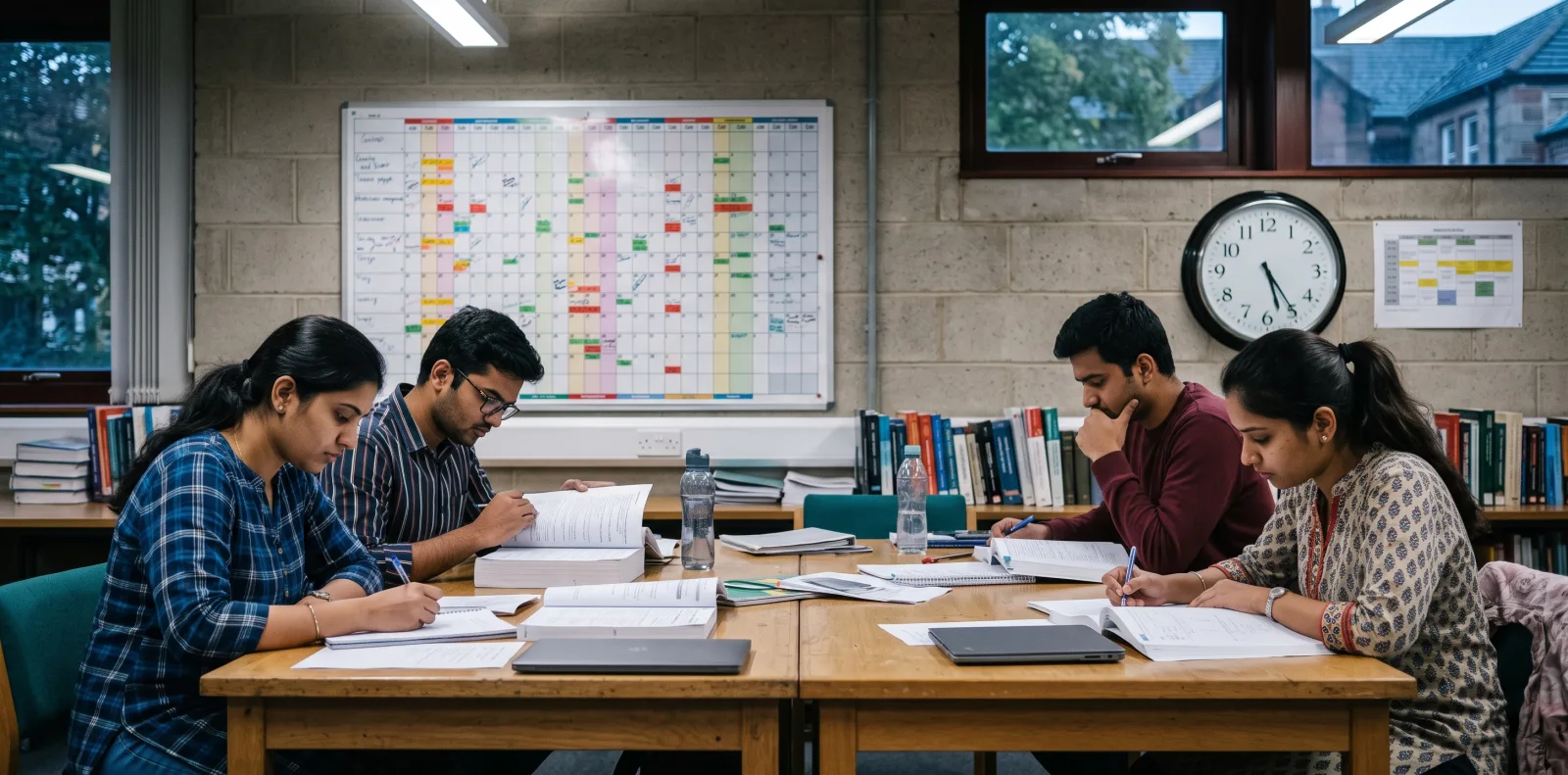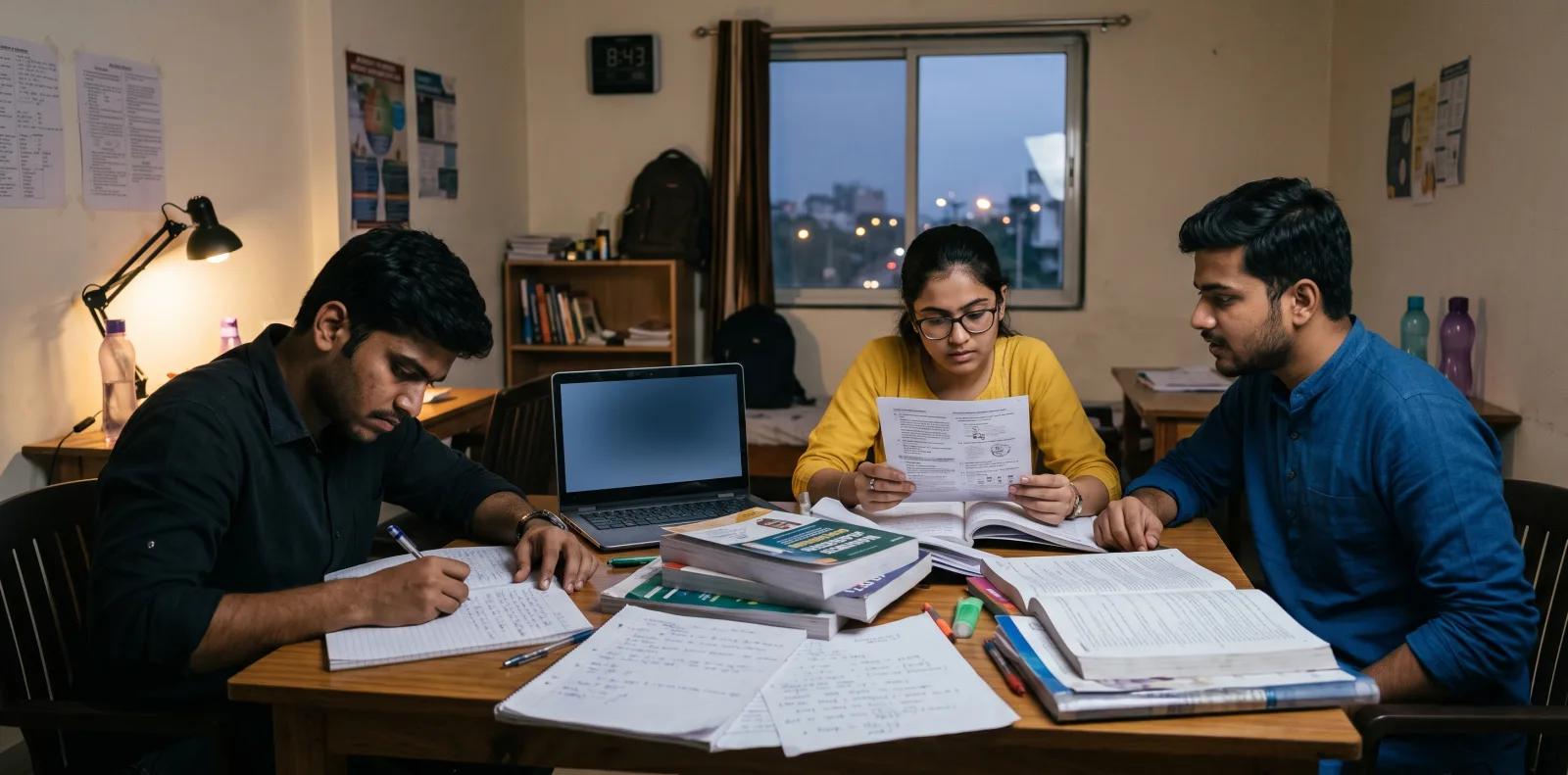
The Number In Your WhatsApp Group Belongs To A Different Examination#
A figure of 13,706 posts circulates attached to IBPS PO 2026. It is real, it is current, and it is not IBPS PO.
That figure belongs to the IBPS RRB cycle, the separate recruitment covering Officer Scale I, II and III and Office Assistant posts in regional rural banks. It has since been revised upwards to 13,745.
IBPS PO 2026 has 7,565 vacancies, itself revised upwards from an earlier 7,365.
The distinction is not trivial. These are different recruitments, with different application windows, different examinations, different eligibility considerations and very different jobs at the end. An aspirant who plans around the wrong figure is planning around the wrong competition ratio, and in some cases applying to the wrong recruitment entirely.
With that cleared up, there is a genuine and substantial change to discuss this cycle. The Mains paper has been rebuilt, and a new stage has appeared in the selection process.
Background: What IBPS PO Is And Where It Sits#
The recruitment. The Institute of Banking Personnel Selection conducts the Common Recruitment Process for Probationary Officers, feeding officer-cadre entry positions across participating public sector banks. A Probationary Officer enters on a management track rather than a clerical one, which is the fundamental distinction from the Clerk and Office Assistant recruitments.
The 2026 calendar. Preliminary examination on 22 and 23 August 2026. Mains examination on 4 October 2026.
The distinction from IBPS RRB. The RRB cycle recruits for regional rural banks, which operate in defined rural and semi-urban catchments. Application for that cycle ran from 1 to 21 September 2026, with Clerk Prelims on 6, 12 and 13 December 2026 and Mains on 30 January 2027. Some candidates sit both cycles; they are separate applications with separate fees.
Vocabulary worth fixing:
Probationary Officer. An officer-cadre entrant who serves a probation period before confirmation, on a promotion ladder that runs considerably higher than the clerical cadre's.
Descriptive paper. A written component in the Mains examination, typically letter and essay writing, assessed separately from the objective sections.
Sectional timing. Each section has its own time allocation, so you cannot borrow minutes from an easy section to rescue a difficult one.
What Actually Changed This Cycle#
| Element | Earlier position | Position for the 2026 cycle |
|---|---|---|
| Vacancies | 7,365 as first notified | Revised to 7,565 |
| Mains objective questions | 145 | 170 |
| Stages | Prelims, Mains, Interview | Prelims, Mains, Personality Test, Interview |
| Prelims date | , | 22 and 23 August 2026 |
| Mains date | , | 4 October 2026 |
| Descriptive component | Part of Mains | Retained as part of Mains |
Confirm every detail against the official notification and any corrigenda at ibps.in, since IBPS revises specifics between cycles and reported figures vary across secondary sources.
The Mains expansion is the change with real consequences. Moving from 145 to 170 objective questions is an increase of roughly seventeen per cent in question volume. Unless the duration expanded proportionately, and you should check the current notification on exactly this point, the effective pace demanded has risen.
What a longer paper does to strategy. Three things.
Selection becomes more decisive than solving. When there is less time per question, the candidate who identifies and abandons a hard question within seconds outperforms the candidate who solves it correctly in four minutes. Triage is now worth more marks than additional depth.
Accuracy pressure rises. With negative marking and more questions in play, the arithmetic of guessing shifts. Know your personal rule before you sit down: attempt when you can eliminate at least two options, leave it when you cannot.
Section-level planning matters more. With sectional timing, you cannot rescue one section with another. Decide in advance how many questions you intend to attempt in each section and at what accuracy, and practise to that target rather than improvising.
The Personality Test insertion. A stage between Mains and Interview is a meaningful structural addition. Candidates should assume it assesses suitability factors alongside the conventional interview and prepare accordingly: know your own application, your academic and work history, why banking, and why an officer role rather than a clerical one. Check the notification for the exact nature and weighting, since this is new and details matter.
Preparing For The Objective Sections#
The content has not changed, but the emphasis has.
Quantitative aptitude. Data interpretation carries substantial weight and rewards practice volume rather than theory. Arithmetic, simplification, number series, quadratic comparisons. The specific skill worth building is rapid approximation: recognising when an exact calculation is unnecessary because the options are far enough apart.
Reasoning ability. Puzzles and seating arrangements dominate and they consume the most time. This is where triage pays hardest. Practise recognising, within thirty seconds, whether a puzzle set will yield quickly or resist. Abandoning a resistant set early is a scoring decision, not a failure.
English language. Reading comprehension, error spotting, cloze tests, parajumbles. Daily long-form reading builds this better than exercises alone, because comprehension speed is the underlying constraint.
General awareness with special reference to banking. This section is underprepared with remarkable consistency, and it is the cheapest in the paper because it requires no calculation at all. Banking and financial awareness, regulatory developments, monetary policy, schemes and appointments. Fifteen minutes daily across months beats forty hours in September, because this material is absorbed rather than crammed.
Computer aptitude, where included, is straightforward and should not consume much preparation time.
The Descriptive Paper, Which Candidates Leave Too Late#
The descriptive component is a small share of the total and a disproportionate source of avoidable loss.
What it typically involves. Letter writing and essay writing on current or banking-related themes, within tight word limits, typed rather than handwritten in a computer-based examination.
Why candidates underperform. Not because they cannot write, but because they have never written to a word limit under time, on a screen, with a clock running. Composing 150 words of coherent argument in fifteen minutes is a trainable skill and an untrained one collapses.
How to fix it cheaply. One letter and one essay a week, typed, timed, for six weeks. That is roughly twelve pieces of writing and it is sufficient. Keep a mental template for formal letter structure and a simple essay skeleton of introduction, two or three substantive points with examples, and conclusion.
Read a few model answers for structure rather than content, then stop reading and start writing. The gap between the two activities is where the marks are.
Planning Around Both IBPS Cycles#
Since the PO and RRB cycles run separately, candidates frequently sit both. A few practical points.
They are separate applications with separate fees and separate deadlines. Missing one does not affect the other, and eligibility conditions differ.
The syllabus overlap is very high, so preparing seriously for one substantially prepares you for the other. The genuinely distinct element is that RRB recruitment carries rural and semi-urban posting expectations and, in several states, a local language requirement at a later stage. Check the notification for your state.
The calendars interlock awkwardly. With PO Mains on 4 October 2026 and RRB Clerk Prelims on 6, 12 and 13 December 2026, followed by RRB Clerk Mains on 30 January 2027, a candidate pursuing both is in an examination cycle for roughly six months. Plan rest into that rather than assuming you will simply keep going.
And decide which you actually want. Officer cadre entry through PO has a higher ceiling and a different working life from Office Assistant or clerical entry. If PO is the goal, treat RRB as insurance rather than splitting your preparation evenly between them.
Preparing For The Interview And Personality Test#
With a Personality Test now sitting between Mains and Interview, the post-written stages carry more weight in this cycle than candidates are used to.
Know your own application in detail. Your academic record, any employment history, your stated reasons for choosing banking. Boards begin with what is in front of them, and hesitation about your own background reads poorly.
Be able to answer the three questions that always come. Why banking rather than another sector. Why an officer role rather than clerical. What you would do if you are not selected. Vague answers to any of these are the most common weakness.
Know the sector properly, not superficially. Current monetary policy position, the role of the central bank, recent regulatory developments, what a non-performing asset is and why it matters, financial inclusion schemes, and the broad shape of the Indian banking system. This is not deep expertise; it is the minimum a prospective officer should hold.
Practise speaking aloud. The gap between knowing something and explaining it clearly under scrutiny is wide and closes only with rehearsal. Arrange mock sessions with someone who will interrupt and challenge you.
Be honest about gaps. Saying you are not sure, calmly, is far stronger than constructing an answer. Panels detect invention reliably and it damages everything that follows.
And present yourself appropriately. Formal dress, documents organised in order, arrival with time in hand. These are trivial and they set the tone before you have said anything.
Frequently Asked Questions#
How many vacancies are in IBPS PO 2026?#
7,565, revised upwards from an initially notified 7,365. The figure of around 13,700 that circulates refers to the separate IBPS RRB cycle covering officer scales and Office Assistant posts in regional rural banks, now at 13,745.
What changed in the IBPS PO Mains pattern?#
The objective paper now carries 170 questions in place of the earlier 145, and a Personality Test has been added between the Mains examination and the Interview. Verify exact durations, sectional splits and weightings in the official notification.
When are the 2026 examinations?#
Preliminary examination on 22 and 23 August 2026, and Mains on 4 October 2026. The separate RRB cycle runs its Clerk Prelims on 6, 12 and 13 December 2026 with Mains on 30 January 2027.
How should a longer Mains paper change my preparation?#
Prioritise selection over solving. With more questions in the same broad window, the ability to identify and abandon a time-consuming question quickly is worth more marks than the ability to solve it. Set section-wise attempt targets and practise to them.
Which section is most underprepared?#
General awareness with banking reference, consistently. It requires no calculation, it is the cheapest section per minute invested, and most candidates leave it until the final weeks when it cannot be absorbed properly.
How do I prepare for the descriptive paper?#
By typing one letter and one essay a week, under time, to the word limit, for about six weeks. Reading model answers helps with structure but does not build the composition speed the paper actually tests.
Is IBPS PO better than IBPS RRB?#
They are different jobs. PO is officer-cadre entry at participating public sector banks with a higher ceiling. RRB covers regional rural banks with rural and semi-urban postings and, in several states, a local language requirement. Choose by the working life you want.
Where should I verify the pattern and vacancy count?#
At ibps.in, which publishes the notification, the detailed scheme and corrigenda. Vacancy figures are revised through the cycle and secondary sources frequently carry stale or conflated numbers, as the 13,706 confusion demonstrates.