The Paper Is Rarely What Beats You. The Calendar Is#
Ask anyone who has spent three years in the government examination cycle what cost them the most, and very few will say a difficult question paper.
They will say they missed a notification window because they were deep in preparation for something else. They will say two examinations fell on the same weekend and they had to pick. They will say they discovered a correction window had closed after they had already submitted a form with the wrong category. They will say a document they needed took five weeks to obtain and the verification lasted four days.
Government recruitment in India runs on a calendar, and the calendar is unforgiving in a specific way: nothing reopens. A missed application window is a missed year, because the next cycle is twelve months away.
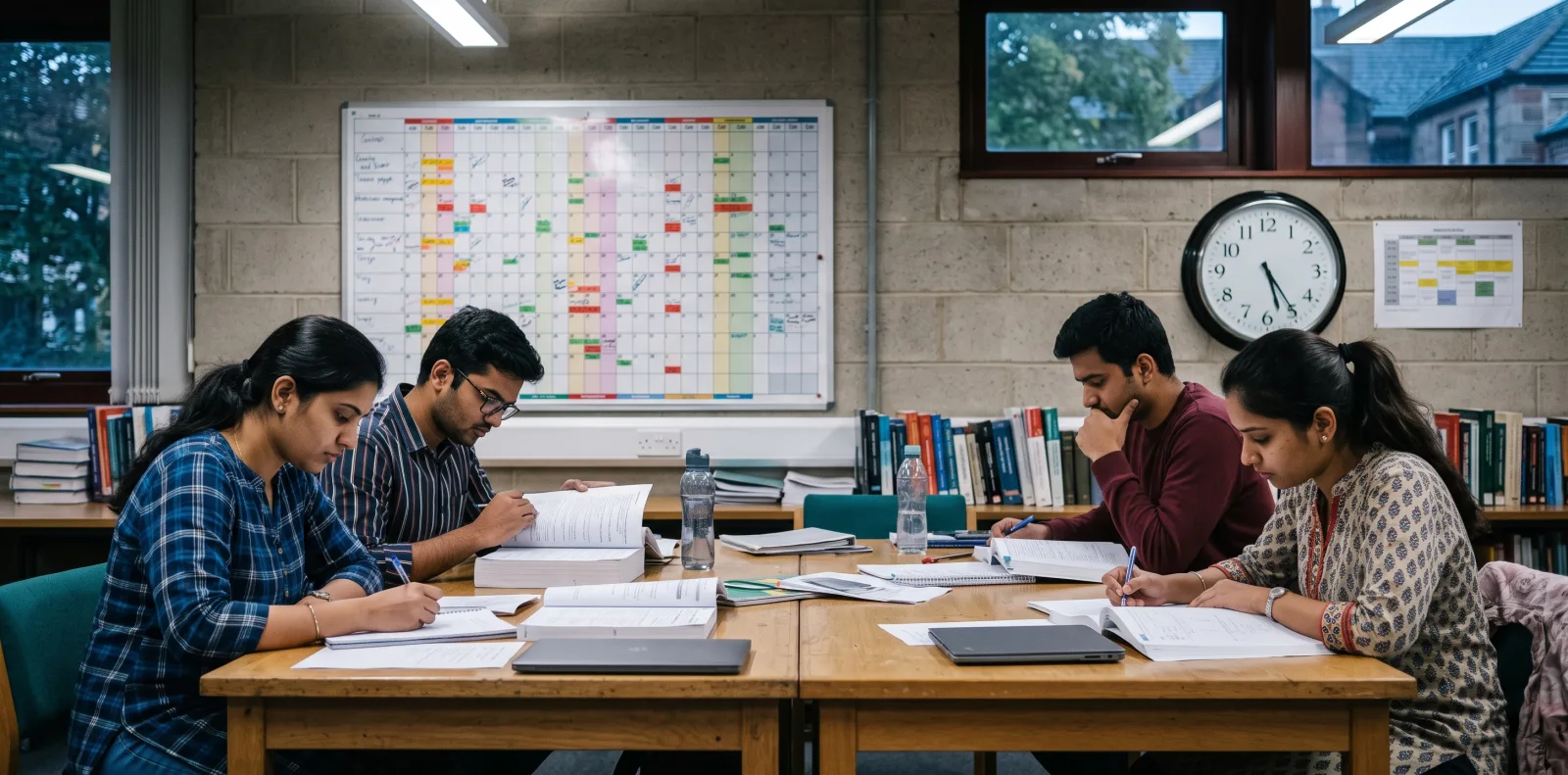
So the single most valuable thing an aspirant can build, before any study plan, is one document containing every date that matters. Here is the 2026 cycle assembled into that document.
Background: How A Government Recruitment Cycle Actually Works#
Each recruitment runs through the same sequence, and understanding it prevents most calendar failures.
Notification. The conducting body publishes the advertisement with vacancies, eligibility, syllabus and the fee. This is the document that governs everything, and reading it is not optional.
Application window. Usually three to five weeks. Registration, fee payment and document upload happen here.
Correction window. A brief period, often a few days, in which you may fix errors in your submitted form. Miss it and the error stands.
Admit card. Released days before the examination, with your centre, reporting time and prohibited items.
Examination stages. Most recruitments run in tiers: a screening stage, a main stage, sometimes a skill test, physical test or interview.
Result and document verification. Verification windows are short and no extensions are granted for certificates still in process.
Three terms worth defining:
Tier or CBT. Stages of a computer-based examination. Tier 1 is usually a qualifying screen and Tier 2 carries the marks that determine selection.
Normalisation. Where an examination runs across many shifts with different papers, raw scores are statistically adjusted for difficulty. SSC and RRB examinations use it extensively.
Indicative vacancies. The number published at notification. It frequently changes before final allotment, usually upwards, so do not treat the initial figure as fixed.
The 2026 Cycle, Assembled#
| Recruitment | Conducting body | Vacancies as notified | Key 2026 dates | Stage structure |
|---|---|---|---|---|
| UPSC Civil Services 2026 | Union Public Service Commission | 933, including 33 for candidates with benchmark disabilities | Notification 4 February 2026. Prelims 24 May 2026. Prelims result 15 June 2026. DAF-I window 19 to 28 June 2026. Mains 21, 22, 23, 29 and 30 August 2026 | Prelims, Mains, Personality Test |
| SSC CGL 2026 | Staff Selection Commission | 12,256 | Registration from 21 May 2026, closing 25 June 2026. Tier 1 from 30 September to 30 October 2026. Tier 2 in December 2026 | Tier 1, Tier 2, with skill and typing tests for relevant posts |
| IBPS PO 2026 | Institute of Banking Personnel Selection | 7,565, revised from an earlier 7,365 | Prelims 22 and 23 August 2026. Mains 4 October 2026 | Prelims, Mains under a revised pattern, Personality Test, Interview |
| IBPS RRB 2026, the CRP RRBs XV cycle | IBPS | 13,745 across Officer Scale I, II and III and Office Assistant, revised from 13,706 | Application 1 to 21 September 2026. Clerk Prelims 6, 12 and 13 December 2026. Clerk Mains 30 January 2027 | Prelims and Mains, with interview for officer scales |
| RRB NTPC 2026 to 2027 | Railway Recruitment Boards | 5,165 approved, comprising 3,477 graduate and 1,688 undergraduate posts | Previous cycle undergraduate CBT 2 on 17 September 2026. New cycle dates follow notification | CBT 1, CBT 2, skill test where applicable, document verification |
| State PSCs | Individual state commissions | Varies widely by state and year | Each state runs its own calendar, typically with prelims in the first half of the year and mains later | Prelims, Mains, Interview, following the UPSC model in most states |
Vacancy figures are as notified and frequently revised. Always confirm against the conducting body's own notification and its subsequent corrigenda.
Reading The Calendar For Clashes#
Look at the table again with September and October in mind, and the problem becomes visible.
SSC CGL Tier 1 runs from 30 September to 30 October 2026. IBPS PO Mains falls on 4 October 2026. An aspirant preparing for both is looking at a Tier 1 slot that could fall on either side of a Mains paper, with no control over which date the Commission allots.
IBPS RRB Clerk Prelims falls on 6, 12 and 13 December 2026, which sits directly across the window in which SSC CGL Tier 2 is expected.
These overlaps are normal rather than exceptional. Conducting bodies do not coordinate their calendars with each other, and there is no authority that deconflicts them.
What to do about it, in order.
Build the document first. One spreadsheet, every recruitment you might apply to, with six columns: notification date, application opens, application closes, correction window, examination date, result date. Update it weekly.
Apply to everything you are eligible for. Application fees are small relative to the cost of a lost year, and you can always decline to sit. What you cannot do is apply retrospectively.
Decide your priority order in advance. Before a clash arrives, know which examination you would choose. Deciding this calmly in July is straightforward. Deciding it in October, with both admit cards downloaded, is not.
Watch for the shift allotment. For multi-day examinations such as SSC CGL Tier 1, your specific date and shift are assigned rather than chosen. You will not know your exact date until the admit card is released, which is usually days before. Plan around the whole window rather than a guessed date.
Month By Month: What The Year Actually Looks Like#
January to March. Notification season for the major national recruitments. UPSC published its 2026 notification on 4 February. This is the period to complete your syllabus coverage for the year and to gather documents, because summer is application season and there is no time then.
April to June. Application windows cluster here. UPSC Prelims fell on 24 May 2026, and SSC CGL registration ran from 21 May to 25 June. Two habits matter: check portals twice a week, and keep your scanned documents ready to the specifications each body demands.
July to August. Results and the first wave of examinations. UPSC Prelims results came on 15 June with the DAF-I window following immediately, and UPSC Mains ran across five days in late August. IBPS PO Prelims fell on 22 and 23 August.
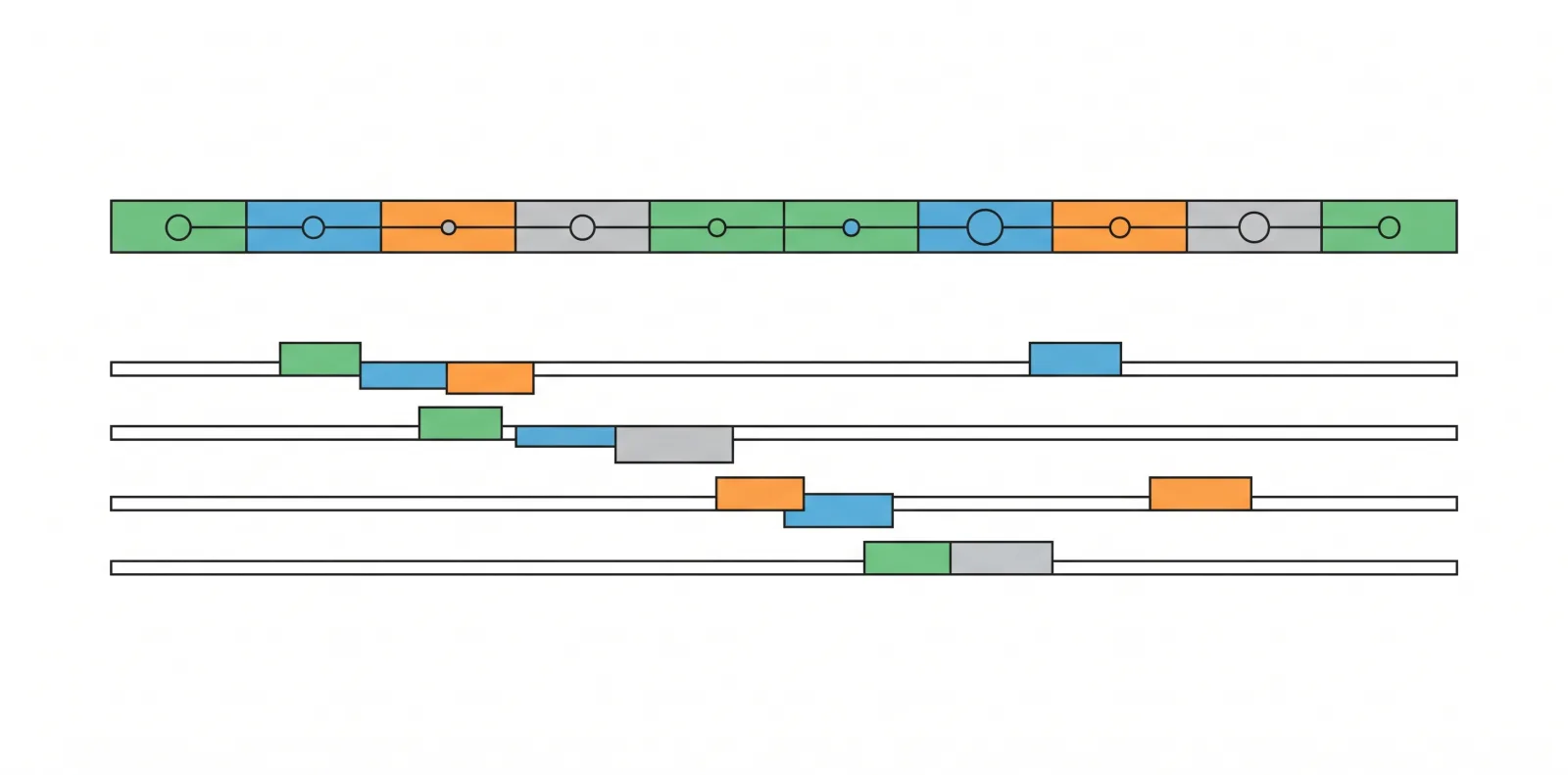
September to October. The heaviest congestion of the year. SSC CGL Tier 1 spans a full month from 30 September, IBPS PO Mains falls on 4 October, and RRB examinations run alongside. This is where clashes bite and where a prepared priority order pays.
November to December. SSC CGL Tier 2 and IBPS RRB Clerk Prelims. State PSC mains examinations commonly fall in this window too.
January onwards. Mains stages carrying into the new year, including IBPS RRB Clerk Mains on 30 January 2027, alongside the first notifications of the next cycle.
Building A Portfolio Rather Than A Single Bet#
A sensible aspirant sits several examinations, and the sensible number is smaller than most people assume.
Anchor on one. Choose the recruitment that genuinely matches what you want: the post, the work, the posting pattern, the pay. Build your preparation around its syllabus.
Add two or three with high syllabus overlap. SSC, banking and railway examinations share a great deal: quantitative aptitude, reasoning, English and general awareness recur across all of them. Adding a second examination from the same family costs you format practice rather than fresh content.
Add your state PSC if you are eligible. State commissions offer a genuine domicile advantage, the competition pool is smaller than the national one, and the posts are frequently excellent. This is the most underused option in the whole landscape.
Stop there. An aspirant sitting eight examinations is preparing properly for none. Four is a portfolio.
And protect the non-negotiables. Documents gathered early, including domicile, category and income certificates where applicable. Photographs and signatures to specification. A single email address and mobile number used consistently across every application, because juggling three creates exactly the confusion that loses admit cards.
The Document Folder You Should Build Before The Season Starts#
Every year, candidates with good scores lose posts to paperwork. It is the most avoidable failure in the entire process and it takes one weekend to prevent.
Build one folder, digital and physical, containing everything. Matriculation certificate for date of birth proof, all degree certificates and mark sheets, category certificate in the prescribed central format, income and asset certificate for EWS where applicable, domicile certificate, disability certificate where applicable, a recent passport photograph and a signature scan to standard specifications, identity proof, and your bank details.
The category certificate catches people out most often. Formats differ between state use and central government use, and a certificate valid for a state recruitment may be rejected for a central one. OBC non-creamy-layer certificates carry a validity period and must be current at the relevant cut-off date stated in the notification. Check the prescribed format in the notification itself rather than assuming your existing certificate works.
Photograph and signature specifications are enforced literally. Dimensions, file size, background colour, and in several recruitments a requirement that the photograph carries the date of capture. Applications are rejected over this every single cycle.
Use one email address and one mobile number across every application. Candidates juggling three addresses miss admit card notifications, and recovery when a registration number is attached to an abandoned account is painful.
Keep every receipt and every confirmation. Application fee payment references, registration numbers, submitted form printouts. If a discrepancy arises at verification, this file is your entire position.
And start the certificates that take weeks now. Domicile and income certificates are issued by revenue authorities on their own timescale, while verification windows during recruitment are measured in days. The gap between those two facts is where seats are lost.
Frequently Asked Questions#
When is SSC CGL Tier 1 2026?#
From 30 September to 30 October 2026, across multiple shifts. Your specific date and shift are allotted rather than chosen and appear on your admit card, which is typically released only days beforehand.
How many vacancies has UPSC CSE 2026 announced?#
933, including 33 reserved for candidates with benchmark disabilities, per the notification published on 4 February 2026. Figures circulating above one thousand do not match the official notification.
How many posts are in IBPS PO 2026?#
7,565, revised upwards from an earlier 7,365. The figure of around 13,700 that circulates refers to the separate IBPS RRB cycle, which covers officer and office assistant posts in regional rural banks.
What changed in the IBPS PO Mains pattern?#
The Mains paper now carries 170 objective questions, replacing the earlier 145, and a Personality Test has been added between the Mains examination and the Interview stage. Confirm details in the official notification.
What happens if two examinations clash?#
You sit one. There is no rescheduling and conducting bodies do not coordinate calendars. Decide your priority order months in advance so the choice is made calmly rather than under pressure.
Should I apply to examinations I am unsure about?#
Generally yes, where you are eligible. Application fees are small compared with the cost of a lost cycle, and you retain the option to decline. You cannot apply after a window closes.
How reliable are the notified vacancy numbers?#
Indicative rather than final. They are frequently revised, usually upwards, before allotment. Follow the conducting body's corrigenda rather than assuming the first figure stands.
Where should I confirm all these dates?#
On the conducting bodies' own portals: upsc.gov.in, ssc.gov.in, ibps.in, the regional RRB sites and your state commission's site. Dates shift and corrigenda are issued regularly, so check the primary source rather than an aggregated calendar, including this one.