
The Mistake Is Treating It As One Decision#
A family sits down, totals a master's at roughly twenty lakh rupees, and goes to the bank to ask for twenty lakh rupees.
That is one decision where there should have been five. And because it is one decision, it produces the largest possible loan, the largest possible instalment, and a graduate whose first three years of working life are organised around debt service rather than around the career the degree was supposed to buy.
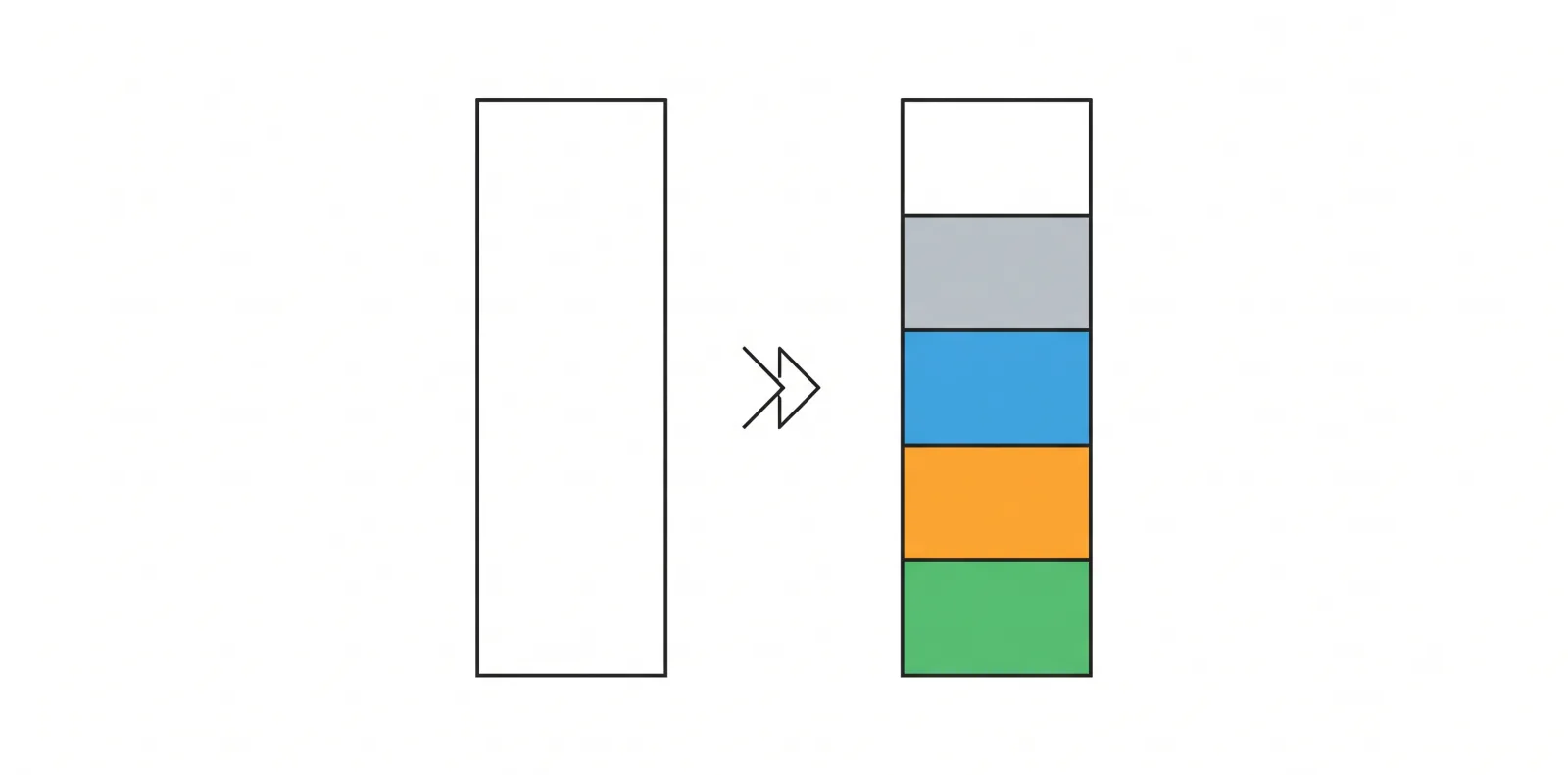
The alternative is a funding stack. You break the cost into its components, cover each from the cheapest available source, and borrow only what is left. The loan becomes the last layer rather than the first, and it is frequently half the size.
This is not a trick. Every layer involves real work, real applications, and real trade-offs. But the difference between a twelve lakh loan and a twenty lakh loan is roughly eight lakh rupees of principal and several lakh more of interest across the tenure. That is worth several weekends of effort.
Background: What The Twenty Lakh Is Actually Made Of#
The single number hides five different costs, each with a different funding source.
Tuition. The largest component, and the one scholarships and assistantships actually address. It is also the component institutions are most willing to discount, because a tuition waiver costs a university less than cash.
Living costs. Rent, food, transport, the rest of life. Typically the second largest component, and the one part-time earnings genuinely reduce.
One-time costs at the start. Visa fees, flights, initial deposits, a laptop, warm clothing for a first northern winter. Often underestimated, and awkward because they fall before any income exists.
Health insurance. Compulsory in most destinations and sometimes bundled into tuition, sometimes separate.
Proof of funds. Not a cost but a cash flow problem. Several visa regimes require evidence that you hold a defined sum, and that money must exist in an account even if the loan will ultimately fund it. A sanction letter frequently satisfies this, but the requirement shapes timing.
Two terms worth defining:
Assistantship. Paid work within your department, usually teaching or research, which often carries a tuition waiver alongside a stipend. The most valuable single item in the stack when available.
Capitalisation. Interest accrued during the study period that is added to your principal rather than paid as it arises. It is the mechanism by which a fifteen lakh loan becomes an eighteen lakh repayment obligation.
The Stack, Layer By Layer#
| Layer | Realistic contribution | Effort required | Notes |
|---|---|---|---|
| Departmental assistantship | Can cover a substantial share of tuition plus a living stipend, where offered | High. Depends on department, discipline and funding | Far more common in research-oriented programmes than taught master's. Ask the department directly, not the admissions office |
| University scholarship or fee waiver | Partial tuition reduction, occasionally substantial | Moderate. Usually a separate application with its own deadline | Apply to more than one. Waivers are frequently awarded on academic merit and are not always advertised prominently |
| External scholarships | Varies enormously, from small awards to full funding | High, and applications are time-consuming | Worth doing early. Deadlines often precede admission decisions |
| Family contribution | Whatever exists, deployed deliberately | None beyond honest conversation | Best used for the one-time start-up costs, which are hardest to fund otherwise |
| Part-time work during study | Meaningful against living costs, not against tuition | Ongoing, and it competes with study time | Bounded by visa rules. See the country notes below |
| Interest servicing during study | Not income, but it prevents capitalisation | Requires a source of cash during study | Often the highest-return single action in the stack |
| The loan | Whatever remains | Moderate | Sized last, not first |
The ordering is the point. Each layer above the loan reduces what the loan has to carry, and the loan is the only layer that charges you for the privilege.
What Part-Time Work Can And Cannot Do#
Students routinely overestimate this layer, so it deserves plain treatment.
The rules are country-specific and they are real limits, not guidelines. Germany permits student work up to 140 full days or 280 half days in a year. Other destinations define limits in hours per week during term with fuller allowances during vacation. Breaching the condition on your visa is a serious matter, not a technicality.
What it realistically covers. Part-time earnings are a living-cost instrument. They can meaningfully reduce what you draw for rent and food. They do not fund tuition, and any plan that depends on them doing so is not a plan.
What it costs. Hours spent working are hours not spent on coursework, on building the network that produces the job, or on the research that produces the reference. A student who works the maximum permitted and graduates with weaker results has traded the asset for the financing.
The honest position. Budget part-time work as a partial offset against living expenses, assume it starts a month or two after arrival rather than immediately, and never build a funding plan whose viability depends on it.
The Interest Servicing Arithmetic#
This is the layer most families skip and it is frequently the cheapest win available.
During your course and the grace period afterwards, interest accrues on what has been disbursed. You may either pay it as it arises or let it be added to the principal.
If you let it capitalise, you pay interest on that interest for the entire remaining tenure. On a loan of fifteen lakh at around ten percent across a four-year study-plus-grace period, the amount added to principal is substantial, and it compounds through every subsequent year of repayment.
If you service it, three things happen. The principal stays where it started. Many lenders offer a rate concession, commonly around one percent, for servicing interest during the moratorium. And you arrive at your first full instalment already in the habit of paying.
Where the money comes from. Usually the family, and usually in amounts far smaller than the eventual saving. This is the layer where a modest monthly contribution from home does the most work per rupee, and it is worth prioritising over topping up living expenses.
A Worked Example#
A twenty lakh master's, with a funding stack built deliberately.
Start: total requirement, twenty lakh.
Less a partial tuition scholarship from the university, applied for separately and awarded on academic merit. Say it covers a quarter of tuition.
Less family contribution directed at the one-time start-up costs: flights, visa, deposit, laptop. These are the costs that would otherwise inflate the first disbursement.
Less part-time earnings applied conservatively against living costs for the second and third semesters, not the first.
The remainder is the loan. And because it is smaller, two further things follow. It may fall under a collateral-free threshold, which changes the security conversation entirely. And it may qualify for interest subvention schemes with income-based eligibility, which the full amount would not.
Then service the interest during study, so that the loan repaid is the loan borrowed rather than the loan borrowed plus four years of compounding.
The arithmetic will differ for every family. The structure will not. Cover the cheapest costs from the cheapest sources, size the loan last, and protect it from capitalisation.
Building Your Own Stack: A Sequence#
Twelve months out. Research external scholarships, because their deadlines are the earliest and frequently precede admission decisions. Have the family conversation about what contribution is genuinely available, in writing, with numbers.
Nine months out. Apply to universities, and apply separately for their scholarships and waivers, which almost always require a distinct application. Email departments directly about assistantships rather than relying on the general admissions correspondence.
Six months out. With offers in hand, compute each option's actual net cost after scholarships rather than comparing sticker prices. A more expensive programme with a substantial waiver frequently beats a cheaper one without.
Four months out. Approach lenders with a specific, justified number rather than asking what you can get. Compare at least one public sector bank against one other lender. Confirm the collateral-free threshold and whether your number sits under it.
Three months out. Arrange the interest servicing mechanism before the first disbursement, so it is automatic rather than remembered.
Throughout. Draw each semester's disbursement rather than the full sanction. Interest accrues only on what has been released.
The Conversation With Your Family#
The layer of the stack that people find hardest is not the scholarship application. It is the honest conversation at home about what is actually available.
Ask for a number, not a sentiment. Families frequently offer to help without quantifying it, and the student then builds a plan around an amount nobody has verified. A specific figure, and a specific timing for when it becomes available, changes the plan entirely.
Distinguish between money that exists and money that would be borrowed. A family contribution funded by a personal loan against property is not a contribution; it is a second, more expensive loan wearing a different name. Say so plainly and compare it against simply borrowing more on the education loan, which is almost always cheaper and carries a moratorium the personal loan will not.
Agree who services the interest during study, and how. This is the highest-return item in the whole stack and it needs a mechanism, not an intention. A standing instruction set up before you leave is worth more than a monthly promise.
Be explicit about what the co-applicant is signing. They are jointly liable for the full amount from the date of sanction. Most parents sign believing they are a fallback. That misunderstanding is best corrected at the kitchen table rather than years later.
And revisit the conversation when offers arrive. The plan made twelve months out was built on estimates. Once you have real offers with real scholarship amounts, the numbers change, and so should the plan.
Frequently Asked Questions#
Is it realistic to fund a master's abroad without a large loan?#
Partially, for most students. A funding stack rarely eliminates borrowing, but it routinely halves it. The goal is a loan a graduate can service comfortably, not a loan of zero.
What is an assistantship and how do I get one?#
Paid departmental work, usually teaching or research, frequently carrying a tuition waiver alongside a stipend. Ask the department directly rather than the admissions office, and ask early. They are far more common in research-oriented programmes than taught ones.
How much can part-time work realistically contribute?#
Enough to meaningfully offset living costs, not enough to fund tuition. Work limits are set by your visa conditions and are firm, and hours spent working compete directly with academic performance.
What are Germany's student work rules?#
Germany permits student employment up to 140 full days or 280 half days in a year. Other destinations use hours-per-week limits during term with wider vacation allowances. Check your specific visa condition rather than assuming.
Why does servicing interest during study matter so much?#
It prevents interest from being added to your principal and compounding for the rest of the tenure, and many lenders grant a rate concession of around one percent for doing it. It is usually the highest-return action per rupee in the whole stack.
Should I draw the full sanction at once?#
No. Draw each semester's requirement. Interest accrues only on what has been disbursed, so a staged drawdown materially reduces what accumulates during study.
Does a smaller loan change what is available to me?#
Often significantly. A smaller amount may fall under the collateral-free threshold, and may qualify for interest subvention schemes whose eligibility is income and amount based. Sizing the loan last can unlock terms the full amount would not.
When should I start on scholarships?#
Around twelve months before intake. External scholarship deadlines are typically the earliest in the whole sequence, and several fall before you know where you have been admitted.