Policies Are Announced Nationally And Delivered One Classroom At A Time#
When the National Education Policy was released in 2020, it arrived with the language of transformation. A new structure for schooling. Mother tongue instruction in early years. The end of rote learning. Vocational exposure from Class 6. Bagless days. A three-language formula. Assessment reform. Board examinations reimagined.
Five years on, the honest question is not whether the policy was ambitious. It plainly was. The question is what happened when an ambitious national document met thirty-six states and union territories, over a million schools, a teaching workforce of several million, and a constitutional arrangement in which school education is a shared responsibility rather than a central one.
The answer is uneven, which is what anyone familiar with Indian education would have predicted. Some changes landed thoroughly. Some landed in name. One became a genuine constitutional argument. And a few of the most interesting ideas remain largely on paper.
Here is the scorecard, written for students who lived through the transition, for those studying education, and for families trying to work out what applies to their school.
Background: What NEP 2020 Is And What It Is Not#
It is a policy, not a law. This distinction explains almost everything about the implementation record. A policy sets direction and recommends. It does not by itself compel. Implementation requires subsequent regulations, curriculum frameworks, board circulars and state government decisions.
Education is on the Concurrent List. Under the Indian Constitution, education is a subject on which both Parliament and state legislatures can legislate. Practically, this means the central government sets frameworks and funds schemes, while states run the overwhelming majority of schools and make their own decisions. A state can decline to adopt a recommendation, and several have.
It replaced a policy from 1986. The previous National Policy on Education, modified in 1992, had governed Indian education for over three decades. A replacement was genuinely overdue.
Key structural vocabulary:
The 5+3+3+4 structure. School education reorganised into four stages: Foundational, covering three years of preschool plus Classes 1 and 2; Preparatory, covering Classes 3 to 5; Middle, covering Classes 6 to 8; and Secondary, covering Classes 9 to 12. This replaced the older 10+2 framing and, importantly, brought early childhood education formally inside the school system for the first time.
NCF-SE 2023. The National Curriculum Framework for School Education, which translates the policy into curricular structure and learning outcomes, and drives the new NCERT textbooks being rolled out progressively.
The Three-Language Formula: The Genuine Flashpoint#
This is where policy met politics most directly, and it deserves to be explained accurately rather than in slogans.
What the policy says. Students should learn three languages, with at least two of the three being native to India. The specific languages are to be chosen by states, regions and students themselves. The policy states explicitly that no language will be imposed on any state.
Why it became contentious anyway. The three-language formula is not new; versions of it date back to the 1960s. Tamil Nadu has maintained a two-language policy, teaching Tamil and English, for decades, on the position that a third language requirement functions in practice as pressure towards Hindi regardless of what the text says. That position has been held consistently by successive state governments across parties, and it reflects a long political history in the state.
The disagreement intensified because central education schemes and their funding became linked to adoption of the policy framework, which the state characterised as coercion and the centre characterised as ordinary conditionality attached to a scheme. Both descriptions are defensible from their respective positions, which is why the argument has not resolved.
Where it stands in practice. Most states operate some version of a three-language arrangement, typically the regional language, English and one other. Tamil Nadu continues with two. The educational question underneath the political one, which is whether early multilingual instruction helps or burdens children, has a research literature that broadly supports early mother tongue instruction for foundational learning, and is considerably less clear about the optimal number of additional languages or the right age to add them.
What it means for a student. Check your own state's policy rather than the national document. Your language requirements are set by your state and your board, and they vary.
No Detention: Automatic Promotion Has Ended In Part Of The System#
This one has genuinely changed, and many families have not noticed.
The original position. The Right of Children to Free and Compulsory Education Act 2009 prohibited holding back any child until the completion of elementary education, meaning Class 8. The intention was sound: holding children back is strongly associated with dropping out, particularly among first-generation learners, and failure at a young age damages engagement durably.
The criticism. Over the following decade, evidence accumulated that large numbers of children were reaching Class 9 without foundational literacy and numeracy, and then failing catastrophically at the Class 10 board examination. Automatic promotion without an effective remedial system, critics argued, had produced the appearance of progression without the substance of learning.
What changed. The RTE Act was amended in 2019 to permit states to conduct examinations at Classes 5 and 8 and, where a child fails, to provide additional instruction and a re-examination opportunity, with the possibility of holding the child back if they fail again. Crucially, this was made a state option rather than a national mandate.
Subsequently, rules were notified ending the no-detention arrangement for schools under central government administration, including Kendriya Vidyalayas, Jawahar Navodaya Vidyalayas and similar schools, so that students failing a re-examination at Class 5 or Class 8 can be held back. Many states had already exercised the option for their own schools; others retained automatic promotion.
The honest assessment. Both sides of this argument have real evidence behind them. Detention does correlate with dropping out. Automatic promotion without remediation does produce children who cannot read their textbooks. The policy question is whether the remediation now attached to the process is adequate and actually delivered, and on that the answer varies enormously between states and schools. The change is only as good as the extra teaching that accompanies it, and that teaching is where implementation most often thins out.
Bagless Days And Vocational Exposure: Landed In Name, Varied In Substance#
The proposal. Students in Classes 6 to 8 spend a number of days each year, commonly ten, without textbooks or bags, engaged instead in experiential activity and vocational exposure. They might spend time with a carpenter, a gardener, an electrician or a potter, or work on a local community project.
The intention. Two things at once. Reduce the physical and psychological weight of the schoolbag, and dismantle the social hierarchy that treats manual and skilled trades as inferior to office work. That second aim is genuinely radical in the Indian context and deserves more credit than it gets.
What happened. Guidelines were issued and many schools have implemented something. Quality varies from thoughtful, well-organised placements with local artisans to a photograph opportunity involving a single afternoon of craft activity. Schools with strong community links and motivated staff have done well with it. Schools without either have done the minimum.
The obstacle. Arranging genuine vocational exposure requires local partnerships, safety arrangements, supervision and staff time. None of that is free, and none of it was accompanied by dedicated funding at scale. The idea is good. The delivery mechanism was left to schools that were already stretched.
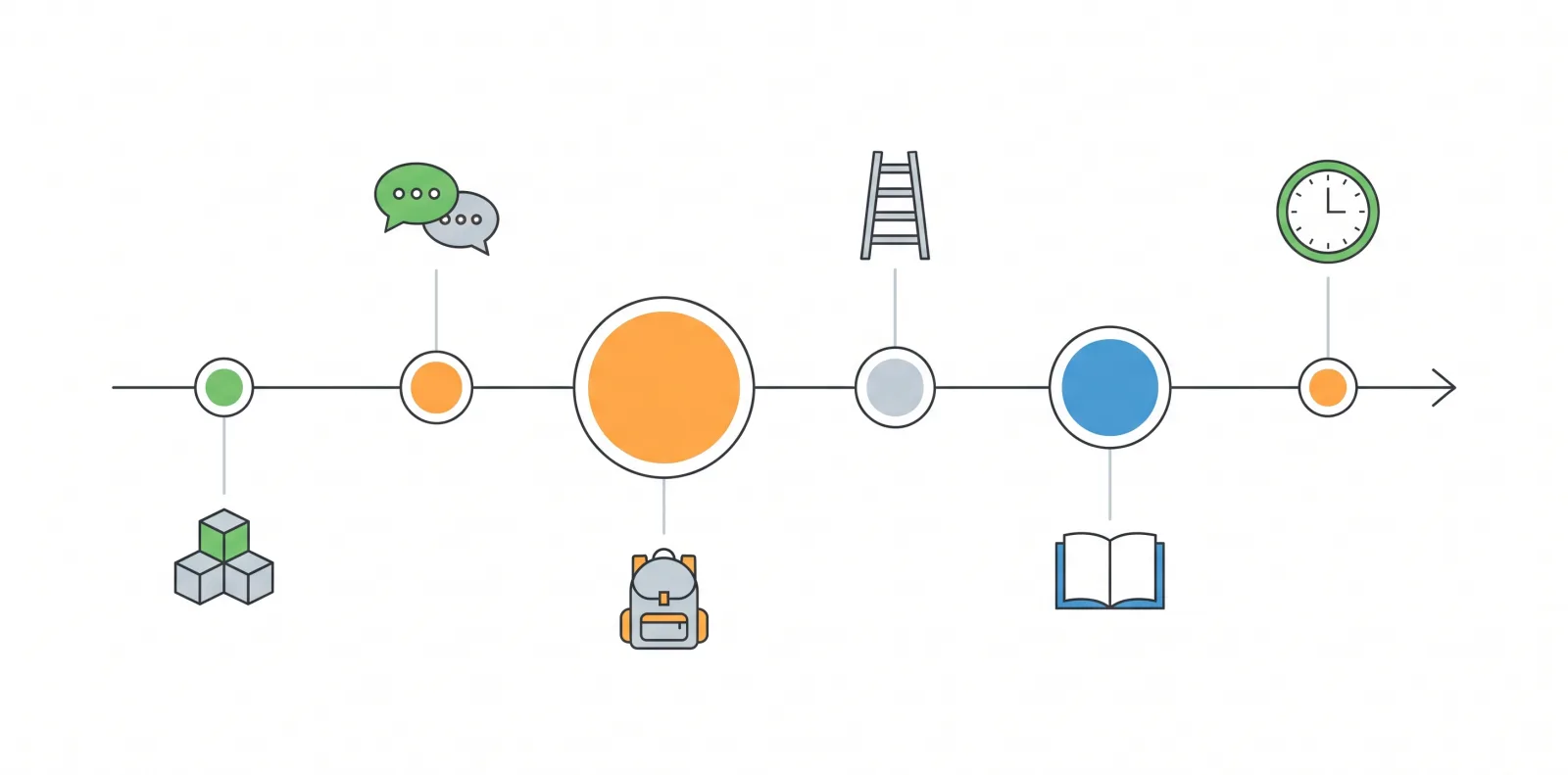
The Implementation Timeline, Drawn Out#
What Genuinely Landed, And What Did Not#
Landed well. The structural reorganisation into four stages is now the framing everyone uses. Early childhood education has been brought inside the formal system, which is arguably the policy's most important and least discussed achievement, because the evidence on the returns to early years investment is among the strongest in education research. New curriculum frameworks and textbooks are in progressive rollout. Assessment reform has produced concrete instruments including the Holistic Progress Card. Board examination reform has moved, with CBSE introducing a two-attempt arrangement at Class 10.
Landed unevenly. Bagless days and vocational exposure, which depend on local capacity. Mother tongue instruction in early years, which runs into the practical problem that many families actively want English-medium instruction and view regional-language schooling as a disadvantage, a preference that policy cannot simply override. Teacher training, which is the foundation of everything else and remains the largest gap.
Largely still ahead. Deep pedagogical change in the classroom. A policy can change textbooks and structures within five years. Changing how several million teachers teach, in classrooms that are often large and under-resourced, is the work of a generation, and it requires sustained investment in training rather than circulars.
Contested. Language policy, for the constitutional and political reasons described above, which will not resolve quickly because the underlying disagreement is not really about education.
Frequently Asked Questions#
Does NEP 2020 make Hindi compulsory?#
No. The policy states that no language will be imposed on any state and that language choice rests with states, regions and students, requiring only that at least two of the three languages are native to India. The dispute concerns whether scheme funding conditions create pressure in practice, which is a political argument rather than a textual one.
Has the no-detention policy been scrapped?#
Partly. The RTE Act was amended in 2019 to let states hold back students in Classes 5 and 8 after a failed re-examination, and rules were subsequently notified ending automatic promotion in schools under central administration. Whether it applies to your school depends on the school's administration and your state's decision.
What are bagless days?#
Days on which students in Classes 6 to 8 attend without textbooks or bags and take part in experiential and vocational activities instead, commonly ten days a year. Implementation quality varies widely between schools.
What does 5+3+3+4 actually mean?#
Four stages: Foundational covering three preschool years plus Classes 1 and 2, Preparatory covering Classes 3 to 5, Middle covering Classes 6 to 8, and Secondary covering Classes 9 to 12. The significant change is bringing early childhood education formally into the school system.
Do all states follow NEP 2020?#
No. Education is on the Concurrent List, so states make their own decisions on adoption. Most have adopted substantial parts. Some have declined specific elements, most visibly on language policy.
Is mother tongue instruction now compulsory until Class 5?#
The policy recommends it strongly but does not compel it, and implementation varies. It also runs into genuine family preference for English-medium schooling, which policy alone does not resolve.
What has changed for someone currently in Class 10 or 12?#
Most visibly, board examination reform, including CBSE's two-attempt arrangement at Class 10, revised curriculum frameworks and progressively updated textbooks. Check your board's current circulars, since implementation details have changed more than once.
Where can I read the policy and track implementation?#
The policy document is published by the Ministry of Education, the curriculum frameworks by NCERT, and implementation details by CBSE and your state education department. Since details have shifted repeatedly, prefer current official circulars over summaries and news coverage.