There Is A Date, And It Is Closer Than Most Students Realise#
If you are currently studying in the United Kingdom, or you will finish a programme there soon, one date matters more than anything else in this article.
31 December 2026.
Applications for the Graduate Route submitted on or before that date are assessed under the existing rules and grant two years of permission to stay and work.
Applications submitted on or after 1 January 2027 grant eighteen months.
The change comes from the Immigration White Paper published in May 2025, and it applies to bachelor's and master's graduates. Doctoral graduates are unaffected in the same way and continue to receive three years.
Six months does not sound like a great deal until you consider what the Graduate Route is actually for. It is not a general residence permission. It is a window in which to find an employer willing to sponsor you onto a work visa, and sponsorship is a process that takes employers time. Cutting the window by a quarter compresses every stage of that.
Here is what it means and what to do about it.
Background: What The Graduate Route Is And Is Not#
What it is. An unsponsored permission to stay in the UK after successfully completing an eligible course at a licensed institution, during which you may work at almost any level or skill, look for work, or be self-employed.
What it is not. It is not a path to settlement in itself and it cannot be extended. It is a bridge. The intended destination is a sponsored work visa, and if you do not reach one before the Graduate Route expires, you leave.
Why that framing matters. Students frequently think of it as two years of freedom. Employers think of it as a window during which they could hire you without sponsoring you, and after which they would have to. The second framing is the one that determines your outcome.
The scale for Indian students. Indian nationals accounted for 42 per cent of the 176,000 Graduate Route visas granted, which makes this the single largest nationality on the route and means the change lands disproportionately on Indian graduates.
Two terms worth defining:
Sponsorship. An employer holding a licence from the Home Office to sponsor foreign workers issues you a certificate of sponsorship, which supports your work visa application. Not every employer holds a licence, and obtaining one takes time and money, which is why many smaller employers simply do not hire candidates who will need it.
Switching in country. Moving from the Graduate Route to a work visa without leaving the UK, which is permitted and is the normal route.
What Changes, And What Does Not#
What is unchanged. Eligibility still requires successful completion of an eligible course at a licensed institution. You still apply from inside the UK. You still may work at almost any level during the period. Doctoral graduates still receive three years.
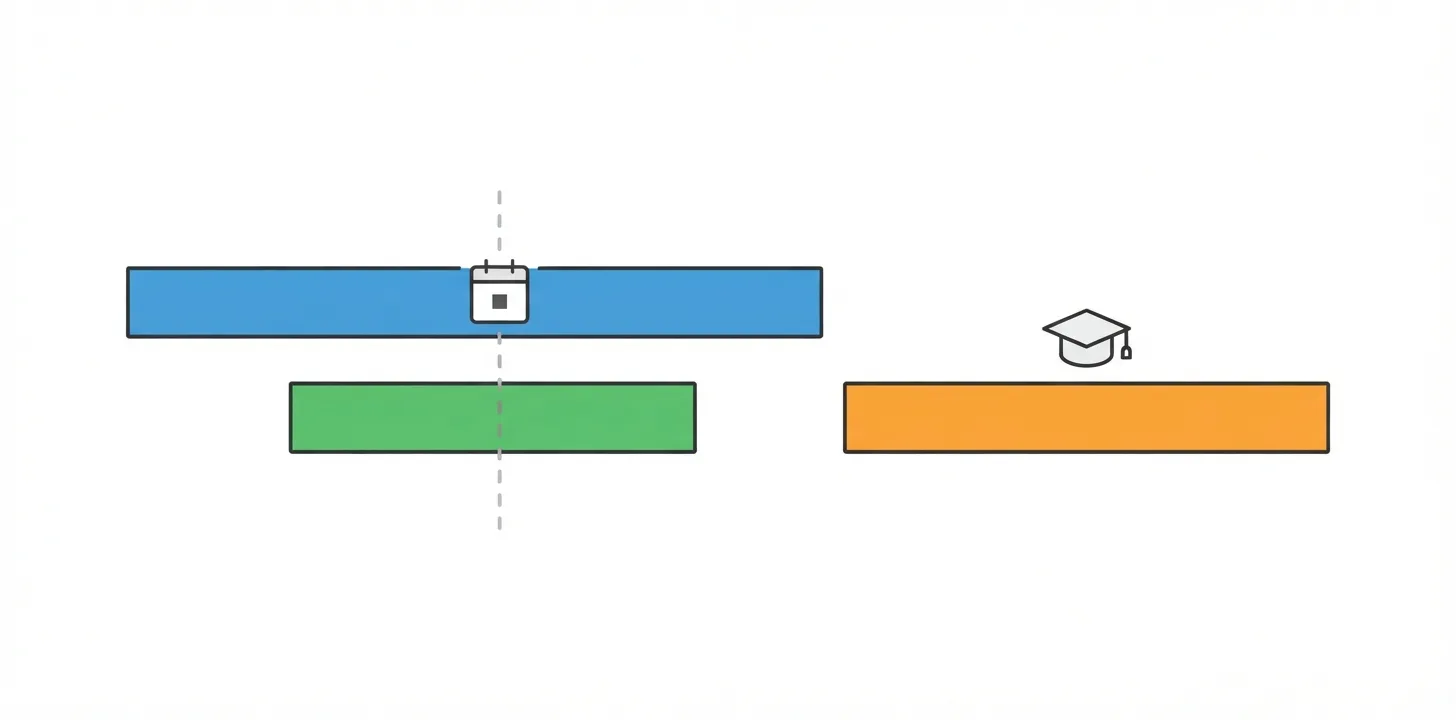
What the reduction actually costs you. Look at the bottom row of that chart. The window has to accommodate three sequential things: finding a role, working through offer and notice periods, and then the employer's sponsorship process and your visa application. None of those is instant. An employer who takes three months to recruit and two months to arrange sponsorship has consumed a third of an eighteen-month window before you have started.
What Indian Students Should Actually Do#
If you can apply on or before 31 December 2026, do. This is the single highest-value action available. Eligibility depends on your course completion being confirmed by your institution, so speak to your international student adviser now about when your result will be formally reported. Students have missed transitional cut-offs by weeks because an institution's reporting timeline was slower than they assumed.
If you will apply after that date, plan the eighteen months backwards. Work out the latest point at which an employer could realistically start sponsorship and still complete before your permission expires, then set your job search deadline well before it.
Start the job search before you graduate, not after. This was always sensible and it is now close to essential. Applications submitted while you are still studying put you in the hiring pipeline months earlier.
Target employers who already hold a sponsor licence. The register of licensed sponsors is published by the Home Office and it is searchable. Applying to employers without a licence means asking them to undertake a process they may not be willing to begin, and in a compressed window that is a poor use of applications.
Understand the salary and skill thresholds for the work visa you are aiming at. Graduate Route work has almost no restrictions. The sponsored work visa you are trying to reach has requirements, and a role that does not meet them cannot become sponsorship however much the employer likes you.
Consider the doctoral difference seriously. Three years against eighteen months is a substantial gap, and for students genuinely interested in research it changes the calculation about whether to pursue a doctorate in the UK.
And weigh the destination decision honestly. Eighteen months is shorter than the post-study period offered by several competing destinations. That does not make the UK a poor choice, since institution quality, course length and the value of a one-year master's all weigh on the other side. But if post-study work time is your primary criterion, it should now be part of the comparison rather than an assumption.
Who Is Eligible, And What Counts As A Qualifying Course#
Before the duration matters, eligibility does, and it is narrower than students assume.
You must have completed an eligible course. Generally a bachelor's degree, a master's, or another qualifying qualification, at a UK higher education provider with a track record of compliance.
Your institution must confirm completion to the Home Office. This is the step students underestimate. You cannot apply on the basis of having finished your examinations; your provider must formally report successful completion. The timing of that report is institutional and it varies, which is exactly why the transitional cut-off is a live risk.
You must be in the UK when you apply. The Graduate Route is an in-country application and cannot be made from abroad.
You must hold or have held valid student permission for the course in question.
Time spent studying outside the UK may affect eligibility depending on when it occurred, so distance-learning periods are worth checking against the current guidance.
The practical instruction, and it is urgent. Contact your international student adviser now and ask one specific question: on what date will my course completion be reported to the Home Office? If the answer places you before 31 December 2026, you can secure the two-year grant. If it places you after, you are in the eighteen-month regime regardless of when you finished studying.
Switching To A Work Visa Before It Expires#
The Graduate Route exists to get you onto a sponsored work visa. Understanding that route determines how you spend the window.
The employer must hold a sponsor licence. Not every employer does, and obtaining one costs money and administrative effort. Many smaller employers simply decline to hire candidates who will need sponsorship.
The role must meet the skill and salary thresholds. A job you enjoy at an employer who likes you cannot become a work visa if the role sits below the required level. Check the thresholds for the visa you are targeting before accepting a role you intend to convert.
You apply from inside the UK. Switching in country is permitted and is the normal route, which means you do not have to leave and reapply.
Timing runs against you. Recruitment takes time, notice periods take time, and the employer's sponsorship process plus visa processing takes more. Work backwards from your expiry date rather than forwards from today.
Use the register of licensed sponsors. The Home Office publishes it and it is searchable. Targeting employers already on it is considerably more efficient than approaching those who would need to obtain a licence first.
And be realistic about salary. Threshold requirements mean some entry-level roles cannot support sponsorship regardless of the employer's willingness. Knowing the floor before you negotiate saves a great deal of wasted effort.
If You Cannot Apply Before The Cut-Off#
Not everyone can reach 31 December 2026, and the eighteen-month regime is workable if you plan for it from the start.
Compress the front end. Begin applying during your final term rather than after results. Graduate schemes recruit months ahead, and a student entering the pipeline in autumn is competing for roles that a student starting in spring will find already filled.
Target sponsoring employers exclusively from day one. With six fewer months, applications to employers who cannot sponsor are a luxury you no longer have.
Prioritise roles above the salary threshold. A role that cannot convert is a role that consumes your window without advancing you.
Consider a doctoral programme if research interests you. Doctoral graduates receive three years rather than eighteen months, which is a substantial difference and a genuine alternative for the right candidate.
Build UK work experience during your degree. Part-time work, internships and placements within the permitted hours address the experience concern that slows international hiring.
And compare destinations honestly before you commit to the UK. Eighteen months is shorter than Canada's post-graduation permit for eligible programmes, Australia's temporary graduate visa, or Ireland's twenty-four months for postgraduate study. If post-study duration is your main criterion, that comparison should happen before you accept an offer rather than after you graduate.
Frequently Asked Questions#
When exactly does the Graduate Route change?#
For applications submitted on or after 1 January 2027, the grant falls from 24 months to 18. Applications submitted on or before 31 December 2026 continue to receive two years.
Does the change affect PhD graduates?#
No. Doctoral and other qualifying research graduates continue to receive three years, which is unchanged.
I am studying now. What should I do?#
Establish with your institution exactly when your course completion will be formally confirmed, since that determines whether you can apply before the cut-off. If a 31 December 2026 application is achievable, it is worth substantial effort to make it.
Can I extend the Graduate Route?#
No. It cannot be extended and it is not a route to settlement in itself. It is a window in which to move onto a sponsored work visa, which you apply for from inside the UK.
Why does six months matter so much?#
Because the window must contain a job search, offer and notice periods, and the employer's sponsorship process plus visa processing. Those run sequentially, and losing a quarter of the total compresses every stage.
How many Indian students does this affect?#
Indian nationals accounted for 42 per cent of the 176,000 Graduate Route visas granted, the largest single nationality on the route, so the change falls disproportionately on Indian graduates.
How do I find employers who can sponsor me?#
The Home Office publishes a register of licensed sponsors, which is searchable. Targeting employers already on it is considerably more efficient than approaching those who would need to obtain a licence first.
Where should I confirm the current rules?#
On the UK government's official immigration pages, which publish the Graduate Route requirements, fees and application process. Rules in this area have changed recently and further adjustment is possible.