
One Test Decides Whether You Earn Three Lakh Or Eleven#
Two students from the same college, the same branch and the same grade average can join the same company on the same day and be paid roughly three times differently.
This is not favouritism and it is not obscure. It is the published design of how large Indian IT services firms now recruit, and it is the single most consequential thing a final-year student can understand about placements.
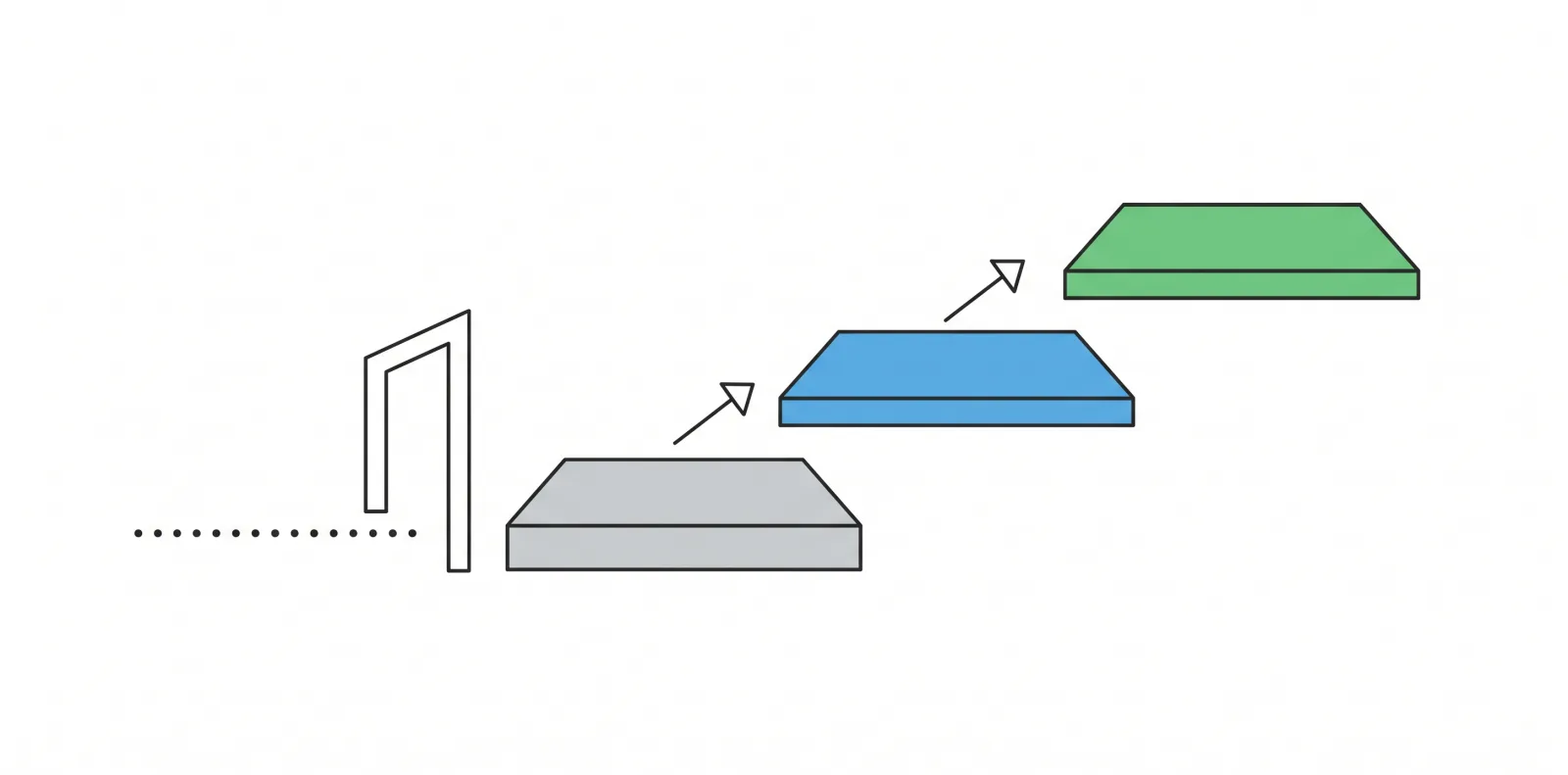
The firms run tiered hiring tracks. A base track that hires in volume at a modest package, a middle track for candidates who clear a higher bar, and a premium track for a small number who perform exceptionally in the assessment. The gap between the bottom and the top of that structure runs to several lakh rupees a year, from the first day of your career, compounding across every subsequent appraisal.
And the tier is decided almost entirely by one assessment. Not by your college's ranking, not by your grade average beyond a qualifying threshold, and not by your interview charm. By how you perform on a test you can prepare for.
That last sentence is the opportunity, and most students discover it too late to act on it.
Background: Why The Tier System Exists#
For two decades, the large services firms hired enormous graduate cohorts on a broadly uniform package and trained them on the bench. That model has substantially ended, for reasons covered in detail elsewhere: automation absorbed the routine junior work, clients stopped tolerating training time, and employers now want immediate contribution.
What replaced it is differentiation. Rather than paying everyone a low uniform package or a high uniform one, the firms sort candidates and pay accordingly. The base tier preserves volume hiring at a cost that still works. The premium tiers compete for candidates who would otherwise go to product companies or global capability centres.
The assessment is the sorting mechanism, and it is deliberately designed to spread candidates out rather than simply to pass or fail them. Which is why a marginal improvement in your score can move you across a tier boundary worth lakhs.
Two terms worth defining:
CTC, or cost to company. The total annual figure an employer quotes, including basic pay, allowances, employer contributions and sometimes a joining bonus or retention component. Your actual monthly take-home is considerably lower than CTC divided by twelve, which surprises almost every fresher.
Service agreement. A commitment to remain with the employer for a defined period, sometimes backed by a bond amount. Common in this sector and worth reading carefully before signing.
The Tier Structure, With Indicative Bands#
| Tier | What it is | Indicative package band | What gets you here |
|---|---|---|---|
| Base or volume track | The mass hiring tier, taking the largest number of candidates. Roles are general engineering, support and delivery | Broadly around ₹3.4 to ₹3.6 lakh a year across the major employers, with reported undergraduate minimums near ₹3.4 lakh and postgraduate minimums slightly higher | Clearing the qualifying threshold on the assessment and meeting the academic eligibility criteria |
| Middle or digital track | A smaller intake at a substantially higher package, with more technical roles | Reported in the region of ₹7 lakh a year at one of the major employers | A materially stronger assessment performance, usually including a coding component |
| Premium track | A small cohort, competing directly with product companies and GCCs | Reported ranges of roughly ₹9 to ₹11.5 lakh a year, with postgraduate bands at the upper end | Exceptional assessment performance, typically strong on advanced programming and problem solving |
A necessary caution about these figures. Package bands for Indian IT services hiring circulate widely through coaching sites, placement aggregators and student forums, and the numbers above reflect that reporting rather than official published rates. They move between hiring cycles and between undergraduate and postgraduate candidates. Treat them as the shape of the structure rather than as a quotation, and confirm the current figures for your own drive from the company's own communication or your placement cell.
What is not in doubt is the shape. A base tier, a middle tier at roughly double it, and a premium tier at roughly triple. That structure is consistent across the major employers even where the specific numbers differ.
What Actually Determines Your Tier#
The assessment, overwhelmingly. These tests typically combine quantitative aptitude, logical reasoning, verbal ability and programming, with the higher tiers gated on the programming and advanced problem-solving sections. A candidate who is competent on aptitude and weak on coding lands in the base tier almost automatically.
Your academic eligibility, as a threshold rather than a score. Most firms specify minimum marks across school and degree and a maximum number of backlogs or gap years. These are gates: clearing them makes you eligible, exceeding them does not move you up a tier. A student with an excellent grade average and a mediocre test score does not reach the premium track.
Your degree and specialisation, at the margin. Postgraduate candidates are frequently offered slightly higher bands within the same tier, and some tracks are restricted by discipline.
The interview, mostly as a filter. Having reached a tier through the assessment, the interview usually confirms rather than promotes. It can certainly lose you an offer; it rarely gains you a tier.
And not your college's ranking, for the national assessment routes. This is the part students most consistently disbelieve. A candidate from an unremarkable college who scores exceptionally on the test reaches the premium track. That is the entire point of running a national assessment.
How To Prepare For The Thing That Matters#
Given that one test determines a difference of several lakh rupees a year, the allocation of your final-year effort should reflect that.
Start in the penultimate year, not the final semester. The advanced programming sections that gate the higher tiers reward accumulated practice rather than a few weeks of cramming. Students who begin in September of their final year are usually preparing for the base tier whether they intend to or not.
Practise programming daily, in small amounts. Thirty minutes a day for a year beats eight hours a day for a month, because the skill being tested is fluency under time pressure rather than knowledge.
Do not neglect aptitude, but do not over-invest in it either. Aptitude sections gate eligibility and are learnable quickly. Programming sections gate the tiers and take much longer. Budget your time accordingly, which most students do in reverse.
Take timed mock assessments under real conditions. The commonest failure is not inability but pacing. Candidates who have never sat the full duration under time pressure lose marks they could have earned.
Learn the specific format of the assessments you will sit. Section structure, marking, negative marking, whether sections are individually timed, whether you can return to earlier questions. This is freely available and it materially affects strategy.
And understand the eligibility rules early. Backlogs, gaps and minimum marks are checked strictly. A student who discovers in the final semester that a pending backlog disqualifies them from the drive has lost an option they could have protected.
Reading The Offer Properly#
When an offer arrives, read it rather than celebrating the headline number.
Separate CTC from take-home. The quoted annual figure includes employer contributions, allowances and sometimes variable or retention components. Your monthly bank credit is meaningfully lower, and freshers are routinely shocked by this. Ask for the salary breakdown before you sign.
Identify the variable component. Some portion may be performance-linked or paid annually rather than monthly. It is real money but it is not guaranteed money.
Check the service agreement. Many offers in this sector include a commitment period, sometimes with a bond amount payable if you leave early. Read the duration, the amount and the conditions. This is the clause most likely to matter to you in two years.
Check the location and the reporting date. Both are often left open in the initial offer and both affect your life considerably.
Understand the training period and what happens during it. Duration, stipend if different from the full package, assessment requirements, and what occurs if you do not clear internal training assessments. This last point is real and it is rarely asked about.
And keep perspective on the tier. A base tier offer is a job, a start and a salary, and a great many successful careers began in one. The tier determines your starting point, not your ceiling. What it does mean is that if you have time before your assessment, that time is worth more than almost anything else you could do with it.
If You Missed The Campus Drive#
A substantial number of students either sit the assessment and do not clear it, or never get a drive at their college at all. That is recoverable, and the routes are specific.
The national assessments run off campus too. The major employers operate open hiring rounds that anyone meeting the eligibility criteria can register for, independent of whether their college hosted a drive. Registration is through the company's own careers portal and it is free.
You usually get another attempt. Most of these assessments permit re-registration after a defined interval. A student who scored into the base tier, or missed the threshold, can prepare properly and sit it again. Check the specific cooling-off period rather than assuming one attempt is final.
Eligibility windows are wider than students think. Several firms accept candidates with up to a year or two of gap since graduation, and some explicitly hire candidates with limited prior experience into fresher tracks. Read the criteria rather than self-rejecting.
Use the time between attempts properly. Six months of daily programming practice moves you across a tier boundary far more reliably than six months of anxious refreshing of job boards. The gap is an opportunity if you treat it as one.
Apply to global capability centres in parallel. They were the fastest-growing entry-level employer category in 2026 and they recruit through their own channels rather than through campus drives, so a missed campus season does not exclude you.
And do not let the gap widen unexamined. A gap spent acquiring a named capability reads entirely differently in an interview from one spent waiting, and the difference is what you can point to at the end of it.
Frequently Asked Questions#
Why do IT services companies have different hiring tracks?#
Mass hiring at a uniform package no longer works, because automation absorbed routine junior work and clients stopped paying for training time. Tiered tracks let firms keep hiring in volume at the base while competing for stronger candidates at higher packages.
What are the indicative packages for each tier?#
Reported bands put the base track broadly around ₹3.4 to ₹3.6 lakh a year, a middle digital track in the region of ₹7 lakh, and premium tracks around ₹9 to ₹11.5 lakh, with postgraduate candidates generally at the upper end. These figures circulate through aggregators rather than official rate cards, so confirm current numbers with your placement cell.
Does my college matter for these packages?#
For the national assessment routes, far less than students assume. The test result is the primary determinant, which is precisely why the firms run a common national assessment rather than relying on institutional reputation.
Does a high grade average move me to a higher tier?#
Generally no. Academic criteria operate as eligibility thresholds rather than as a score. Clearing them makes you eligible; exceeding them does not promote you. The assessment determines the tier.
What should I prepare most?#
Programming and advanced problem solving, because those sections gate the higher tiers and take the longest to develop. Aptitude sections matter for eligibility but are learnable relatively quickly, so students commonly over-invest there.
When should I start preparing?#
In your penultimate year. The skills these assessments test are fluency under time pressure, which accumulates through daily practice rather than through intensive cramming in the final semester.
What is CTC and why is my take-home lower?#
Cost to company is the total annual figure the employer bears, including allowances, employer contributions and sometimes variable or joining components. Your monthly credit is considerably less than CTC divided by twelve. Ask for the full salary breakdown before signing.
Should I sign a service agreement?#
They are common in this sector and frequently unavoidable. Read the duration, the bond amount and the conditions under which it applies before signing, because it is the clause most likely to affect you if your plans change within two years.