
The Narrower The Scheme, The Better Your Odds#
Here is a counterintuitive fact about Indian scholarships that almost nobody acts on.
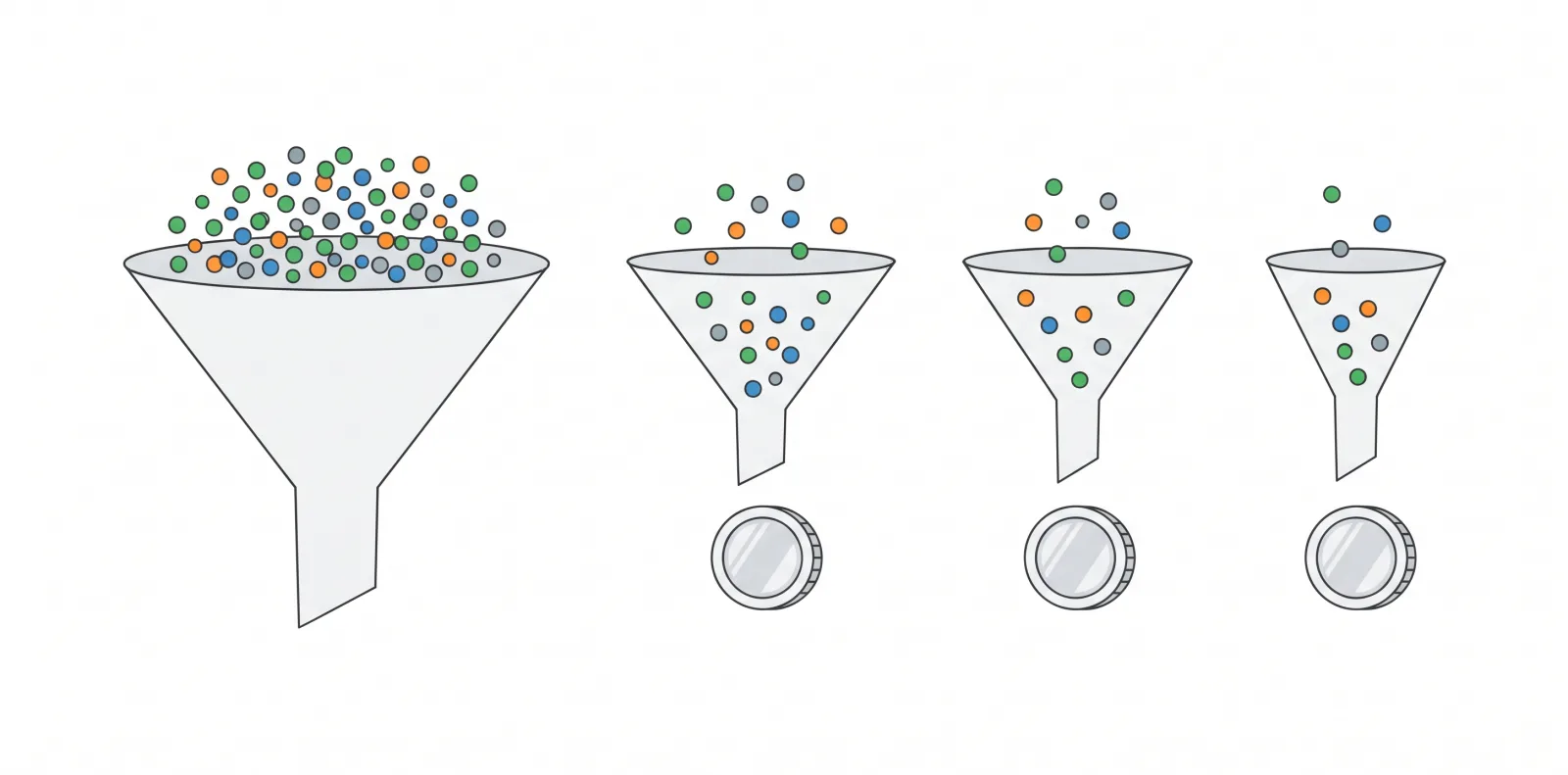
The large, well-publicised schemes attract enormous numbers of applicants. The narrow ones, aimed at a specifically defined group, attract very few, because the eligible population is small and because most of that small population never hears about them.
A scheme for single girl children pursuing postgraduate study. A scheme for students with benchmark disabilities. A fellowship for a specific category at a specific level. These have modest allocations and, frequently, applicant numbers that do not fill them.
Which means the most valuable thing you can do is not to prepare a better application for the obvious scheme. It is to spend half an hour establishing which narrow schemes you qualify for, because you may be competing against dozens rather than lakhs.
Here is the landscape, wide schemes first and narrow ones after.
Background: How These Schemes Are Organised#
By administering ministry. Category scholarships are funded and administered by different central ministries, each responsible for particular groups. Understanding which ministry covers you is the fastest way to find your schemes.
The Ministry of Social Justice and Empowerment administers schemes for Scheduled Caste students and for Other Backward Classes among others. The Ministry of Tribal Affairs covers Scheduled Tribe students. The Ministry of Minority Affairs covers notified minority communities. The Department of Empowerment of Persons with Disabilities covers students with disabilities. The University Grants Commission administers certain fellowships and higher education schemes.
By level. Pre-matric schemes support schooling up to Class 10. Post-matric schemes support education beyond it. Above these sit merit-based and top-class schemes with higher awards and stricter selection.
By route. Most are applied for through the National Scholarship Portal at scholarships.gov.in, with a common One-Time Registration and a shared documentation set. Some UGC and institution-specific schemes have their own processes.
Two terms worth defining:
Non-creamy layer. For OBC schemes, eligibility generally requires a non-creamy-layer certificate confirming family income is below the prescribed threshold. It has a validity period and must be current.
Benchmark disability. A defined threshold, commonly 40 per cent, evidenced by a disability certificate in the prescribed format, which governs eligibility for disability-specific schemes.
The Landscape, Wide To Narrow#
| Scheme family | Who it is for | Level | Competition | What to know |
|---|---|---|---|---|
| Post-matric scholarships for SC students | Scheduled Caste students within the income ceiling | Post-Class 10, including degree and professional courses | Very high applicant volume | The largest single pool. Income certificate format and caste certificate accuracy govern most rejections |
| Post-matric scholarships for ST students | Scheduled Tribe students within the income ceiling | Post-Class 10 | High | Administered by the Ministry of Tribal Affairs. State-level variants also exist alongside the central scheme |
| Post-matric scholarships for OBC students | Other Backward Classes students within the income ceiling | Post-Class 10 | High | Requires a current non-creamy-layer certificate, which expires and is a frequent cause of rejection |
| Merit-cum-means for minority students | Students from notified minority communities, means-tested with a merit component | Professional and technical courses | Moderate | Targeted at professional courses, which narrows the eligible pool considerably relative to general schemes |
| Top-class education schemes | High-performing students from specified categories at listed premier institutions | Degree and above | Lower, because the institution list restricts eligibility | Awards are substantially larger than general post-matric schemes. Check whether your institution is on the notified list |
| Scholarships for students with disabilities | Students with benchmark disability, commonly 40 per cent | Pre-matric, post-matric and top-class variants | Low. Consistently under-applied | Requires a disability certificate in the prescribed format. Among the best odds available to those who qualify |
| Single girl child schemes | A girl who is the only child of her parents, pursuing specified levels of study | Commonly postgraduate | Very low. Among the least-applied schemes in the system | Eligibility is narrow and specific, which is precisely why the odds are favourable. Requires an affidavit or declaration of single girl child status |
| National fellowships for specified categories | Research scholars from specified categories pursuing doctoral study | Doctoral | Moderate to low | Substantially larger awards than undergraduate schemes, covering fellowship-level support |
Why The Narrow Schemes Go Unclaimed#
Worth understanding, because it explains where your effort is best spent.
Nobody promotes them. A scheme with a few hundred places and a narrowly defined eligible group does not get publicity campaigns. It sits on a portal among dozens of others.
Students self-select out. A candidate who qualifies for a disability scheme and a general post-matric scheme frequently applies only to the one they have heard of.
The eligibility reads as restrictive. A single girl child scheme sounds like it applies to almost nobody. It applies to a great many students who have never checked.
Documentation feels daunting. An affidavit, a specific certificate format, a declaration. These are administrative tasks of a few days that deter people from applying at all.
The practical instruction. Open the full scheme list on the National Scholarship Portal and read every scheme's eligibility, not just the ones with familiar names. Most students find at least one they did not know applied to them.
The Documentation That Governs Everything#
Almost all rejections in this system come from documents rather than from merit.
The income certificate must be in the prescribed format, from the competent authority for your state, and current for the cycle. A certificate valid for one purpose may be rejected for another. This is the single commonest rejection cause.
The category certificate must match your name exactly as it appears on your Aadhaar, your marksheets and your bank account. Initials, expansions and spelling variants cause failures.
The non-creamy-layer certificate, for OBC schemes, carries a validity period and must be current at the relevant date. An expired certificate is a straightforward rejection.
The disability certificate, where applicable, must evidence the threshold and be in the accepted format.
Bank account seeding. Your account must be in your own name and seeded with Aadhaar through the NPCI system, or an approved scholarship cannot be disbursed.
And institution verification. Your college must verify your application on the portal after you submit. Unverified applications lapse silently.
Start the certificates months ahead. Revenue authorities issue income and caste certificates on their own timescale, while verification windows during the scholarship cycle are measured in days. That mismatch is where most eligible students lose their award.
Merit Schemes And The Income Ceiling Question#
Most category schemes are means-tested, which leaves a substantial group of students unsure whether anything applies to them.
The central sector scheme for college and university students awards on merit within an income limit, targeted at students who performed strongly at Class 12 and are pursuing higher study. It is merit-based but not income-blind.
Top-class education schemes combine category eligibility with academic performance and restrict eligibility to notified premier institutions, which substantially reduces competition while raising the award.
National fellowships for specified categories support doctoral research at fellowship rates considerably above undergraduate scholarship levels.
Where the income ceiling excludes you, three routes remain. State merit schemes, several of which apply no income test. Institutional awards, which are frequently purely academic. And corporate and foundation scholarships, whose criteria vary widely and are not uniformly means-tested.
A point about income certificates and honesty. The ceiling is assessed on declared family income, evidenced by a certificate from the competent authority. Declaring accurately matters: a false declaration risks cancellation with recovery of amounts already received, which is a considerably worse outcome than not having applied.
And note that ceilings differ between schemes. A student above the limit for one scheme may be comfortably within it for another, which is another reason to read the full list rather than assuming exclusion from one means exclusion from all.
Applying For More Than One Without Breaking The Rules#
Most students under-apply. A few over-apply in ways that cause problems. Here is the distinction.
Applying to several schemes is normal and expected. The portal is designed for it, and eligibility overlaps across schemes by design.
Holding several awards simultaneously is where rules bite. Many schemes explicitly restrict concurrent scholarships, and some prohibit holding another government award while permitting private ones. The terms differ scheme by scheme.
What happens if you breach it. Typically cancellation of one or both awards, and in some cases recovery of amounts already disbursed. This is a materially worse position than having chosen one.
How to handle it properly. Apply to everything you qualify for, since applications are not awards. When offers arrive, read the concurrent-award terms of each before accepting. If two conflict, take the more valuable one and decline the other in writing.
Declare existing awards where asked. Application forms commonly ask whether you hold another scholarship. Answering honestly protects you; concealment is what converts an administrative question into a recovery action.
And keep a record of what you hold. Award letters, disbursement advices and the terms of each. At renewal you will be asked to re-declare, and a clear record makes that straightforward.
Frequently Asked Questions#
Which ministry administers which scheme?#
Social Justice and Empowerment covers Scheduled Caste and Other Backward Classes schemes, Tribal Affairs covers Scheduled Tribe schemes, Minority Affairs covers notified minority communities, and the Department of Empowerment of Persons with Disabilities covers disability schemes. The UGC administers certain fellowships.
Can I apply for more than one scheme?#
You can apply to schemes you are eligible for, though rules on holding multiple awards simultaneously vary. Read each scheme's conditions, and note that most students under-apply rather than over-apply.
Why are disability and single girl child schemes easier to win?#
Because the eligible population is small and, within it, awareness is low. Allocations are modest but applicant numbers are frequently lower still, which produces genuinely favourable odds for those who qualify and apply.
What is a non-creamy-layer certificate?#
A certificate confirming that family income falls below the prescribed threshold for OBC reservation benefits. It carries a validity period and must be current at the relevant date, and an expired certificate causes straightforward rejection.
What is the most common reason applications are rejected?#
Documentation, not merit. Most commonly an income certificate in the wrong format or from the wrong authority, or a name mismatch across Aadhaar, certificate, marksheet and bank account.
What are top-class education schemes?#
Schemes providing substantially larger awards to high-performing students from specified categories studying at notified premier institutions. Because the institution list restricts eligibility, competition is lower than for general post-matric schemes.
Do I need to apply again each year?#
Yes. Renewals must be applied for within the cycle's deadline and are subject to continued eligibility and academic progress. They are not automatic, and students who assume otherwise lose the award.
Where do I find the full scheme list?#
On the National Scholarship Portal at scholarships.gov.in, which lists every centrally funded scheme with its eligibility conditions. Read the full list rather than stopping at familiar names, since most students qualify for more than they realise.