
You Are Not Talking To An Examiner#
The single most useful thing to understand about PTE Academic is who is listening.
In IELTS, your speaking is assessed by a human examiner sitting across a table, who can follow a slightly odd sentence, infer what you meant, and form an overall impression of your fluency. In PTE Academic, every response is evaluated by an automated scoring system, with human reviewers monitoring for memorised or template-based answers under the hybrid model introduced in August 2025.
That difference is not a criticism of either test. It is a design choice with consequences, and candidates who prepare for PTE as though it were IELTS with a microphone consistently underperform.
Machine scoring rewards specific, observable things: clear pronunciation, unbroken fluency, appropriate pace, and content that demonstrably matches the prompt. It does not reward charm, does not infer intent, and does not give credit for a good point delivered hesitantly.
It also returns results in about forty-eight hours, which is why the test is popular with candidates facing deadlines. This article covers what the scoring actually rewards, how the bands work, and the strategy that follows.
Background: What PTE Academic Is#
A computer-based test taken at Pearson-authorised test centres, assessing reading, writing, listening and speaking.
Scored on a scale of 10 to 90, in single-point increments, which is finer granularity than IELTS bands or the new TOEFL half-bands. An overall score is reported alongside individual communicative skills.
Priced at ₹18,900 in India, inclusive of eighteen percent GST, with the fee effective from March 2026 across Pearson-authorised centres.
Results typically within about forty-eight hours, stated as one to five business days.
Accepted by thousands of institutions and recognised in Australia, the United Kingdom, Canada and the United States, with acceptance at over three thousand institutions worldwide.
Two terms worth defining:
Integrated task. A task assessing more than one skill at once, such as listening to a lecture and then writing a summary. PTE uses these heavily, and they are the reason one response can affect several scores.
Hybrid scoring. The current model, in which AI evaluates all responses instantly while human reviewers monitor for memorised or template-based responses. It combines the consistency and speed of automated scoring with a check against gaming.
How The Scoring Actually Works#
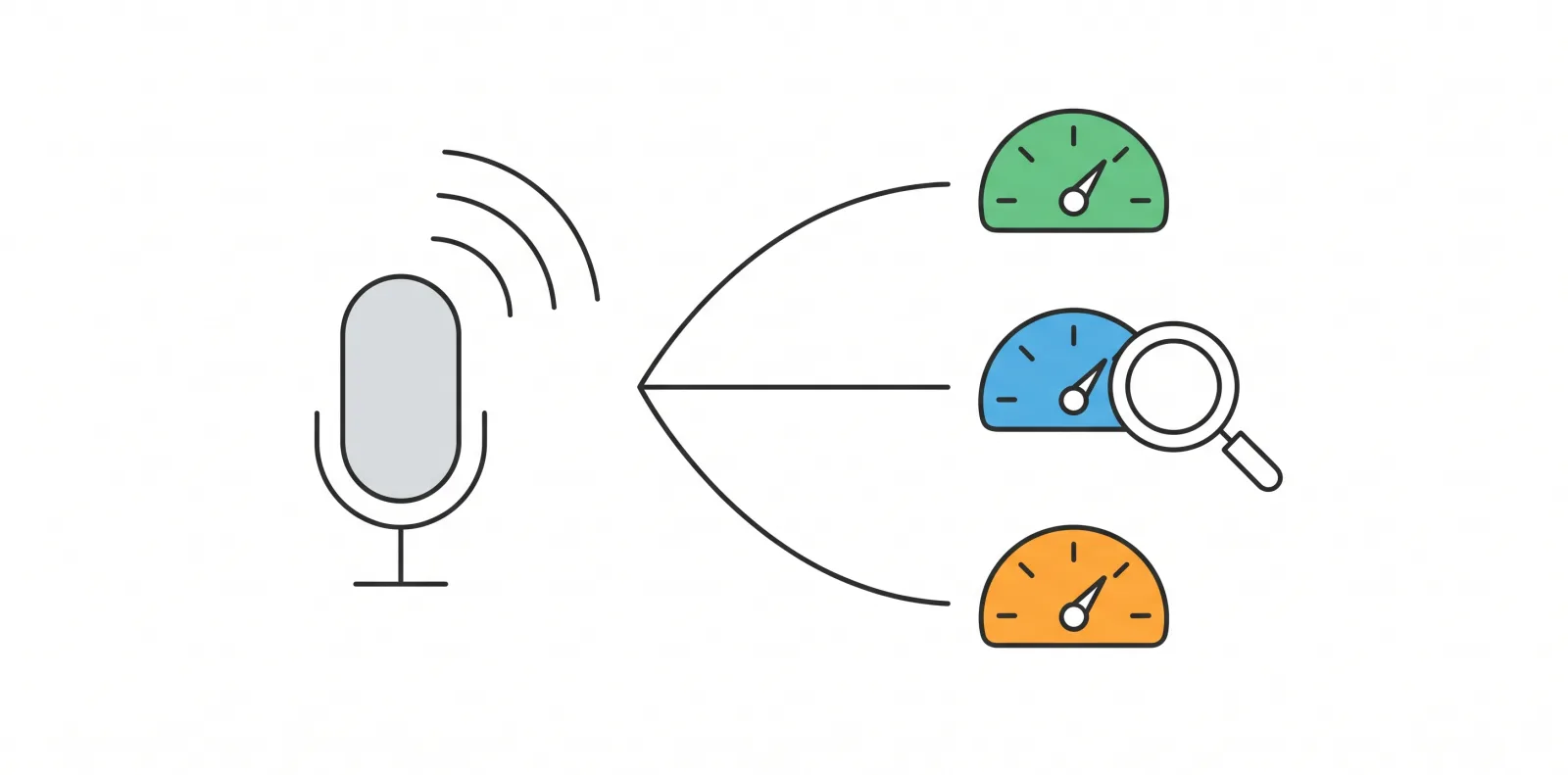
This is the structural feature that changes everything about preparation. Because tasks are integrated and each response feeds several scores, a single weakness propagates. A candidate who pauses frequently loses oral fluency marks and, because the pauses eat the response time, content marks as well.
The corollary is that fixing one habit can lift several scores. Eliminating filler hesitation is the clearest example, and it is the single highest-return change most Indian candidates can make.
And it explains why scores sometimes surprise people. A candidate who felt they spoke well but paused to search for a better word has been penalised for exactly that search.
What Machine Scoring Rewards And Penalises#
Rewarded: continuous speech at a steady pace. Fluency here means unbroken delivery, not eloquence. A simple sentence delivered smoothly scores better than a sophisticated one delivered haltingly.
Rewarded: clear articulation of individual sounds. Pronunciation is assessed against intelligibility. A consistent, clear accent is not penalised; unclear articulation is.
Rewarded: content that visibly matches the prompt. The system checks whether your response addresses what was asked, so restating key elements of the prompt is genuinely useful rather than merely padding.
Penalised: hesitation, self-correction and restarts. Stopping to rephrase costs you twice. Say the simpler thing and keep going.
Penalised: silence at the start. Response windows begin immediately and candidates who pause to think lose recorded time. Begin speaking within the first second.
Penalised: memorised templates. This is precisely what the human reviewers in the hybrid model look for. Generic pre-learned openings that fit any prompt are a recognised pattern and are checked.
And neither rewarded nor penalised: charm, rapport, or explaining yourself. There is nobody to persuade.
Reading The Score Bands#
The scale runs 10 to 90 in single-point increments, which means a score of 65 and a score of 67 are formally different in a way that IELTS bands are not. Institutions set their minimums on this scale directly.
Common university requirements cluster in recognisable places. Many undergraduate and postgraduate programmes set overall requirements in the region of the high fifties to mid sixties, with more competitive programmes higher. Your target is whatever your programmes publish, not a general benchmark.
Communicative skill scores are reported separately, and many institutions set minimums for individual skills alongside the overall. A candidate meeting an overall requirement but falling below a speaking minimum has not met the requirement.
The fine granularity cuts both ways. It allows you to demonstrate a score just above a threshold, and it removes the rounding cushion that band systems provide. Aim comfortably above your minimum rather than at it.
And remember that equivalence tables between PTE, IELTS and TOEFL are institution-specific. Different universities publish different conversions, so the only mapping that matters is the one your university uses.
Preparing For It Properly#
Record yourself and listen back. This is uncomfortable and it is the single most effective preparation activity. You will hear the hesitations you do not notice while speaking.
Practise beginning immediately. Set a prompt, and start speaking within one second. The instinct to think first is the most expensive habit a candidate brings to this test.
Simplify your sentences deliberately. Aim for clear, complete, unhurried sentences rather than complex constructions you might not finish. The scoring rewards the former.
Work on pace rather than speed. Too fast damages pronunciation scores, too slow damages fluency. A steady, moderate pace is what the system is calibrated against.
Do not memorise templates. The hybrid model exists partly to catch them, and a flagged response is worse than a mediocre original one.
Practise the integrated tasks specifically, because listening and then writing a summary, or reading aloud, are formats that do not appear on other tests and that candidates have rarely practised.
And use official practice material, which is scored by the same system and therefore tells you something a third-party estimate cannot.
The Task Types That Decide Your Score#
PTE contains a long list of task types, and a small number of them carry disproportionate weight because they feed several skill scores at once.
Read aloud. A short passage displayed on screen, read into the microphone. It feeds speaking, reading, oral fluency and pronunciation simultaneously, which makes it the highest-value task in the test. Practise reading unfamiliar passages cold, at a steady pace, without stopping to correct a stumble.
Repeat sentence. You hear a sentence and repeat it. It tests listening and speaking together and rewards short-term retention. Candidates improve on this quickly with practice and rarely practise it.
Describe image. A chart or diagram appears and you speak about it. The scoring checks whether your content matches the image, so naming what the image shows explicitly, then one or two observations, outperforms an elegant description that never identifies the subject.
Summarise written text. One sentence, within a word limit, capturing a passage. It tests reading and writing together, and the word limit is enforced strictly.
Write from dictation. You hear a sentence and type it. Short, heavily weighted for listening and writing, and almost entirely a matter of practice.
Essay. Fewer marks than candidates expect relative to the time it consumes. Write a clear, conventionally structured response and move on rather than polishing.
The strategic implication. Time spent on read aloud, repeat sentence and write from dictation lifts more scores per hour of practice than time spent on the essay, which is where most candidates over-invest.
Whether PTE Suits You Specifically#
The tests are not interchangeable, and some candidates score noticeably better on one than another. A few honest indicators help.
PTE tends to suit candidates who are fluent but not confident with people. If speaking to an examiner makes you hesitant, a microphone removes that pressure entirely. Several candidates who underperform in an IELTS interview score well here.
It tends to suit fast, accurate typists, because several tasks require typing under time pressure and the difference between hunting for keys and touch typing is worth real marks.
It suits candidates who need a result quickly, at around forty-eight hours.
It suits people who prefer a predictable system. Machine scoring is consistent. It rewards the same things every time, which means practice transfers reliably.
It suits you less if you speak with frequent natural pauses, which a human examiner reads as thoughtfulness and an automated system reads as disfluency. This is a real and specific disadvantage and it is worth knowing before booking.
It suits you less if your institutions do not accept it, which remains the first question regardless of everything above.
The practical test. Take a free official practice attempt of PTE and of one alternative before booking either. The format difference is large enough that many candidates discover a clear preference within an hour, and that preference is worth more than any general advice.
Frequently Asked Questions#
How much does PTE Academic cost in India?#
₹18,900 including eighteen percent GST, effective from March 2026 across Pearson-authorised test centres.
How is PTE Academic scored?#
On a scale of 10 to 90 in single-point increments. Since August 2025 it has used a hybrid model in which AI evaluates all responses instantly while human reviewers monitor for memorised or template-based answers.
How quickly do results arrive?#
Typically within about 48 hours, stated as one to five business days, which is among the fastest turnarounds available.
Does the AI penalise an Indian accent?#
The scoring assesses intelligibility rather than accent origin. A clear, consistent accent is not the problem; unclear articulation of individual sounds is, and that is what preparation should address.
Why did I score lower than I expected on speaking?#
Most often because of hesitation. Pauses and self-corrections reduce oral fluency scores and consume response time, which reduces content scores as well, so one habit costs marks in two places.
Should I use memorised templates?#
No. Detecting memorised and template-based responses is an explicit function of the human review layer in the hybrid scoring model, and a flagged response is worse than an ordinary original one.
Is PTE accepted widely?#
It is accepted at over three thousand institutions worldwide and recognised in Australia, the United Kingdom, Canada and the United States. Confirm acceptance for your specific programmes, as with any test.
What is the most useful thing to practise?#
Beginning your response within one second and speaking continuously in simple complete sentences. Recording yourself and listening back is the fastest way to find the hesitations you do not notice while speaking.