
Eleven Months Is Plenty, Provided You Stop Doing The Thing That Wastes Nine Of Them#
The most common way to waste a NEET year is not laziness. It is a specific, hard-working, well-intentioned mistake: treating all three subjects as though they need the same kind of study.
Students read the Physics chapter the way they read the Biology chapter, carefully, highlighting, making notes, and then move on feeling productive. Months later they discover that the Biology approach worked and the Physics approach did not, because Physics is not learnt by reading. It is learnt by solving, failing, and solving again.
The reverse error is just as common. Students attack Biology with problem sets and question banks when what Biology actually rewards is repeated, almost obsessive familiarity with a single book.
Get that distinction right and eleven months is generous. Get it wrong and eleven months produces a score you could have reached in four.
Here is the plan, built around the current examination structure and the subjects as they actually behave.
Background: What The Examination Is Now#
The format matters because it shapes the plan.
180 questions, all compulsory. The Section A and Section B arrangement with internal choice, introduced during the pandemic years, has been removed. Every question counts and there is nothing to skip.
180 minutes. Three hours flat, reduced from the earlier three hours and twenty minutes. That is sixty seconds per question on average, including reading.
Subject split. Physics 45 questions, Chemistry 45 questions, Biology 90 questions divided between Botany and Zoology.
Marks. Four for a correct answer, minus one for a wrong one, nothing for an unattempted question. Total 720.
And from 2027, computer-based delivery. Following the 2026 cancellation and re-examination, the National Testing Agency has confirmed that NEET UG moves to computer-based testing from the 2027 cycle. The syllabus and question standard do not change. The delivery does, and that has practical consequences for how you should practise.
Two terms to fix before we go further:
Weightage. The share of questions historically drawn from a given chapter or unit. It is a pattern observed across past papers, not a promise published by NTA. Useful for prioritising, dangerous for skipping.
High-yield. A chapter that delivers a lot of marks relative to the time required to learn it. High weightage plus low difficulty equals high yield. A heavy chapter that is also conceptually hard is important but not high-yield.
Where The Marks Actually Are#
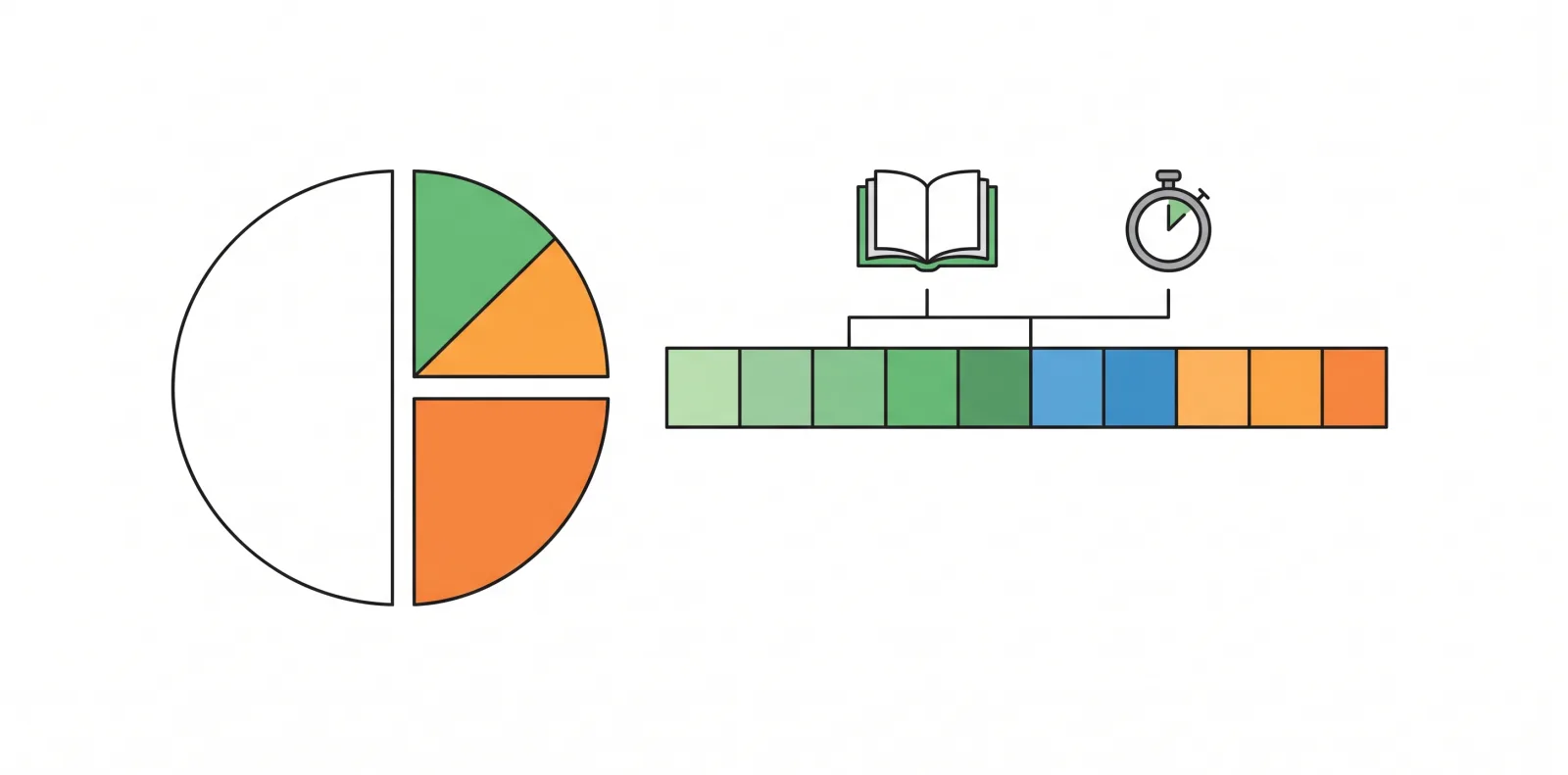
That mismatch between the two bands is the single most useful idea in this article. Biology is half the paper and is the cheapest half to secure, because it responds to repeated reading of a fixed text. Physics is a quarter of the paper and consumes the most time, because it responds only to solving problems. Allocating time in proportion to marks is intuitive and wrong.
The highest-weight areas, as observed across recent papers. Treat these as priorities rather than as a syllabus.
In Biology, Human Physiology is consistently the heaviest single area in Zoology, followed by Genetics and Evolution, Human Reproduction and Ecology. In Botany, Plant Physiology leads, with Plant Diversity, Reproduction in Flowering Plants and Cell Biology close behind. Biotechnology and Biological Classification also appear reliably.
In Physics, Current Electricity, Systems of Particles and Rotational Motion, Thermodynamics, Semiconductor Electronics, Ray Optics and Electrostatics carry disproportionate weight. Modern Physics and Magnetic Effects of Current follow.
In Chemistry, the paper splits roughly evenly across Physical, Organic and Inorganic. Organic reaction mechanisms, Chemical Bonding, Coordination Compounds, Equilibrium, Thermodynamics and the p-block are the recurring heavy areas.
One warning about weightage. These are patterns from past papers, not guarantees. A chapter that carried three questions for five years can carry one this year. Use weightage to decide what to master first, never to decide what to leave out. With 180 compulsory questions and no internal choice, a skipped chapter is a gap you cannot route around.
The NCERT Question, Answered Subject By Subject#
"Is NCERT enough for NEET?" is the most asked and most badly answered question in this field, because the honest answer is different for each subject.
For Biology, NCERT is close to sufficient, and it is non-negotiable. A very large share of NEET Biology questions are traceable directly to NCERT text, including sentences in the body of the chapter that look like background detail, diagram labels, table entries, and the summary boxes. The correct approach is not to read it once carefully. It is to read it repeatedly until you recognise phrasing. Four or five passes across the year, each faster than the last, with a question bank used to test recall rather than to teach content.
Specific habits that pay: read every diagram caption, learn the tables rather than skimming them, and pay attention to examples given in passing, because those are exactly the details that get examined. When a question bank answer surprises you, go back and find the line in NCERT that supports it. Almost always it is there.
For Chemistry, NCERT is the foundation and needs supplementing. Inorganic Chemistry is heavily NCERT-based and should be learnt the way you learn Biology, through repetition. Organic Chemistry needs NCERT for the reactions and mechanisms plus substantial problem practice to handle conversions and reasoning questions. Physical Chemistry needs NCERT for concepts plus a numerical practice book, because NCERT's problem set is not enough.
For Physics, NCERT is necessary and clearly not sufficient. The concepts and derivations are there, and you should read them. But NEET Physics is a problem-solving examination, and the volume and variety of problems in NCERT falls short of what you need. Use NCERT to understand, then work through a dedicated problem book and previous year questions until the standard patterns are automatic.
The universal rule that outranks all of this. Previous year questions are the most accurate description of the examination that exists. Ten to fifteen years of them, worked through chapter by chapter after you learn each chapter, will teach you what the examination actually wants better than any commentary.
The Eleven-Month Schedule#
Months one to four: foundation. Complete the syllabus subject by subject, chapter by chapter. For each chapter, learn it, then immediately solve previous year questions on it. Do not move on with a chapter half understood on the assumption that revision will fix it. Start a formula sheet for Physics and a reaction sheet for Organic Chemistry from day one, and add to them weekly. Take one full-length mock at the end of month two purely for calibration, and expect it to be discouraging. That is what it is for.
Months five to seven: consolidation. Second pass through the syllabus, faster, prioritising the high-weight areas listed above. Increase mock frequency to one every fortnight. Begin an error log with four columns: the question, the concept, why you got it wrong, and what you will do about it. Sort errors into four types, because they need four different responses. Concept not known requires relearning. Concept known but calculation slipped requires timed practice. Question misread requires slowing down on the first read. Ran out of time requires pacing work.
Months eight to nine: testing. One full-length mock every week, then twice a week, taken at the same time of day as the actual examination and under strict conditions. Analyse every one within twenty-four hours. The analysis is where the marks come from, not the test. Watch your error log by category and check whether each category is shrinking. A category that is not shrinking means your approach to it is wrong and needs changing rather than repeating.
Month ten: revision at speed. No new material. Rapid NCERT passes for Biology and Inorganic Chemistry. Formula and reaction sheets daily. Mocks every alternate day. Rework questions you previously got wrong rather than seeking fresh ones, because confirming a fixed weakness is worth more than finding a new one.
Month eleven: taper and protect. Reduce volume in the final ten days. Sleep properly, because memory consolidation happens during sleep and the students who collapse in the final fortnight are almost always the ones who stopped sleeping in the preceding two months. Revise only from your own error log and summary sheets. Do one final full mock about a week out, then stop. Prepare documents and logistics the day before, not the morning of.
Throughout, from month one. Take your mocks on a computer. With NEET moving to computer-based delivery from 2027, the adjustment to reading dense Biology passages on a screen, keeping rough work on a separate sheet, and navigating between questions through an interface is a real skill that takes a few weeks. Building it from the start costs you nothing. Discovering it in April costs you marks.
The Habits That Separate Scores, Regardless Of Plan#
Analyse mocks properly or do not take them. A mock you did not analyse is an afternoon spent measuring rather than improving.
Protect accuracy over attempts. With negative marking and a very large cohort, a handful of careless errors moves your rank by thousands. In a high-scoring year this effect is magnified, because everyone else is also close to the top.
Use one primary source per subject. Students accumulate four books per subject and cover none properly. One NCERT, one problem book, one question bank. Depth in a few resources beats shallow coverage of many.
Revise on a schedule, not on a feeling. Spaced repetition is one of the best-evidenced findings in learning research. Set fixed revision slots and keep them even when you would rather push forward.
And plan the outcome honestly. With registrations above twenty-two lakh and government MBBS seats a small fraction of that, a realistic second option is not defeatism. It is planning. Know what score gets you where in your state and category, and know what you would do at each level, before results day rather than after it.
The Daily Structure Underneath The Plan#
A monthly plan tells you what to cover. A daily structure is what makes it happen, and most plans fail at this level rather than the strategic one.
Put your hardest work in your sharpest hours. For most people that is the morning. Physics problem-solving, the most cognitively demanding thing you do, belongs there rather than at eleven at night when you are already depleted. Biology reading survives tiredness far better, so it can occupy the later slots.
Revise the same day you learn. Twenty minutes revisiting the material you covered that morning is worth several times the same twenty minutes a week later. This is one of the most robust findings in learning research and one of the least used.
Work in blocks with real breaks. Sustained attention degrades after an hour or so for most people. Blocks of roughly fifty minutes with genuine ten-minute breaks, away from a screen, produce more than three unbroken hours of declining concentration.
Keep a running formula sheet and reaction sheet. Built from day one, added to weekly, revised daily in the final months. Students who start these in month nine spend month nine writing instead of revising.
Protect one day a week. Genuinely off, not a guilty half-study day. Performance declines measurably without recovery, and eleven months is long enough that the deficit compounds.
Sleep seven to eight hours at consistent times. Memory consolidation happens during sleep. The hours you gain by cutting it are worth less than the retention you lose, and the students who collapse in the final fortnight are almost always the ones who stopped sleeping in December.
And track something. Chapters completed, mocks analysed, error categories shrinking. A plan without measurement drifts, and eleven months is plenty of time to drift a long way.
Frequently Asked Questions#
Is NCERT enough for NEET?#
For Biology, close to sufficient and absolutely essential, provided you read it repeatedly rather than once. For Inorganic Chemistry, largely sufficient. For Organic and Physical Chemistry, necessary but needing problem practice alongside. For Physics, necessary and clearly not sufficient, since NEET Physics is a problem-solving examination.
How should I split my time between the three subjects?#
Not in proportion to marks. Biology carries half the paper but rewards repetition rather than problem-solving, so it needs roughly forty per cent of your time. Physics carries a quarter of the marks and typically needs around thirty per cent of your hours because problems take time.
What are the highest-weight chapters?#
In Biology, Human Physiology, Genetics and Evolution, Plant Physiology, Human Reproduction and Ecology. In Physics, Current Electricity, Rotational Motion, Thermodynamics, Semiconductor Electronics and Ray Optics. In Chemistry, Organic mechanisms, Chemical Bonding, Coordination Compounds and Equilibrium. Use these to prioritise, never to skip.
How many mock tests should I take?#
Build up gradually: one early for calibration, fortnightly by the middle months, weekly and then twice weekly in the final testing phase. Analyse every single one, because the analysis is where improvement happens.
Does NEET still have optional questions?#
No. The Section A and Section B format with internal choice has been removed. All 180 questions are compulsory and the duration is 180 minutes, down from the earlier 200.
How do I prepare for the computer-based format from 2027?#
Take your mocks on a computer from now. Practise reading long Biology passages on screen, keep rough work on a separate sheet beside you, and get comfortable with marking questions for review and navigating sections. The content does not change, only the delivery.
Should I attempt every question given the negative marking?#
No. Four marks for a correct answer against one for a wrong one means a genuinely informed guess is usually worth taking, but a blind guess across many questions costs you. Attempt when you can eliminate at least two options; leave it when you cannot.
Where can I confirm the current pattern and syllabus?#
On NTA's official NEET portal at neet.nta.nic.in and at nta.ac.in, which publish the information bulletin and syllabus. The pattern has changed more than once in recent years, so check the current bulletin rather than relying on an older summary or a coaching claim.