Two Changes That Together Reshaped The American Application#
If you are applying for an F-1 visa from India, two things have shifted and both deserve your attention before you commit money to applications.
Refusal rates reached a decade high. In 2025, 61 per cent of Indian F-1 applications were refused, according to US Department of State data. That is up from 53 per cent in 2024 and from 23 per cent as recently as 2015. Figures for 2026 show approval running at around 59 per cent, which means roughly 41 in every 100 applicants are refused.
The Dropbox route is gone for students. The interview waiver programme, which allowed many renewal applicants to submit documents without appearing in person, was substantially narrowed from 2 September 2025. Since 1 October 2025 it has not been available for F-1 and several other categories. Nearly everyone now attends an in-person interview.
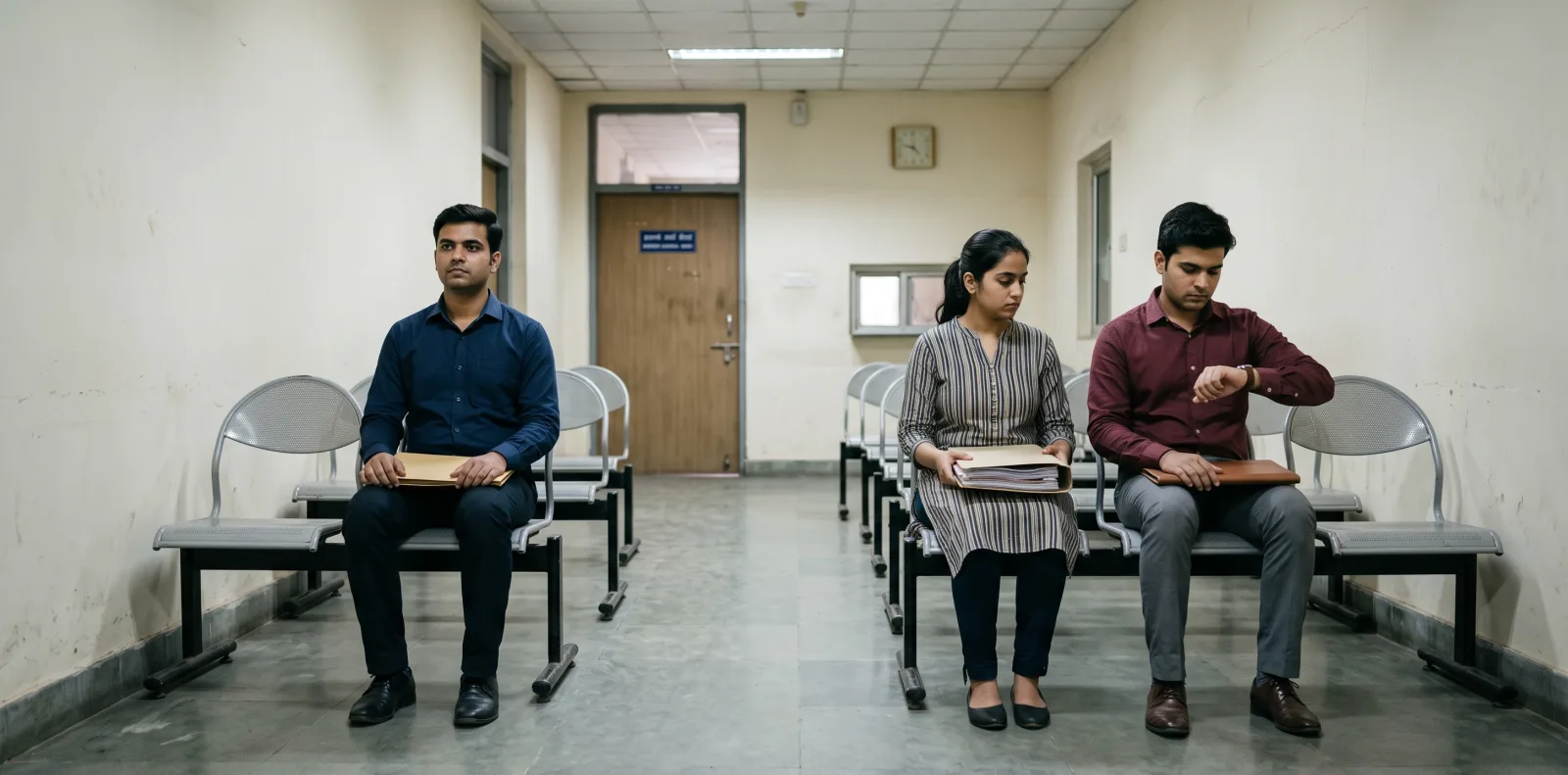
Read those two together and the position is clear. More applicants are being refused, and every applicant now faces a consular officer across a counter.
That is not an argument against applying. The United States remains among the strongest destinations for graduate study, and around six in ten Indian applicants still succeed. It is an argument for understanding precisely what is being assessed, because the interview is now unavoidable and it is where the decision is made.
Background: What An F-1 Refusal Actually Means#
The visa category. F-1 is the student visa for academic programmes at accredited US institutions. It is a non-immigrant visa, and that single word carries most of the weight in this article.
Section 214(b). The overwhelming majority of student visa refusals are issued under this provision of US immigration law. It creates a presumption that every non-immigrant visa applicant intends to immigrate, and it places the burden on you to overcome that presumption.
What that means in practice. You are not being asked to prove you are a good student. You are being asked to satisfy the officer that you intend to return to India after your programme. A refusal under 214(b) is not a judgement on your academic record; it is a finding that you did not discharge that burden.
Refusals are not permanent bans. A 214(b) refusal can be reapplied against, and applicants do succeed on a subsequent attempt, particularly where circumstances or documentation have genuinely changed. Reapplying with an identical profile and no new evidence, however, generally produces the same outcome.
Two more terms:
I-20. The document issued by your admitting institution confirming your admission and the funding you have demonstrated to them. It is a prerequisite for the visa application.
SEVIS. The student and exchange visitor information system, to which a fee is payable before your interview.
The Numbers, In Context#
| Year | Indian F-1 refusal position | What changed |
|---|---|---|
| 2015 | Around 23 per cent refused | A markedly more permissive environment |
| 2024 | Around 53 per cent refused | A sustained upward trend already well established |
| 2025 | 61 per cent refused, a ten-year high | Alongside the withdrawal of the interview waiver for student categories from September and October |
| 2026 | Approval around 59 per cent, so roughly 41 per cent refused | An improvement on 2025, though far above historic refusal levels |
One comparison worth holding on to. Indian applicants have been refused at close to seven times the rate of European applicants, whose denial rate sits around 9 per cent. That gap is not explained by academic quality. It reflects how the 214(b) presumption interacts with applicant volume, the profile of applications from high-volume markets, and consular assessment of intent.
And one caution about reading the trend. These are aggregate national figures. They do not tell you your own probability, which depends on your institution, your funding position, your academic record, your interview performance and the particular consular post. A well-prepared applicant with a funded place at a strong institution faces very different odds from an under-prepared applicant at a marginal one.
What The Interview Actually Assesses#
Since everyone now sits one, it is worth being precise about what the officer is doing in those few minutes.
Three questions underlie almost every interview.
Are you a genuine student? Does your chosen programme make sense given your academic background and your stated career direction? An applicant whose degree subject, work history and proposed programme do not connect coherently invites doubt.
Can you fund it? Is the funding you have shown genuine, documented, and sufficient for the whole programme rather than the first semester? Where is the money coming from and what is the relationship of the funder to you?
Will you return? What ties you to India: family, property, a career direction that requires an Indian context, a business, a professional qualification. This is the 214(b) question and it is the one applicants prepare for least.
What genuinely improves your position.
Coherence above all. Your programme, your background and your stated plans should form a single story that a stranger can follow in thirty seconds. Applicants who have thought this through answer quickly and consistently; those who have not contradict themselves.
Documented, verifiable funding. Clear sources, proper bank records, a comprehensible relationship between you and whoever is funding you. Vagueness here is a common refusal trigger.
Brevity and directness. Officers have very little time. Short, clear, honest answers work better than long explanations, which frequently introduce inconsistencies.
Honesty about everything, including previous refusals. Misrepresentation is a far more serious problem than a prior refusal.
What does not help. Memorised scripts, which sound memorised. Rehearsed emotional appeals. Documents produced in volume rather than in relevance. And trying to guess what the officer wants to hear rather than answering the question asked.
Practical Steps That Matter Now#
Budget for the in-person interview. Appointment availability at Indian consular posts varies and can involve waiting. Since Dropbox is no longer available for F-1, everyone is in the same queue. Book as early as your I-20 allows.
Prepare the funding documentation properly. Not a pile of statements, but a clear account: who is funding, from what source, with what evidence, covering what portion of the total cost.
Practise answering aloud. Not scripts. Have a friend ask you the three underlying questions in different forms until your answers are consistent and short.
Keep your application, your I-20 and your interview answers aligned. Discrepancies between what your institution has on file and what you say are noticed.
Have a second destination genuinely in play. Given a refusal rate above 40 per cent, an applicant with no alternative is taking a substantial risk with a year of their life. Germany, the United Kingdom, Canada, Ireland and several European destinations all admit on different terms, and applying in parallel costs application fees rather than a year.
And if refused, understand why before reapplying. A 214(b) refusal with no change in your circumstances or documentation is likely to repeat. A refusal followed by a strengthened funding position, a clearer academic rationale or better-prepared answers is a different application.
Preparing Your Documents Properly#
The interview is short, but the file behind it is assessed and inconsistencies within it are the most common avoidable problem.
The core set. Passport, I-20 from your admitting institution, SEVIS fee receipt, visa application confirmation, appointment confirmation and a photograph to specification.
Academic records. Transcripts and degree certificates, plus standardised test scores where your admission relied on them. These should match what your institution has on file exactly.
Financial documentation. This is where most files are weak. You need a clear account of how the full programme will be funded, not just the first year: bank statements, loan sanction letters, sponsor income evidence and a comprehensible relationship between you and the funder. A pile of statements without an explanation is worse than a short, clear summary with supporting documents behind it.
Ties to India. Not a formal requirement with a checklist, but material you should be able to reference: family circumstances, property, a business, a career direction that requires an Indian context. The officer is assessing intent and you should be able to speak to it.
Consistency above completeness. The single most damaging thing in a file is a discrepancy: a funding figure that differs between your I-20 and your bank evidence, a programme description that differs from what you say aloud, an employment history that does not match your application. Check these against each other before you go.
And carry originals, organised. Not a disorganised folder you search through at the counter. A file you can produce a specific document from in seconds reads as a prepared applicant.
What A Refusal Actually Means, And What To Do Next#
Given refusal rates above forty per cent, planning for this outcome is prudent rather than pessimistic.
You will usually be told the provision, not the reasoning. Most refusals are issued under Section 214(b), and officers are not obliged to provide a detailed explanation. You will generally receive a standard letter.
It is not a ban. You may reapply, including at the same post, and applicants do succeed on subsequent attempts.
But reapplying unchanged rarely works. If nothing about your circumstances, documentation or presentation has altered, the assessment is likely to reach the same conclusion. The question to answer honestly is what was weak.
The three common weaknesses. Funding that was unclear, insufficient for the full programme, or from a source whose relationship to you was not evident. A programme choice that did not connect coherently to your background and stated plans. Or answers at interview that were inconsistent, evasive or over-rehearsed.
Address the specific one. Strengthen and simplify the funding evidence. Be able to explain the academic rationale in one clear sentence. Practise answering the underlying questions briefly and consistently.
Consider the timing. Reapplying immediately with the same file is generally unproductive. Reapplying for a later intake with genuinely improved documentation is a different application.
And have the alternative live. A student with a place held elsewhere, or applications running in parallel to another destination, faces a refusal as a setback rather than as a lost year. That is the single most useful preparation for this outcome.
Frequently Asked Questions#
What is the current F-1 refusal rate for Indian students?#
In 2025, 61 per cent of Indian F-1 applications were refused, a ten-year high. Figures for 2026 show approval at around 59 per cent, meaning roughly 41 per cent are refused. Both are far above the 23 per cent refusal rate recorded in 2015.
Is the Dropbox interview waiver still available for students?#
No. The interview waiver programme was substantially narrowed from 2 September 2025, and since 1 October 2025 it has not been available for F-1 and several other categories. Nearly all applicants now attend in person.
What is a 214(b) refusal?#
A refusal under the provision that presumes every non-immigrant applicant intends to immigrate, placing the burden on you to demonstrate otherwise. Most student visa refusals fall under it, and it is a finding about intent rather than about your academic merit.
Can I reapply after a refusal?#
Yes. A 214(b) refusal is not a ban. But reapplying with an identical profile and no new evidence generally produces the same result, so identify what was weak and address it before booking again.
Why are Indian applicants refused more often than European ones?#
Indian applicants have been refused at close to seven times the European rate, which sits around 9 per cent. The gap reflects how the intent presumption interacts with high-volume markets and consular assessment rather than academic quality.
What matters most in the interview?#
Coherence between your background, your programme and your stated plans; documented and verifiable funding for the full programme; and a credible account of your ties to India. Answers should be short, direct and consistent.
Should I apply to other countries at the same time?#
With a refusal rate above 40 per cent, having a genuine alternative in play is sensible risk management rather than a lack of commitment. Parallel applications cost fees rather than a year.
Where should I check current requirements?#
On the US Department of State's visa pages and the website of the US Mission to India, which publish current interview waiver policy, appointment availability and documentation requirements. Policy in this area has changed more than once recently.