A Country Where Your Family Income Decides Your Tuition, Not Your Passport#
Most study destinations price international students the same way: a fixed fee, usually higher than the domestic one, identical for a billionaire's child and a clerk's.
Italy does something different. Its public universities set tuition against declared family income, and international students are assessed on the same principle as Italian ones. A family with modest means pays modest fees. A family with substantial means pays more.
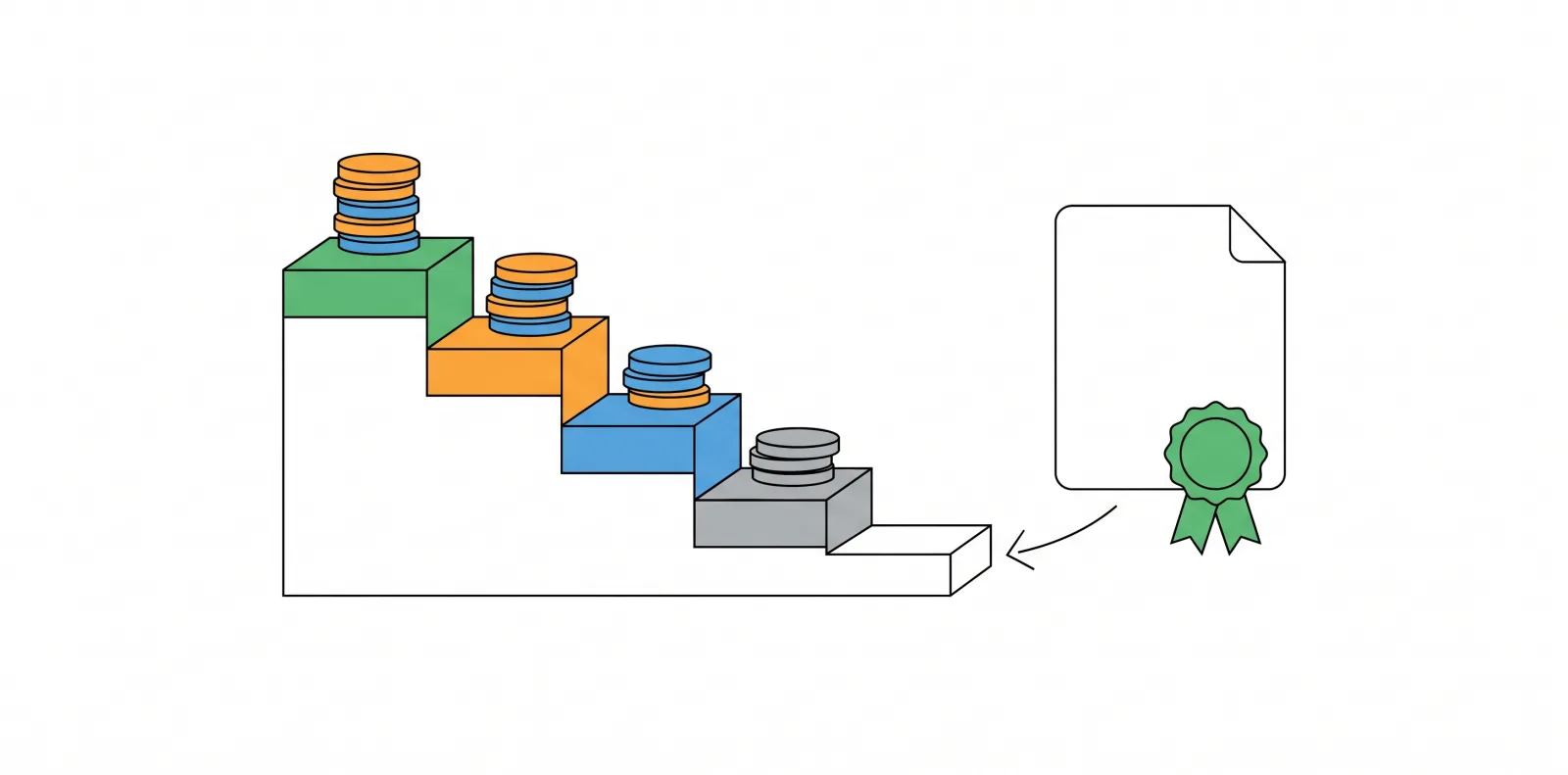
The numbers make the point. Published tuition at Italian public universities typically runs from around €900 to €4,000 a year before any reduction. After income-based assessment, many Indian students from low and middle-income families pay somewhere between nothing and €1,500 a year.
On top of that sit regional scholarships that can add a complete tuition waiver, a cash stipend and subsidised meals.
The catch is not financial. It is bureaucratic, and it is entirely front-loaded: the documents that unlock all of this must be assembled in India, translated, and apostilled, months before you go. Students who arrive without them pay the full sticker price and cannot retrospectively fix it.
Background: What ISEE Actually Is#
ISEE stands for Indicatore della Situazione Economica Equivalente, the equivalent economic situation indicator. It is Italy's standard measure of household economic position, combining income, property and assets with household size into a single figure.
It is used across Italian public services, not just universities, which is why the system is well established and administered nationally rather than invented by each institution.
ISEE Parificato is the version for households whose income and assets are outside Italy. Since an Indian family's finances are not in Italian tax records, an equivalent calculation is produced from documentation you supply. This is the version that matters to you, and it is the one that requires the paperwork.
How universities use it. Each university publishes fee brackets against ISEE bands. Below a threshold, tuition is reduced or waived entirely. Reported thresholds for the lowest brackets commonly sit in the region of €23,000 to €25,000 of assessed household position, though each university sets its own bands, so check the institution rather than assuming a national figure.
Two further terms:
DSU. Diritto allo Studio Universitario, the right to university study. Regional bodies administer need-based scholarships under this framework, separately from the tuition brackets.
Apostille. An international certification confirming a public document is genuine, issued under the Hague Convention. Indian documents intended for Italian official use generally require it, and obtaining one takes time.
What You Actually Pay#
The Documents, Which Are The Whole Game#
This is the section to act on, because everything else follows from it.
Four documents form the core of an ISEE Parificato application.
Family income certificate, evidencing the household's annual income from all sources.
Property certificate, evidencing property owned by the household.
Bank balance certificate, evidencing held assets.
Family composition certificate, evidencing who is in the household.
Each must be translated into Italian and apostilled. Translation must generally be certified, and apostille is obtained through the designated authority in India. Neither is instantaneous and both require the underlying certificate to exist first.
Why this catches people. An Indian family does not routinely hold a property certificate or a family composition certificate. These must be obtained from the relevant local authority, which operates on its own timescale. Then translated. Then apostilled. A student who begins this in July for a September intake will not finish.
Start six months before departure. That is not a cautious estimate; it is a realistic one given how many separate offices are involved.
Accuracy matters more than optimisation. Declarations are assessed and inconsistencies cause problems. Declare accurately and let the brackets do their work.
DSU Scholarships, Which Sit On Top#
The tuition brackets reduce what you pay. DSU scholarships go further.
They are administered regionally, not by the university, under the right-to-study framework. Each region has its own body, its own thresholds, its own application portal and its own deadlines.
What they typically provide. A complete tuition waiver, a cash stipend reported at up to around €7,200, and subsidised or free meals at university canteens. Some also assist with accommodation.
They are need-based, assessed on the same ISEE Parificato figure. Which means the documents you assembled for the tuition bracket serve here too.
The deadlines are separate from your university application and they are strict. Missing a DSU deadline does not affect your admission; it simply means no scholarship for that year. Regional portals publish dates well in advance and candidates still miss them because they are watching the university's calendar instead.
And they are renewable subject to academic progress, typically measured in credits earned per year. A student who falls behind can lose the scholarship, which makes the academic requirement worth understanding at the outset rather than discovering in year two.
Who Italy Actually Suits#
It suits you strongly if your family income is genuinely modest and you can assemble the documentation properly. The combination of income-assessed tuition and a DSU scholarship can produce a total cost that is among the lowest available anywhere for a European degree.
It suits you if you are willing to engage with Italian bureaucracy patiently. This is a system that rewards preparation and punishes improvisation, and students who find paperwork intolerable will struggle.
It suits you less if you need English-medium instruction across a wide range of programmes. English-taught options exist and are growing, particularly at master's level, but the range is narrower than in Germany or the Netherlands and Italian remains the language of daily life.
It does not suit you if you are leaving the documentation until the last minute. Without ISEE Parificato you pay the sticker price, and the sticker price is not the reason anyone chooses Italy.
A final note on the post-study position. Italy offers a post-study stay permission for graduates seeking work, and Italian language ability strongly determines how usable that period is. A student who spends their degree acquiring Italian is in a substantially different position afterwards from one who does not.
Living Costs And The Cities That Change The Arithmetic#
Tuition is the headline. Living costs are what you will actually spend, and in Italy they vary enormously by city.
The north is expensive, the south is not. Milan, Bologna and Rome sit at the top of the range. Smaller university cities in central and southern Italy can cost substantially less for comparable accommodation, and several host excellent universities.
Accommodation dominates. University-managed residences, where available, are considerably cheaper than the private market and are frequently allocated through the same DSU regional process that handles scholarships. This is an under-used route, and the application deadlines run alongside the scholarship ones.
Canteen access matters more than it sounds. University canteens are heavily subsidised and DSU scholarship holders commonly receive free or reduced meals. Over an academic year this is a meaningful sum, and students who eat out because they never registered are spending unnecessarily.
Transport is usually cheap. Student concessions on regional transport are standard and Italian cities are generally walkable.
The permesso di soggiorno. Your residence permit must be applied for shortly after arrival and carries its own fee and process. Missing the window creates problems that are tedious to resolve, and it is the single most common administrative error new arrivals make.
Building a realistic budget. Take the city rather than the country as your unit. Establish accommodation cost first, since it dominates. Add a first-months buffer covering deposit, initial rent and living before any part-time income. And remember that with tuition at or near zero after assessment, living costs are effectively your entire budget, which makes city choice the single most consequential financial decision you make.
Admission, Language And The Pre-Enrolment Process#
Getting the money right is only half of it. Italy's admission machinery has its own sequence and it runs earlier than most applicants expect.
Universitaly is the central portal. Indian applicants complete a pre-enrolment application through it, selecting their institution and programme, before the Italian mission in India processes the study visa. It is a required step rather than an optional convenience.
Declaration of Value, or its replacements. Italian institutions have historically required a Dichiarazione di Valore confirming the standing of your foreign qualification, though several now accept alternatives such as a CIMEA statement of comparability. Which applies depends on the institution, and obtaining either takes weeks.
Admission tests exist for many programmes. Medicine, architecture and several other fields run national or institutional entrance examinations with their own calendars, frequently held before the main application season.
Language requirements depend on the programme. English-taught programmes require IELTS or TOEFL at the level the institution specifies. Italian-taught programmes require certified Italian, commonly at B2 level, and some institutions run their own language assessment.
Learning Italian is worth doing regardless. Daily life, part-time work, accommodation searches and employment after graduation all run considerably more smoothly with it, and Italian is among the more approachable European languages for an English speaker to reach conversational level in.
The sequencing point. Pre-enrolment, document recognition, admission test where applicable, language certification and ISEE Parificato documentation all need to exist before different deadlines. Map them together in one calendar rather than handling each as it arises, because several take weeks and they overlap.
Frequently Asked Questions#
What is ISEE and why does it matter?#
The equivalent economic situation indicator, Italy's standard measure of household economic position combining income, property and assets with household size. Public universities set tuition brackets against it, so it determines what you actually pay.
What is ISEE Parificato?#
The version used for households whose income and assets are outside Italy. Indian families need this, and it is calculated from documentation you supply rather than from Italian tax records.
How much do Indian students actually pay?#
Published tuition typically runs from around €900 to €4,000 a year. After income-based assessment, many students from low and middle-income families pay between nothing and €1,500. With a DSU scholarship, tuition can be fully waived.
Which documents do I need?#
Family income certificate, property certificate, bank balance certificate and family composition certificate, each translated into Italian and apostilled in India. Start at least six months before departure.
What are DSU scholarships worth?#
Administered by regional bodies, they typically provide a full tuition waiver, a cash stipend reported at up to around €7,200 and subsidised or free canteen meals, assessed on the same ISEE Parificato figure.
Are DSU deadlines the same as university deadlines?#
No. They are separate, regional and strict. Missing one does not affect admission but does mean no scholarship for that year, and students frequently miss them by watching only the university calendar.
Is instruction available in English?#
Yes, particularly at master's level, and the offering is growing. It remains narrower than in Germany or the Netherlands, and Italian is the language of daily life and of most post-study employment.
Where should I verify brackets and deadlines?#
On each university's own fees page for its ISEE brackets, on the relevant regional DSU body's portal for scholarships and deadlines, and with the Italian mission in India for document and apostille requirements.