
The Headline Is That Nothing Changed. The Story Is What Might#
The Consortium of National Law Universities met on 18 July 2026 and confirmed what a great many anxious candidates wanted to hear. There will be no changes to the syllabus, pattern or sections of CLAT 2027, for either the undergraduate or postgraduate papers.
So if you are sitting CLAT on 6 December 2026, you are sitting the paper you have been preparing for. Five sections, 120 questions, two hours, offline in OMR mode.
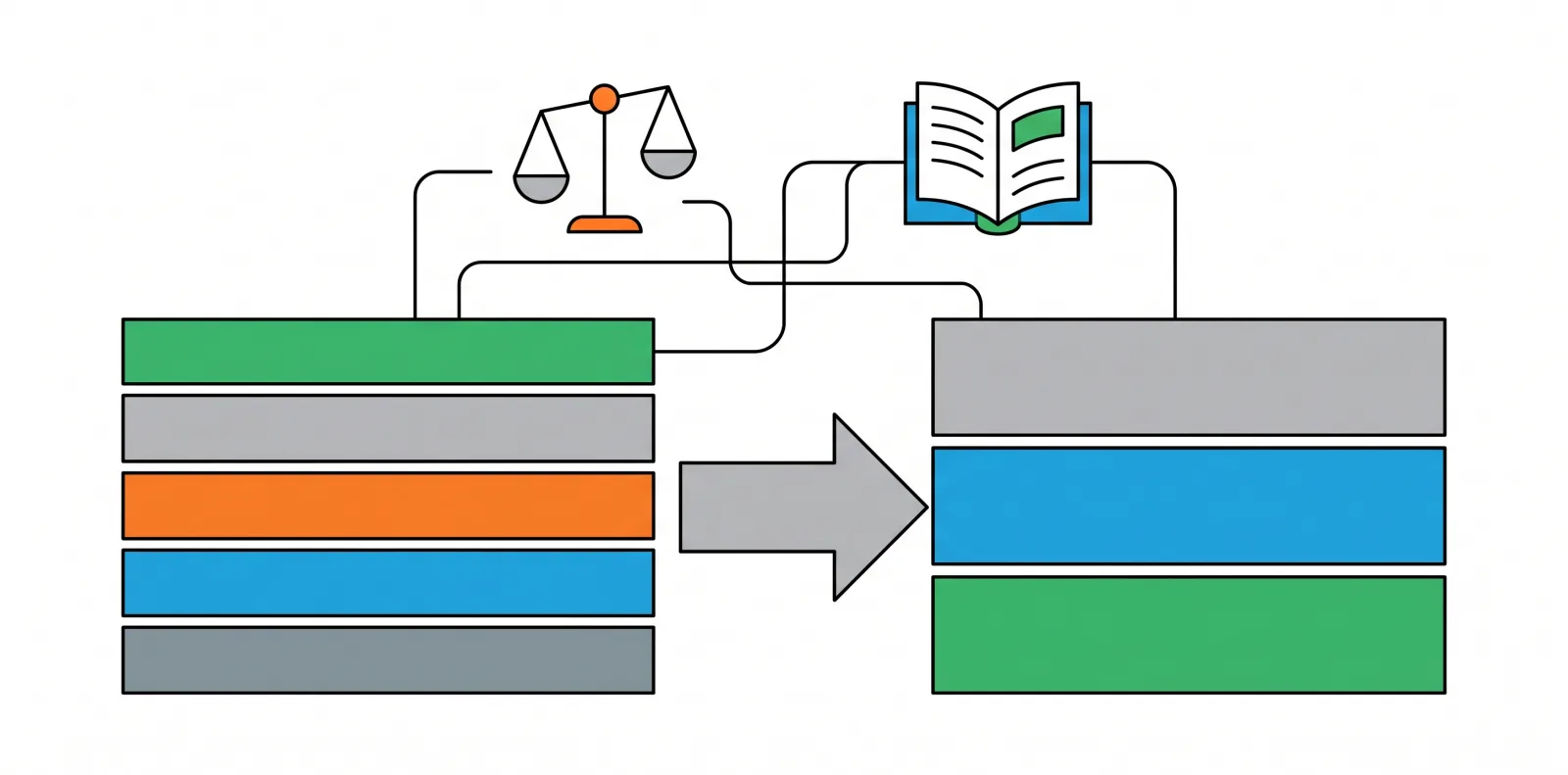
But underneath that reassurance sits something more interesting. An expert committee has recommended a substantial restructuring: collapsing the five-section undergraduate paper into three sections, removing the general knowledge and current affairs section entirely, and merging legal reasoning with logical reasoning.
None of that applies to CLAT 2027. The Consortium has been explicit that the committee's recommendations will not affect this cycle. But if you are in Class 11 now, or if you are considering a second attempt, this is the shape of the examination you may eventually face, and knowing it changes how you build your foundations today.
The Consortium has also indicated that while the pattern stays the same, the question papers themselves will see qualitative changes. That is a quieter signal than a structural overhaul and it is worth taking seriously, because it usually means the emphasis within sections is shifting even where the section headings are not.
Background: What CLAT Is And How It Works#
The Consortium. CLAT is conducted by the Consortium of National Law Universities, a body formed by the NLUs themselves to run a common admission test. More than twenty-seven NLUs use it.
The one big exception. NLU Delhi does not use CLAT. It conducts its own examination, AILET, for its own seats. A CLAT score cannot get you into NLU Delhi and an AILET score cannot get you into any other NLU. Candidates targeting NLU Delhi must sit both examinations, and the dates are close together: CLAT 2027 on 6 December 2026 and AILET 2027 on 13 December 2026.
The programme. CLAT UG feeds five-year integrated law degrees, typically BA LLB, BBA LLB or similar combinations. You enter after Class 12 and emerge with two qualifications.
The format. 120 questions in 120 minutes, in offline pen-and-paper OMR mode, with negative marking. That works out to one minute per question, and the questions are passage-based, which means reading speed is not a nice-to-have but a core competency.
Two terms worth pinning down:
Comprehension-based testing. CLAT does not ask you to recall legal provisions. It gives you a passage containing the principle and asks you to apply it. This means you do not need prior legal knowledge, which surprises candidates, and it means you do need to read carefully under time pressure, which defeats them.
Consortium cut-off versus NLU cut-off. The Consortium publishes your rank. Individual NLUs then fill seats through a centralised counselling process, and the closing rank for each NLU and category is the effective cut-off. Those closing ranks are the numbers that matter.
The Confirmed Structure For CLAT 2027#
| Section | Approximate share | Question count, indicative | What it actually tests | Where candidates lose marks |
|---|---|---|---|---|
| English Language | Around 20 per cent | Roughly 22 to 26 | Comprehension of passages of about 450 words, drawn from contemporary and historically significant fiction and non-fiction, pitched at a level a Class 12 student can read comfortably | Reading too slowly, or answering from impression rather than from the text |
| Current Affairs including General Knowledge | Around 25 per cent | Roughly 28 to 32 | Awareness of news, events and general knowledge, usually presented through a passage | Relying on a compendium memorised late rather than sustained reading through the year |
| Legal Reasoning | Around 25 per cent | Roughly 28 to 32 | Applying a principle supplied in the passage to a factual situation. No prior legal knowledge required | Importing outside legal knowledge or moral intuition instead of applying the stated principle exactly |
| Logical Reasoning | Around 20 per cent | Roughly 22 to 26 | Identifying arguments, assumptions, conclusions and flaws within short passages | Confusing what the author states with what the candidate believes |
| Quantitative Techniques | Around 10 per cent | Roughly 10 to 14 | Elementary mathematics up to about Class 10 level, applied to data in passages | Skipping the section entirely on the assumption it is negligible |
Two observations from that table.
The paper is overwhelmingly a reading test. Every section except quantitative techniques is passage-based, and even that one wraps its arithmetic in a passage. Roughly speaking, CLAT is testing whether you can read a substantial amount of unfamiliar text quickly and reason about it accurately. Candidates who read widely for years do well almost automatically. Candidates who have not read outside their textbooks find one minute per question brutal, regardless of how many mock tests they take.
Quantitative techniques is small and frequently abandoned. At around ten per cent it is the smallest section, and the mathematics is elementary. Candidates from humanities streams often write it off. That is roughly twelve marks conceded to save a few hours of Class 10 arithmetic revision, which is poor value in an examination where ranks cluster tightly.
Why The English Section Deserves More Of Your Time Than It Gets#
The English section carries around twenty per cent directly. Its actual influence is considerably larger, and this is the most useful insight in this article.
Every other section is also an English test. The legal reasoning passage is in English. The logical reasoning argument is in English. The current affairs question is wrapped in a passage. Even the quantitative data arrives inside prose. A candidate who reads at 150 words a minute and one who reads at 300 are effectively sitting two different examinations, because one has twice as long to think.
So improving your reading speed and accuracy improves your score in every section at once. No other single intervention does that.
How to actually build it. Not through comprehension exercises alone, which train test technique rather than reading capacity. Through volume, over months.
Read long-form non-fiction daily. Editorial and opinion pages of a good newspaper, long magazine essays, well-written history and biography. Fiction counts too, particularly the kind of literary fiction CLAT draws from, because it builds tolerance for complex sentence structures and unfamiliar registers.
Read actively. After each article, state the author's main claim in one sentence, identify the evidence offered, and note one assumption the author has not defended. Those three moves are precisely what the logical reasoning section tests, and doing them daily on real text is better preparation than any question bank.
Then add timed practice separately. Passage, questions, clock. But treat this as calibration rather than as the training itself.
On current affairs. The most efficient route is the same one: fifteen minutes of newspaper reading daily, kept in a single notebook, across the whole year. This beats memorising a compendium in November by a wide margin, because the material is absorbed in context rather than crammed. And if the expert committee's recommendation to drop this section is eventually adopted, the reading habit you built will still be serving your English and logical reasoning scores.
How NLU Cut-Offs Tier#
Closing ranks vary every year with applicant numbers and paper difficulty, and they differ by category and by state domicile quota. The tiering below describes the general shape of competition rather than specific numbers, and you should check the Consortium's published closing ranks from the most recent cycle for figures.
The most competitive tier. NLSIU Bangalore sits at the top of the law school hierarchy and has done since it opened in 1987 as the first NLU. NALSAR Hyderabad and NUJS Kolkata follow closely. Closing ranks for the unreserved category at these institutions sit in the low hundreds nationally, which given the size of the CLAT cohort is a very narrow band.
The strong established tier. NLU Jodhpur, GNLU Gandhinagar, NLIU Bhopal, HNLU Raipur and similar institutions. Well-established, with mature recruitment relationships and good outcomes.
The developing tier. Newer NLUs established over the past decade and a half. Same statutory model, growing faculty, developing recruiter access, and substantially gentler closing ranks.
Three things this tiering does not capture, and you should check directly.
Domicile quotas. Most NLUs reserve a proportion of seats for candidates domiciled in the state that established them. For a home-state candidate, the effective closing rank can be dramatically more favourable than the national figure. This is the single most underused advantage in NLU admissions.
Fees. They vary considerably between NLUs, and across five years the difference is material. Check the current figure for any institution you are targeting.
What each school is actually good at. Faculty strength varies by area, and some institutions have particular depth in constitutional law, others in corporate or intellectual property work. If you already know your direction, that matters more than a tier label.
Preparing For Two Papers At Once#
If you are in Class 12 and sitting CLAT 2027, prepare for the confirmed five-section paper. That is the examination in front of you and the committee's proposals do not apply to it.
If you are in Class 11 or earlier, or contemplating a later attempt, build the skills that survive either structure.
Reading capacity survives everything. Whether the paper has five sections or three, it will be comprehension-driven. Reading widely and quickly is the investment that cannot be wasted.
Legal and logical reasoning survive a merger. The proposal is to combine them, not to remove them. The underlying skill, applying a stated principle to facts and identifying the structure of an argument, is the same either way.
Elementary mathematics survives. Quantitative techniques appears in both the current structure and the proposed one.
Current affairs is the one at risk. If the recommendation to remove it is adopted, the compendium-memorising portion of preparation would become obsolete. The daily newspaper habit would not, because it feeds comprehension and general reasoning regardless.
And the practical rule. Track the Consortium's own announcements at consortiumofnlus.ac.in rather than reacting to coaching advertisements or forum speculation. Pattern change reports circulate every year, most of them are wrong, and the Consortium publishes its decisions directly. Registration for CLAT 2027 closes on 31 October 2026, which is the date that actually requires your attention right now.
Domicile Quotas: The Advantage Most Candidates Never Use#
This is the single most underused fact in NLU admissions, and it can be worth hundreds of ranks.
Most NLUs reserve a proportion of seats for candidates domiciled in the state that established them. Because each NLU was created by a State Act, the state that funded it typically retains a share of seats for its own residents. The proportion varies considerably between universities.
The practical effect. For a home-state candidate, the closing rank in the domicile category can be substantially more favourable than the all-India figure for the same university. A rank that would not open an NLU nationally may comfortably open your own state's NLU.
Why candidates miss it. National conversation about CLAT focuses almost entirely on the all-India closing ranks at the best-known institutions. A student in a state with its own NLU frequently never checks what their rank would achieve there under the domicile category, and applies as though only the national figure exists.
What to do about it. Find your state's NLU. Look up its published closing ranks for the domicile category in your reservation category across the last three years. Compare that against your realistic rank band. Many candidates discover that an NLU seat is considerably closer than they assumed.
Gather the documentation early. Domicile certificates take weeks to obtain, requirements differ by state, and counselling verification windows are measured in days. This is exactly the kind of avoidable administrative failure that costs earned seats.
And check the specific rules. Some universities apply a residence test, some a schooling test, some a parental employment test, and some a combination. Read your target university's admission brochure rather than assuming the general pattern applies.
Frequently Asked Questions#
Has the Consortium changed the CLAT 2027 pattern?#
No. At its governing body meeting on 18 July 2026 the Consortium confirmed no changes to the syllabus, pattern or sections for either the UG or PG paper. It has indicated that question papers will see qualitative changes, which affects emphasis rather than structure.
What is the expert committee proposal?#
A recommendation to replace the five-section UG paper with three sections, remove the general knowledge and current affairs section entirely, and merge legal reasoning with logical reasoning. The Consortium has stated these recommendations will not affect CLAT 2027.
When is CLAT 2027 and when do applications close?#
The examination is scheduled for 6 December 2026 in offline OMR mode, and the application window closes on 31 October 2026.
How much does the English section carry?#
Around twenty per cent directly, with roughly 22 to 26 questions based on passages of about 450 words. Its real influence is larger, because every other section except quantitative techniques is also passage-based, so reading speed affects your score throughout.
Do I need prior legal knowledge for legal reasoning?#
No. The principle you need is supplied in the passage, and your task is to apply it to the facts given. Importing outside legal knowledge or moral intuition is one of the most common ways candidates lose marks in this section.
Can I use a CLAT score for NLU Delhi?#
No. NLU Delhi conducts its own examination, AILET, scheduled for 13 December 2026 for the 2027 cycle. A CLAT score cannot be used there and an AILET score cannot be used at other NLUs, so candidates targeting both must sit both.
Should I skip the quantitative techniques section?#
No. It is the smallest section at around ten per cent, but the mathematics is elementary, up to roughly Class 10 level. Conceding those marks to save a few hours of arithmetic revision is poor value in an examination where ranks cluster closely.
Where should I check cut-offs and official announcements?#
On the Consortium's own site at consortiumofnlus.ac.in, which publishes the notification, the information brochure and counselling closing ranks. Use published closing ranks from the most recent cycle rather than tiered summaries, and check the domicile quota position for your own state.