Every Brochure Photographs The Same Corner#
There is one bench under one flowering tree on almost every Indian campus, and it appears on the cover of every prospectus. There is one laboratory with new equipment, photographed from the angle that excludes the three benches where nothing works. There is one library reading room, photographed at an hour when it is empty and sunlit rather than at the hour when there are no free seats.
This is not fraud. It is marketing, and every institution in the world does it. Expecting a brochure to tell you about the hot water supply is like expecting a restaurant menu to describe the kitchen.
But you are about to hand over a substantial sum of money and several years of your life on the basis of that brochure, and the things it does not mention are precisely the things that will determine whether those years are good ones. Whether the mess food is edible. Whether the internet works when an assignment is due. Whether you can walk back to the hostel at ten at night without worrying. Whether the laboratory equipment in your department actually functions.
All of this is knowable before you pay. It takes perhaps six hours spread over a week. Here is how.
Background: What Institutions Are Legally Required To Tell You#
Start with the good news. Indian regulators require institutions to publish a substantial amount of factual information, and almost nobody reads it.
Mandatory disclosure. Regulatory bodies including the UGC and AICTE require institutions to publish specified information on their own websites in a standard format. This typically includes the sanctioned intake for each programme, the full faculty list with qualifications and designations, fee structure, infrastructure details including hostel capacity and laboratory facilities, and the institution's approval and accreditation status. This document is often buried under a menu item labelled "Mandatory Disclosure" or "Statutory" and it is frequently more informative than the entire prospectus.
Approval letters. Institutions offering regulated programmes must hold current approval from the relevant council, and these letters specify the approved intake and any conditions imposed. AICTE publishes approved intake data, and professional councils publish recognised institution lists.
Accreditation reports. NAAC publishes accreditation outcomes including the grade, the CGPA and the validity period. Some institutions also publish their self-study reports, which contain a great deal of detail.
Annual reports and placement reports. Public institutions generally publish these. They contain student numbers, faculty numbers, financial information and, in the better ones, branch-wise placement figures.
Anti-ragging compliance. Institutions are required to have anti-ragging committees and squads, to file undertakings, and to display helpline information. The presence and visibility of this apparatus tells you something about institutional seriousness.
Two things to look for that reveal a lot quickly:
Faculty vacancy rate. Compare the number of faculty listed against the sanctioned strength. A department running well below sanctioned strength will cancel electives, overload remaining staff and lean on temporary appointments.
Hostel capacity against intake. If a college admits eight hundred students a year and has hostel capacity for four hundred in total across all years, most students are living outside. That changes your cost and your experience substantially.
The Verification Checklist#
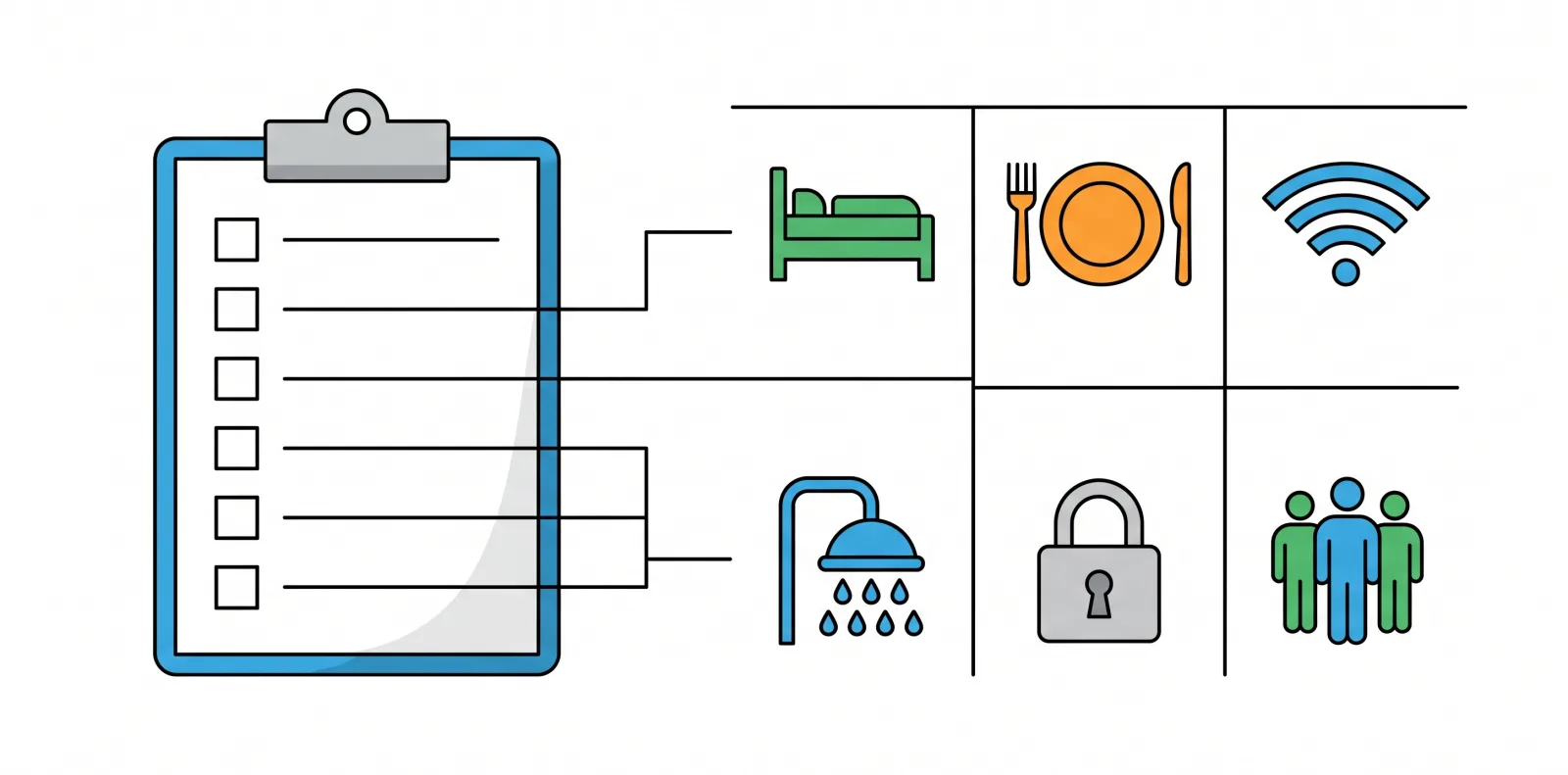
Work through this systematically. The right-hand column is where the answer actually lives, which is the part most people get wrong.
| What to verify | The specific question to answer | Where the honest answer is |
|---|---|---|
| Hostel availability | Is accommodation guaranteed for first-year students, and for all four years? What is total capacity against total enrolment? | Mandatory disclosure for capacity, hostel page for rules, and a current student for what actually happens in practice |
| Room conditions | How many students per room in year one? Is there a separate study table and cupboard per student? What is the bathroom-to-student ratio? | A campus visit, or photographs from a current student rather than from the website |
| Water and electricity | Is hot water available, at what hours, and does it work in winter? Is there a generator or inverter backup, and does it cover hostel rooms or only academic blocks? | Current students only. This appears in no document anywhere |
| Mess food | How many mess options are there? Is the mess compulsory and is the fee refundable if you eat elsewhere? What are the timings, and what happens if your class overruns lunch? | Current students, plus a visit to the mess at an actual mealtime |
| Internet | What is the bandwidth per student, is there wifi in hostel rooms or only in common areas, is there a data cap, and is it blocked at night? | Current students. Every institution claims high-speed internet |
| Laboratories and equipment | For your specific department, what equipment exists and does it work? How many students share each setup during practicals? | A visit to your own department, and students in your branch specifically |
| Library | Are current journal subscriptions active? Are there enough copies of core textbooks? What are the opening hours during examinations? | A visit, plus the library page listing subscriptions |
| Safety | Are there working lights along internal paths? What are hostel entry timings and do they differ by gender? Is there a functioning grievance mechanism? | Current students, and a visit after dark if possible |
| Anti-ragging | Is the committee active, are helpline numbers displayed, and what do second-years say about their first month? | Second-year students, asked privately and specifically |
| Medical facilities | Is there a campus health centre, what hours does it keep, and where is the nearest hospital? | Institution website and current students |
| Travel and connectivity | How far is the nearest railway station and airport? What transport exists, and how do students actually get to the city? | Maps, plus students who make the journey |
| Fees over the full programme | What is the total across all years, including hostel, mess, examination and laboratory charges? What is the refund policy on withdrawal? | Ask the admissions office in writing and keep the reply |
Using Student Communities Without Being Misled#
Student communities online are the single best source of unfiltered information about campus life, and also a place where you can be thoroughly misinformed. Use them with method.
Where to look. Institution-specific subreddits exist for most large Indian colleges and for many smaller ones, and the broader Indian college and examination subreddits carry a lot of discussion. Quora has a long archive of detailed answers, though much of it is old. Messaging-app groups for admitted students form every year and are usually the most current source. Some colleges have active alumni presence on professional networks, which is useful for outcomes rather than for daily life.
How to read it. A few rules that will save you from bad conclusions.
Weight recency heavily. A detailed answer about hostel conditions from six years ago describes a building that may since have been renovated or may have deteriorated further. Check dates on everything.
Discount both extremes. The most enthusiastic post and the most furious post are both written by people in an unusual emotional state. The useful information is in the middling, specific, slightly bored replies.
Prefer specific over general. "The mess is bad" tells you nothing, because mess quality is subjective and varies by what you are used to. "The mess serves the same three vegetables on rotation and closes at eight, so if your lab runs late you are ordering food" tells you something you can act on.
Look for consensus across independent sources. One person complaining about the internet is a data point. Six people across three different platforms and two different years describing the same problem is a fact.
Be alert to promotional accounts. Private institutions do sometimes seed positive content. Signs include accounts with no history other than praising one institution, unusually polished language, and answers that read like a prospectus.
Ask rather than only read. Post a specific question. Students generally answer honestly and at length, because they remember being in your position.
The Questions That Produce Honest Answers#
Generic questions produce generic answers. These produce real ones.
"What is the one thing you wish you had known before joining?" The single highest-yield question. It bypasses the instinct to defend one's own institution.
"Walk me through a normal Tuesday." Concrete and hard to romanticise. You will learn about class timings, gaps, mess hours, commute and workload in one answer.
"What happens when the hot water fails?" A proxy for maintenance culture generally. The answer tells you whether complaints get fixed or absorbed.
"How many of the courses in my branch last semester were taught by permanent faculty?" Directly measures the faculty vacancy problem.
"Which electives were offered last year and which were cancelled?" Cancelled electives are the clearest symptom of an understaffed department.
"What do students do at weekends?" Reveals whether the campus is isolated, whether there is anything to do, and whether people go home constantly, which affects community.
"If you were choosing again, would you choose this place?" Ask it last. The hesitation before the answer is informative.
The Campus Visit, Done Properly#
If you can visit, visit. If the institution is far and you have an offer, it can still be worth the journey before paying a large fee.
Go on a working day during term. A campus on a Sunday or during vacation tells you nothing. You want to see it populated and functioning.
Decline the official tour, or take it and then wander. Official tours are choreographed. The useful hour is the one afterwards, walking around by yourself.
Visit the mess at a mealtime. Look at what is being served, how long the queue is, how clean the eating area is, and whether students look content or resigned.
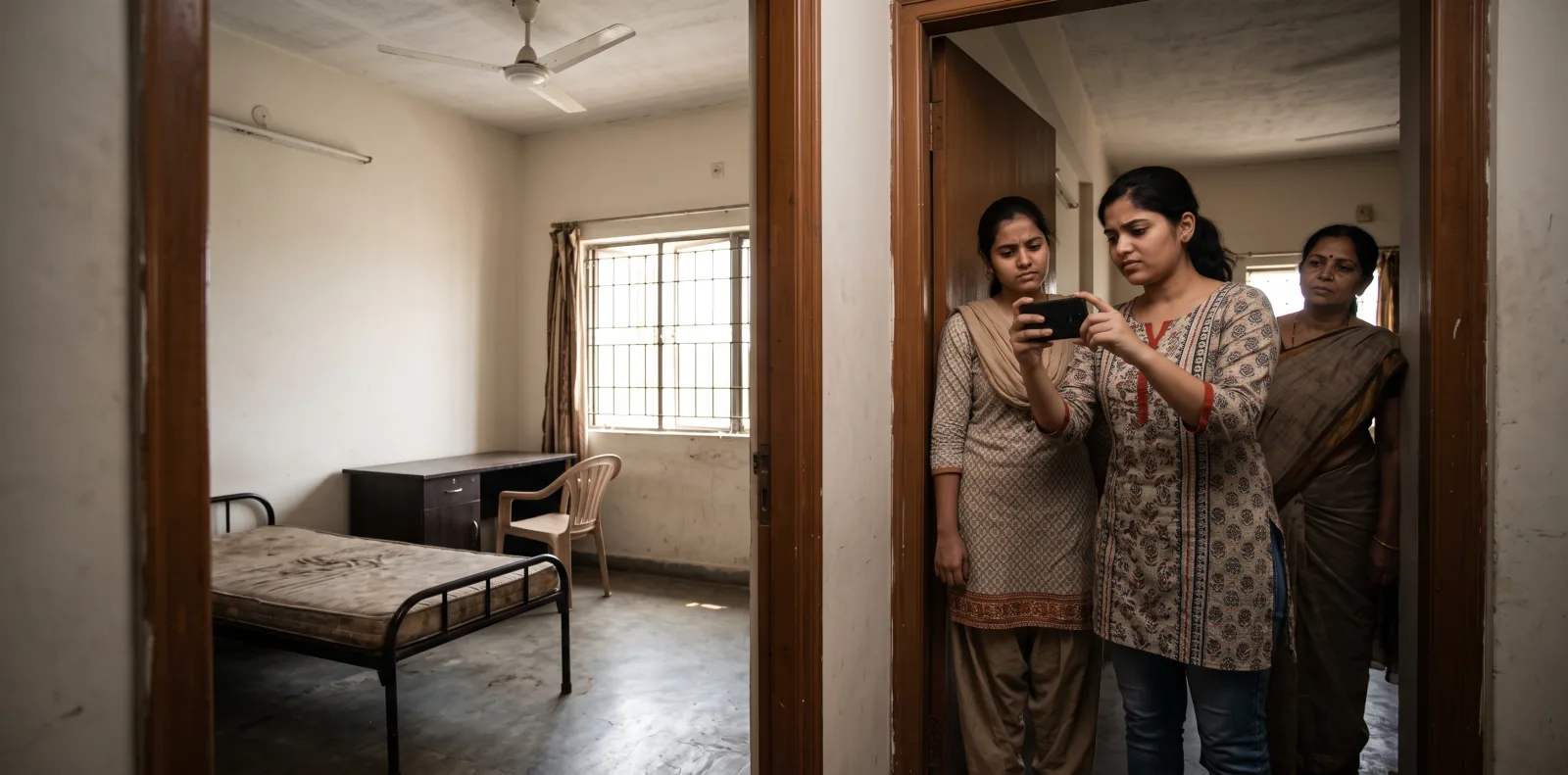
Ask to see an actual hostel room, ideally one currently occupied rather than a display room. If this request is refused, note the refusal.
Visit your own department, not the main administrative building. Look at the laboratories, the noticeboards, the corridors. Noticeboards are unexpectedly revealing: an active department has recent seminar notices, project announcements and internship information. A dormant one has a faded circular from two years ago.
Talk to a student you choose, not one the institution supplies. Approach someone sitting alone in the canteen and ask politely. Most will talk.
Check mobile signal in the hostel area and the academic block. It matters more than you expect.
Safety Rules For Admission Season#
Admission season attracts people who take advantage of anxious families, so a few firm rules.
Never pay any amount outside the official channel. Fees go to the institution through its published payment system, against a receipt in the institution's name. Anyone offering a seat in exchange for a payment to a personal account is running a fraud, regardless of how plausible they sound or which officials they claim to know.
Do not share personal documents with strangers online. Marksheets, identity documents, admission letters and payment receipts contain enough information for identity theft. Share nothing beyond what an official portal requires.
Treat "management quota" offers with great care. Legitimate management quota admissions exist at some private institutions under regulated fee structures and published processes. Anything conducted informally, urgently, or through an intermediary asking for cash is not that.
Verify any person claiming to represent the institution by contacting the institution directly through the phone number on its official website, not a number the person gave you.
Be wary of urgency. "This seat will be gone in two hours" is the oldest pressure technique there is. Real institutional processes have published deadlines.
Keep every document. Payment receipts, email correspondence, offer letters, fee schedules. If a dispute arises later, this is your entire position.
Frequently Asked Questions#
Where do I find a college's mandatory disclosure?#
On the institution's own website, usually under a menu item called Mandatory Disclosure, Statutory Information, or similar. It is required by regulators and contains faculty lists, intake, fees and infrastructure details. If you cannot find it, that absence is itself worth noting.
Are Reddit and Quora reliable for college information?#
Reliable for texture and daily reality, unreliable as single data points. Check dates, ignore the extremes, prefer specific descriptions over verdicts, and look for the same observation from multiple independent people before treating it as fact.
What is the most useful single question to ask a current student?#
What they wish they had known before joining. It produces honest, specific answers more reliably than any direct question about quality.
Should I trust placement figures on the college website?#
Trust them cautiously and look for detail. Institution-wide averages and highest packages tell you little. Branch-wise medians, the number of students actually placed against the number eligible, and the list of recruiting companies are the useful figures.
How do I check hostel availability before accepting a seat?#
Compare total hostel capacity in the mandatory disclosure against total enrolment, read the hostel allocation rules on the institution's site, and ask current students what actually happens in practice, particularly for first-year and outstation students.
Is it worth visiting a campus if I already have an offer?#
Often, yes, particularly before paying a large fee or committing to a distant institution. Go on a working day, visit your own department and the mess, and speak to a student you approach yourself.
What are the warning signs of an admission fraud?#
Any payment outside the official channel, urgency about a deadline that is not published, an intermediary promising a seat, a request for cash, and reluctance to put anything in writing. Verify every claim by contacting the institution through the number on its official website.
The college says it has high-speed wifi. How do I check?#
You cannot check it from the brochure, because every institution claims it. Ask current students specifically about bandwidth in hostel rooms, whether coverage extends to rooms or only common areas, whether there is a data cap, and whether access is restricted at night.